How ADR, dubbing and professional voice casting rescue indie soundtracks, from casting and remote sessions to rates, usage rights and mixing dialogue.
A compelling scene can lose its force when wind buries a line or a replacement voice feels detached from the character. Audiences may forgive a soft image, but they are less forgiving when dialogue makes them strain to follow the story. For an indie filmmaker, that gap can leave a finished cut feeling less convincing than the performances and images around it.
Directors, producers, and post-production crews often meet this problem when the budget is already committed and the schedule is narrowing. ADR (Automated Dialogue Replacement) and dubbing may happen in post, but the decisions behind them reach beyond signal cleanup. The work depends on whether a recorded line still feels connected to the person and moment on screen.
What ADR and Dubbing Can Fix, and What They Can’t
ADR replaces individual lines while matching lip movement, breath, and body rhythm. Actors record against repeated cues or loops, a workflow explained in this guide to no-budget ADR for independent films. Dubbing replaces an entire performance, usually in another language.
Both processes can produce broadcast-quality audio and address sound challenges in indie films, including aircraft noise, wind, camera hum, unusable boom recordings, flubbed words, and script revisions.
However, neither can create a performance that was never captured. Likewise, a clean, close-mic dialogue recording may never sound natural in a scene shot from a wide perspective. Teams should flag ADR on set and note it in the sound report because actor availability often disappears quickly after production wraps.
Casting the Voice That Keeps the Character Intact
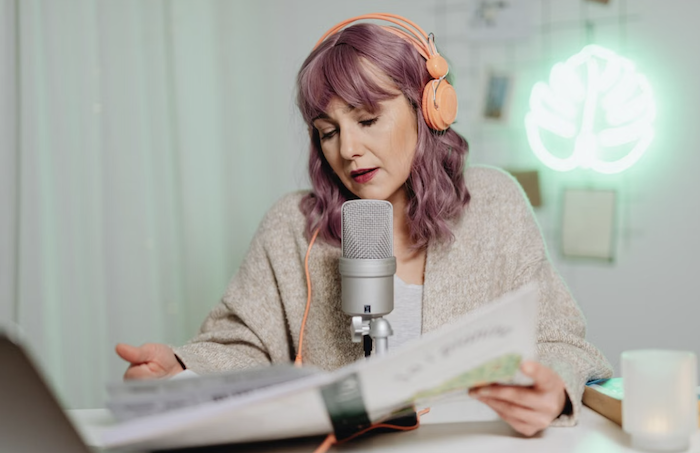
A technically spotless line still fails when delivered at the wrong emotional temperature. Audiences follow continuity of performance, not signal quality alone. Effective voice casting must therefore match the original actor’s breath pattern, vocal age, regional placement, and emotional momentum, rather than merely matching vocal timbre.
Where Indie Productions Actually Find Talent
Some productions post to open boards such as Casting Call Club, some use agency rosters and vetted voice over services, and some return to actors they have already directed. Each route provides a different level of filtering.
An open board produces a large audition pool and often attracts enthusiastic performers, although the casting director may encounter inconsistent recordings. A voice talent agency or curated demo reel narrows the field to performers who can interpret timing notes, follow direction, and deliver usable files.
A practical audition brief identifies the character, the emotional state of the specific line, the reference accent, and the required file format. Sending only the script can encourage choices that sound impressive alone but do not connect with the photographed performance.
What Dialogue Work Costs on an Indie Budget
Short dialogue jobs are not priced by running time alone. A session minimum establishes the floor because the voice actor must prepare, configure the recording chain, connect with the director, record, label, and deliver the material. Indie rate guides commonly price directed character work by the hour or session, while non-broadcast narration may be quoted by word count.
The VA Indie Rate Guide also separates recording fees from usage rights. Festival exhibition, streaming, and broadcast use can require different permissions, while a buyout should identify the covered uses and territories. Accordingly, those rights belong in the initial budget rather than in negotiations after picture lock.
Synthetic and cloned voices can support temporary tracks and indistinct crowd fill. However, they do not sustain a character’s changing emotional state across a scene as reliably as a directed performance.
Dubbing, Accents, and Casting for New Territories
Dubbing is a recasting process, not a literal translation exercise. An adapted line must preserve meaning while fitting the visible mouth timing, pauses, and physical energy of the original performance. This often requires rewriting for syllable count and cadence rather than selecting the closest dictionary equivalent.
Accents and localization also shape whether a dub feels native to its intended audience. Generic European Spanish can sound imported to Latin American listeners, just as an imprecise regional accent can distract audiences within an English-language market. Accent authenticity is therefore a voice casting decision. Hiring a voice actor from the relevant region is more dependable than maintaining a coached approximation throughout a film.
Multilingual voice talent can preserve a character’s vocal qualities across language versions, reducing abrupt changes between festival and international distribution deliverables. Even so, each language needs separate direction because the same emotion may require a different rhythm.
An indie filmmaker should lock the original dialogue edit before commissioning a dub. Otherwise, each later script change multiplies across adaptation, performance timing, recording, and editing.
Running Remote ADR Sessions That Survive the Mix
Remote recording still requires close direction. Before the first take, the director should explain the scene context, emotional intention, and transitions surrounding the line. The performer can then play the production take through headphones while the director monitors the return feed and gives timing notes against the picture.
Home-Studio Standards and File Delivery Specs
The recording brief should specify a treated space without audible HVAC, traffic, or hard reflections. The voice actor should also maintain the same microphone, position, and mouth-to-mic distance across sessions. A low noise floor matters because aggressive noise reduction can thin the voice and introduce artifacts during editing and mixing.
Delivery requirements should be equally clear:
- Match the project’s sample rate and bit depth.
- Supply WAV files rather than compressed audio.
- Record dry, without EQ, compression, reverb, or noise processing.
- Retain every take, and label files by scene, line number, and take.
- Include a short room sample from the recording space.
During ADR, the performer should hear the original line privately while watching the cue. Matching timing during the session produces a stronger result than stretching words later in a digital audio workstation (DAW).
Matching Room Tone, EQ, and Reverb
Broadcast-quality audio can still sound pasted onto a scene. Production dialogue contains room tone, microphone coloration, distance, and reflections. A dry replacement contains none of those characteristics until the mixer rebuilds them.
Room tone from the location should continue beneath the replacement line. EQ can then match the ADR to the production microphone, while reverb should reflect the visible space. A tiled corridor, furnished bedroom, and open field each place a voice differently.
Dialogue-to-score balance can also expose replaced lines because ADR lacks the natural ambience and bleed of production speech. Careful automation, room tone, EQ, and spatial matching allow the dialogue recording to occupy the scene instead of hovering over it.
What Better Dialogue Actually Buys an Indie Film
Better dialogue gives an independent film believable continuity. The voice, room, picture, and performance appear to belong to the same moment, and audiences can remain focused on the character rather than the mechanics of the soundtrack.
That continuity begins when crews flag ADR while actors remain available, cast for performance fit, budget usage rights alongside recording costs, and preserve enough post-production time to integrate each line. Ultimately, ADR and dubbing succeed when the audience continues to believe the voice belongs on screen.