I think that most reasonable people have had enough of the pearl-clutching, the sanctimonious purists, and the terrified gatekeepers pretending they’re defending the sanctity of this thing or that. Politics, culture, and the arts used to be at least up for debate, but now we find ourselves having to fight just to keep ourselves from being consumed by the dogma of those who will feign morality to maximize their place in the market, at our expense. Outside of people getting shot for their politics, nothing reflects this more than the entry of AI into the entertainment economy, and let’s be perfectly clear: the furious anti-AI backlash isn’t about artistic integrity, it’s about market control, intellectual cowardice, and the stubborn defense of inevitably obsolete capital barriers. This is no longer a creative debate; it’s a temper tantrum from people who just realized their stronghold on production has been shattered.
I am a creator and have been for several decades. Not only can I draw, paint, sculpt, and create practical and visual effects, but I’ve also worked as an art teacher and have created many tutorials on my YouTube channel over the years, so the argument that I would use AI because I have no talent is a fraudulent one. I know what creativity is, and I know where it comes from. It’s not a secret handshake reserved for a special few; it’s the beautiful, sometimes painful, result of human ingenuity grappling with the tools at hand. And when I look at generative AI, I don’t see a monster; I see yet another tool of liberation for me and others to extend ourselves through.
“When I look at generative AI, I don’t see a monster; I see yet another tool of liberation for me and others to extend ourselves through.”
The idea that you need to be financially wealthy or institutionally approved, employing hundreds of people, over extended periods of time to realize a complex artistic vision was and remains a lie. That was the original, poisonous barrier to entry that made me want to get out of the old system in the first place. AI now lets me achieve the complexity and scale that previously demanded a hundred thousand dollars in software licenses, staff, and overhead. It turns a single independent creator into a small studio, shattering the economic necessity of begging for corporate and union approval. My embrace of AI isn’t a surrender to technology; it’s a manifesto of self-determination, and they just can’t stand it. It eats them up to see that we don’t need them anymore.
The real tell is who is leading the charge against it. It’s the same established players, the giant content monopolists, stars whose light is fading, and bureaucrats, who are screaming the loudest about “stealing” and “ethics.” Their goal is not to protect the individual artist; they are trying to raise the financial barrier to entry to dizzying new heights. Their “ethical” campaign is a cynical, anti-competitive market play designed to cripple the independent creators who are using this technology to bypass them entirely. They are trying to legislate the future to look exactly like their comfortable past.
The Deliberate Fraud of the “Stolen Library”
Let’s address the most potent and willfully perpetuated lie: the claim that AI is “stealing” art because it’s somehow copying and patching together images from a secret, stolen library. This is a technical fiction they cling to because it’s the only way to sustain their moral outrage. It is demonstrably false. Generative AI models do not store and reproduce images like a copy machine. There isn’t a computer or server farm in the world that could store enough files to accomplish that, if they did. They train on data to learn the relationship between concepts, colors, and compositions, then produce a new work from whole cloth based on that learned understanding.
In fact, the simple camera, which mechanically captures an exact, literal reproduction of reality from one vantage point, is a far greater “copying” device than any AI model. Yet, the camera was deemed legitimate. This brings us back to the Photography Fallacy. In the 1830s, critics called the camera mechanical and soulless. Now, they ignore the fundamental technical difference between a literal copy (photography) and a learned output (AI) so they can maintain their panicked stance.
“This is not a mistake; it is a campaign of willful intellectual dishonesty.”
This is not a mistake; it is a campaign of willful intellectual dishonesty. They are diligent in poisoning the well by spreading disinformation and engaging in a constant lie by omission. They ignore the technical reality and every lesson from history because it is tactically useful for them to maintain a posture of moral superiority. They use motivated reasoning, finding “evidence” only to bolster their predetermined conclusion: that their old way must be preserved at any cost.
The purists aren’t defending creativity; they’re trying to dictate it. Their inability to see how a truly creative person can blend AI with traditional techniques is the ultimate proof of their own cognitive rigidity and lack of imaginative capacity. They want to turn copyright law, which was designed to promote the progress of science and useful arts, into a prescriptive, regressive tool to stall progress and protect obsolete job roles.
I refuse to ask permission to create. I refuse to let people who demonstrate such a limited vision of art dictate the utility of my tools. The age of the gatekeeper is over. The monopolists’ power is dissolving, and we are now standing on the new ground they failed to secure.
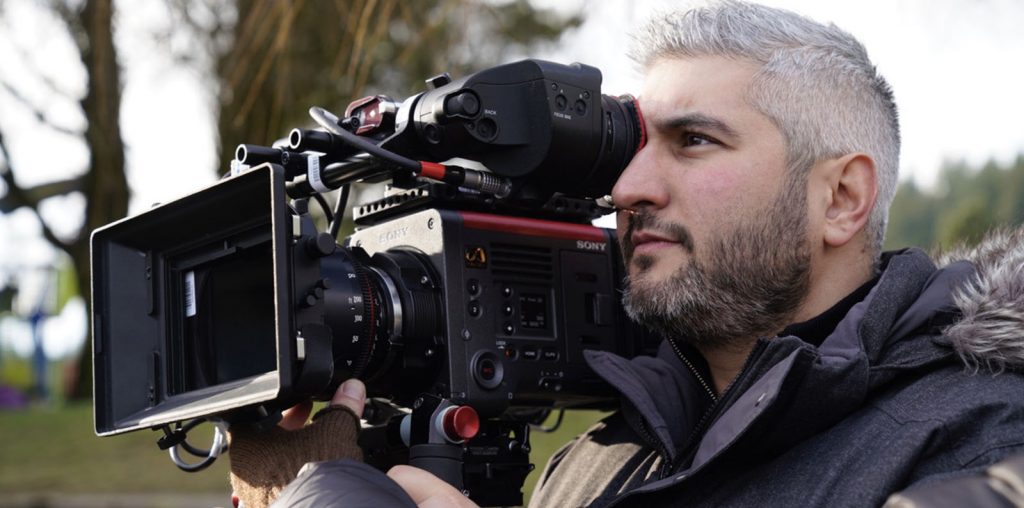
Christopher Moonlight is an animator, special effects artist, and the director of the ‘Award This’ winning movie, The Quantum Terror. His upcoming animated sci-fi adventure, Escape From Planet Omega-12, combines traditional film-making special effects with AI to create something never seen before in independent film. You can follow the behind-the-scenes, including tutorials, tips, and tricks, on his YouTube Channel and Substack.