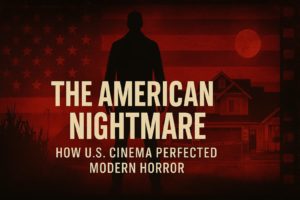
No other film genre has traced the emotional map of a nation quite like horror. Since the early 20th century, American cinema has used fear to probe the country’s collective psyche. Every generation finds its reflection in the monsters it creates—from the gothic shadows of the 1930s to the sleek, psychological terrors of today. What began as pulp entertainment has become one of the most revealing art forms in modern storytelling.
When streaming became the dominant way people watched films, horror adapted faster than any other genre. The same tension that once held audiences in darkened theatres now grips them on handheld screens. For those curious about what defines contemporary fright, the Best Horror Movies on Netflix feature, as highlighted by MAXMAG, showcases how the genre’s classic atmosphere survives within a new digital ecosystem. It proves that even as technology evolves, the primal thrill of fear never loses its appeal.
The entertainment magazine Variety captures this transformation in its round-up of the best horror films of the last two decades, pointing to a creative resurgence that blends old craft with new perspectives. What links these modern works isn’t their gore or shock value but their intelligence. Today’s filmmakers treat horror not just as a vehicle for scares but as a lens through which to examine social and psychological unrest.
The origins of unease
American horror’s foundations lie in the fusion of folklore, religion, and anxiety about progress. In the silent era, directors borrowed visual cues from German expressionism but added a uniquely American realism. When Dracula and Frankenstein premiered in the 1930s, they were as much about scientific overreach and fear of the unknown as about fangs and lightning. By the 1960s, Alfred Hitchcock’s Psycho redefined terror by moving it into the everyday. The monster was no longer supernatural—it was human, repressed, and polite.
This shift changed everything. Instead of distant castles or mythic curses, horror now unfolded in diners, motels, and suburban homes. The realisation that terror could wear an ordinary face was a cultural turning point, one that mirrored growing mistrust in authority and comfort.
The home becomes haunted
The 1970s and early 1980s marked a golden age of American horror. Films such as The Exorcist, Halloween, and The Texas Chain Saw Massacre transformed fear into social commentary. They tapped into anxieties about religion, gender, and the fragility of family life. Each film carried the weight of the times: post-Vietnam disillusionment, economic stagnation, and the slow decay of suburban dreams.
By the 1990s, the genre became self-aware. Scream dissected the clichés it had inherited, turning audience familiarity into tension. This irony re-energised horror, allowing it to speak both to fans and sceptics. The monster was now meta—a reflection of horror itself.
After the millennium
The 2000s saw an evolution in tone rather than formula. Horror matured. Films like The Others, The Descent, and 28 Weeks Later replaced relentless violence with psychological complexity. Later, directors such as Jordan Peele, Ari Aster, and Robert Eggers elevated the genre further, weaving cultural critique into every frame. In Get Out, the real villain wasn’t supernatural but systemic. In Hereditary, grief became the haunting. These films used fear as metaphor, not as gimmick.
Streaming platforms played a vital role in this shift. They gave independent filmmakers visibility that the studio system rarely allowed. Budgets shrank, but creative freedom expanded. The best modern horrors are intimate and patient, prioritising unease over spectacle. Their success proves that audiences crave intelligence as much as adrenaline.

Craft and conscience
What makes American horror endure isn’t just its inventiveness but its craftsmanship. The genre thrives on precision. The camera doesn’t simply observe; it manipulates perception. The soundtrack doesn’t underscore; it deceives. Filmmakers understand that fear is rhythm—a heartbeat that can speed up or slow down depending on the cut.
Beyond aesthetics, horror remains one of the few cinematic spaces where moral questions are unavoidable. Every scream forces viewers to confront complicity, empathy, or disbelief. That’s why even critics who dismiss other genres recognise horror’s philosophical weight. It engages with death, guilt, and power—the raw materials of storytelling itself.
Global influence and reflection
American horror no longer stands alone. The rise of South Korean, Mexican, and European auteurs has diversified the genre’s voice, yet much of their language still traces back to Hollywood’s template. The American nightmare has become global shorthand for the human condition: ambition meeting consequence, curiosity meeting chaos.
Ironically, competition has revitalised the U.S. scene. Cross-cultural influences now push filmmakers to innovate. The result is a genre more inclusive, layered, and introspective than ever before.
Conclusion
If horror once lurked in the shadows of respectability, American cinema brought it into the light and taught it to speak. From black-and-white spectres to streaming-age allegories, the genre continues to hold a mirror to its audience. It asks uncomfortable questions and rewards those brave enough to answer them.
The American nightmare persists because it feels real. It thrives in reflection—in the glow of a laptop screen, in the hush of a cinema, in the uneasy recognition that the monster might be us after all.