The 64th New York Film Festival has come to an end, and it was a banner year, packed with exciting world premieres, star-studded Q&As, and ecstatic audiences. I packed 66 films into my 16 days at the festival, and there was barely a miss, which makes choosing the best 12 a daunting task, but I’ve painstakingly managed to narrow it down. While there were some fantastic short films and thrilling revivals like the restoration of Ken Russell’s The Devils, which was maybe the most fun I’ve had in a movie theater all year, this list is specifically focused on new, feature-length films.
You Can See Everything—Directed by Nathan Fielder and Lance Oppenheim
A surprise late addition, Fielder and Oppenheim’s blockbuster collaboration was certainly the buzziest film at the festival, and for good reason. This nearly 3-hour epic about disgraced Theranos founder Elizabeth Holmes wasn’t just one of the best of the festival; it’s one of the best documentaries of the century. You’ll see a lot of hyperbole about this film online, and it’s all warranted. Fielder admitted that he never planned to be in front of the camera for this one, but Holmes’ pull was too strong to resist as production rolled on. The result is not only an intimate portrait of Holmes’ final days before prison, but a deconstruction of the very tenets of documentary storytelling that’ll leave you questioning subject, truth, intention, and more. Get to the theaters quickly, because this is sure to be one of the most talked-about films of the year, and you’ll want to go in as spoiler-free as possible.
In Theaters Now
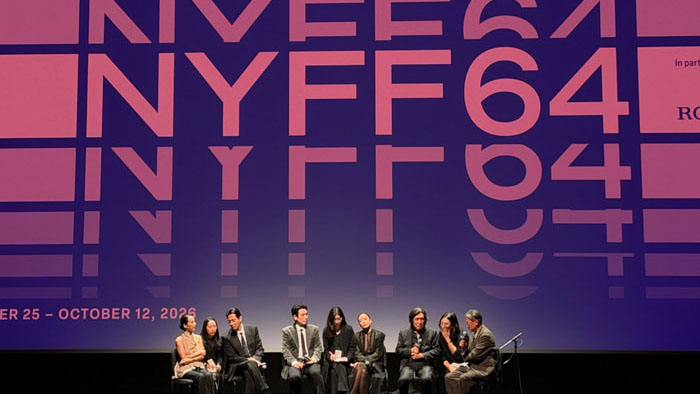
The Possible Love team sits on stage for a Q&A beneath the NYFF64 logo at the New York Film Festival.
Possible Love—Written and Directed by Lee Chang-dong
Never doubt a master like Lee Chang-dong. All of the hype from Venice and Toronto was certainly deserved. Inspired by a real labor dispute in Korea, the film follows two couples on opposite ends of the class spectrum. On one side, a man is laid off following a strike and violent conflict. On the other, a wealthy documentarian tells the story of that strike while essentially role-playing as a member of the working class. Lee’s naturalistic approach sucks you into his world as if he’s letting you in on a secret. You feel the pain, the tension, and the shame of a man’s world turned upside down as Lee explores the lasting impact of class struggle and the bravery in the fight for identity. Jeon Do-yeon delivers one of the best performances of the year in this profound, reflective visual poem that will leave you with a glimmer of hope for the future.
In Theaters October 23, Streaming on Netflix November 6
Tender Loving Care—Written and Directed by Mike Leigh
Mike Leigh has done it again, maybe for the final time. In what could be his last statement to the world, he asks: where has our empathy gone? It has all the hallmarks we’ve come to love about Leigh—improvised character development, wry British humor, and a story that focuses on real people with real problems. This one centers on two empathetic social workers in an increasingly cold world, flourishing into a poignant family drama reflecting on the power of human connection. It features a quartet of wonderful performances from Kate O’Flynn, Marion Bailey, Paul Jesson, and Alice Bailey Johnson that each deserve their fair share of flowers. It’s the work of these four actors together that really packs the emotional punch. It’s also a heartwarming tribute to Leigh’s work itself as he assembles an ensemble of his frequent collaborators one last time, going out with the bang this legendary filmmaker deserves.
In Theaters December 4
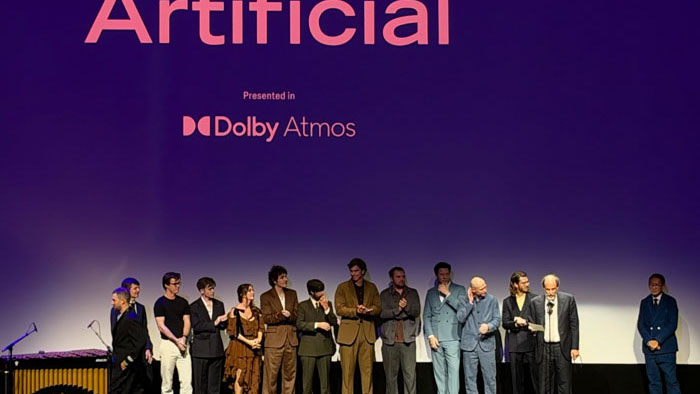
The cast and filmmakers of Artificial line up on stage beneath the title screen at the 64th New York Film Festival.
Artificial—Directed by Luca Guadagnino
A film that feels as relevant as The Social Network did upon its release in 2010, Artificial tells the origin story of OpenAI and the rise of AI technology. It’s not the film I expected it to be, never holding back in its searing criticism of Sam Altman and his cronies who have chosen profits over the safety of their users. It infuses horror and dark comedy into this corporate biopic, underscoring the seriousness of the moment we’re in. But the real highlight is its performances. Andrew Garfield transforms into Altman with pinpoint accuracy, revealing the sinister cracks behind the PR-trained facade. Yura Borisov is brilliant as Ilya Sutskever, not only the brains behind the operation but the moral core of the film. But it’s clear who writer Simon Rich and Guadagnino hate most: Elon Musk. Ike Barinholtz turns him into a caricature, the butt of a lot of the film’s jokes. It’s a movie for the moment, sailing out of the festival as a surprise juggernaut this awards season.
In Theaters December 25
All of a Sudden—Co-Written and Directed by Ryusuke Hamaguchi
I never imagined Hamaguchi could come close to topping his brilliant 2021 feature Drive My Car, but All of a Sudden does. The film centers on a budding friendship between a nursing home director and a theater artist that quickly develops into something special. The chemistry between Virginie Efira and Tao Okamoto is instant. It’s easy to see why the two were jointly awarded the acting prize at Cannes. The two are so intrinsically intertwined that it would be impossible to separate them; without one, the other feels incomplete. The film brazenly acknowledges the factors poisoning our society. Most prominently, it centers the prioritization of capital over people, even taking the time to literally diagram capitalism’s fatal flaws. But above all else, it illustrates that life is too good to waste, celebrating the power of connection, empathy, understanding, and compassion as a means of survival. Make sure to pack tissues when you head to the theater for this one.
In Theaters November 25
Once Upon a Time in Harlem—Directed by William and David Greaves
In August of 1972, iconic documentary filmmaker William Greaves invited the living legends that powered the Harlem Renaissance to Duke Ellington’s apartment, and he began recording. The result is an excellent time capsule preserving the minds that helped shape Greaves’ own work as well as the work of generations of other artists and thinkers. Eubie Blake and Noble Sissle, Arna Bontemps, James VanDerZee, Leigh Whipper, and scene stealer Richard Bruce Nugent—the film is packed with some of the greatest artists of the 20th century. But Greaves makes it clear that it wasn’t just about the art. The Renaissance was just as much about politics. It was about Marcus Garvey, Hubert Harrison, and the socialist movement centered around community meetings debating the best paths forward. You don’t get one without the other. William’s son David has resurrected this film at the perfect time, providing a blueprint for what a successful society needs to thrive. As we become more and more divided, it acts as a shining reminder of how great we can be. If we take the time to understand where we’ve come from, a much brighter future awaits.
In Theaters Now
Dao—Written and Directed by Alain Gomis
Watching a film can often feel voyeuristic, especially when it’s about an intimate family moment or a culture we know nothing about. But by blending traditional narrative storytelling with documentary-like interviews with family members and non-professional actors, Gomis creates a permission structure that invites us deep inside his world. Recreating two of Gomis’ recent life events—a family funeral in a small village in Guinea-Bissau and the same family’s wedding in France—he underscores how deeply connected these cultures are despite their distance. We’re fully immersed both in the joy and grief of each moment, feeling like a member of the family throughout the course of this sprawling epic. Gomis has wielded the art of cinema to do something truly impressive, pushing against the boundaries of traditional filmmaking. You leave the film as enriched as you would be from a month-long trip to another country, learning about customs and traditions while also being emotionally walloped by the humanity of it all. It’s bold, imaginative, and an important reminder of what cinema is capable of.
Release date TBA
Red Rocks—Written and Directed by Bruno Dumont
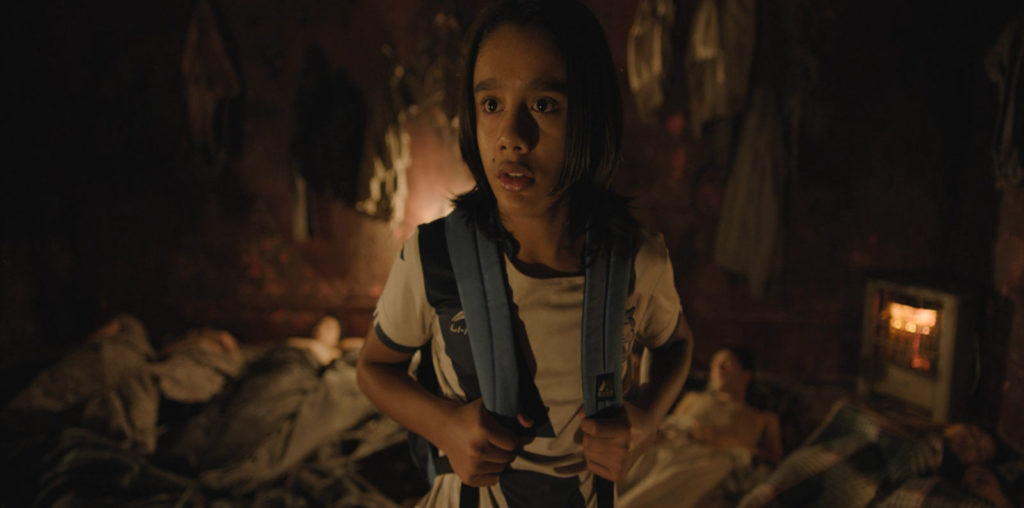
Imagine a tense drama pitting two biker gangs against each other as its two leaders battle over the affections of a woman. Now imagine that all the characters are around six years old and their bikes are actually just the battery-powered four-wheelers we all had as kids. That’s what you’re getting with Bruno Dumont’s Red Rocks. Sitting somewhere between documentary and fiction with a cast of non-professional actors—literally just a bunch of kids being kids—this film is able to channel an authenticity rarely seen with children on screen. It’s less a coming-of-age story than it is a rare glimpse into the complexity of a child’s inner world. We’ve all gone through childhood, yet it feels at arm’s length, hard to pull ourselves back into a realm yet to be corrupted by the influences of the outside world. It’s charming, funny, surprising, tense, and subtle—an impressive achievement from Dumont and quite unlike any film I’ve seen before.
A Day in the Life of Jo: Chapter Phaedra—Written and Directed by Jacqueline Lentzou
This film roared into the festival with a ton of buzz, fresh off its reception in Venice. It’s a stylish and inventive coming-of-age story about a disconnected young girl drifting through high school… until it isn’t. A subversive twist flips everything on its head, evolving into something much more poignant and provocative, capturing the very essence and transcendental nature of humanity itself. I won’t say much else, because you should go into this as blindly as possible, but Lentzou deserves heaps of credit for how she effectively wields the craft, from her vivid visual approach to the immersive sound design. It’s refreshing to see a young director take such a big swing. She’s definitely a filmmaker to keep an eye on.
Anticipated release in 2027
Diary of a Chambermaid—Written and Directed by Radu Jude
If you’re looking for great satire but Digger didn’t scratch the itch, look no further than Jude’s latest project. It brings satire to the screen with a nuance and emotional depth that Iñárritu couldn’t dream of. Ana Dumitrașcu gives a phenomenal performance as a Romanian woman working as a maid for a wealthy family in France while acting in a production of Diary of a Chambermaid, based on Octave Mirbeau’s 1900 novel. As the holidays approach, she counts down the days until she can return to Romania to be with her daughter, but a family accident keeps her in France longer than expected. It may not have the absurd touches we’ve come to expect from Jude, but the film feels richer and more resonant because of it. There are even moments that unfold rather poetically, signaling a lighter touch from the typically heavy-handed director. Thanks to his restraint, Jude is able to pack so much empathy into each frame. He’s really found a new gear here, showing he’s more than just his searing wit—there’s a heart behind all that irony.
Release date TBA
The Debut—Written and Directed by Jesse Eisenberg
This film is tailor-made for a New York audience, and it absolutely brought the house down at the festival. Set inside the world of a New Jersey community theater, it follows an adrift housewife as she’s cast as the lead in a musical production despite having no experience. She’s met by a ruthless, eccentric theater director who opens up her world to the possibilities that come with embodying a character. The real star of the show is Julianne Moore, who delivers a performance worthy of another Oscar. She’s both hilarious and incredibly moving, pulling out surprise after surprise as the film rolls along, even earning a mid-movie ovation for a rousing monologue she delivers alongside Paul Giamatti, who is also phenomenal. The musical theater community is a great setting for this film, acting as a proxy for the passions that make us feel whole. For Eisenberg, it was his local New Jersey community theater that helped him find himself, and this film serves as a beautiful tribute to that journey. We’re lucky he discovered theater all those years ago because he’s blossoming into a heck of a filmmaker, getting better and better with each effort.
In Theaters December 11
I Deserve a Lover Whose Every Rise Sets Fiery Dooms Raging Across the Skies—Directed by Mani Haghighi
Don’t let the length of the title scare you away; Haghighi’s exceptional new 76-minute documentary brings us inside the lives of Nasser Bakhshi and Roghayeh Najdi, two artists based in Tabriz, Iran. Some might call them hoarders; they call themselves archivists, but they’re really activists, preserving the memories of a country that has historically had its memories erased, either by American aggression or government censorship. The film is colorful, inventive, surreal, and packed with moments you’ve never seen on screen before, especially in a documentary. Haghighi’s images are striking and provocative, somehow able to create a visual language to help bring Bakhshi and Najdi’s eccentric world to life. There’s a story in every piece of paper, photograph, discarded painting, or pile of dirt the two collect, and the film serves to both amplify the work of the artists and honor the people behind those stories. And just like those stories, this film is a hidden gem that deserves to be both uncovered and celebrated.
Release date TBA
The films of this year’s New York Film Festival broadly examined what it means to be human. They celebrated life’s highs, they mourned its lows, and they called for empathy and connection above all else. I left the festival feeling invigorated, having spent two weeks laughing, gasping, crying, and reveling alongside so many other film lovers. Despite the state of the world, the festival represents the best humanity has to offer—artists using their craft to open hearts and change minds, and audiences roaring in appreciation. I’m already counting down the days until next year.