In June 2016, Duncan Jones’s Warcraft opened in American theaters to brutal reviews and a soft $24 million weekend. Days earlier, it had opened in China and broken records. A decade on, the film is mostly remembered as a punchline or a cautionary tale, while the game it was built to sell is bigger and stranger than ever.
Blizzard is marking the anniversary, intentionally or not, with World of Warcraft: Forever, a new permanent version of the 2004 game that launches on November 4, 2026. That makes this a good moment to ask what went wrong with the movie, what went right, and why it deserves another look.
The Director Who Took Orcs Seriously
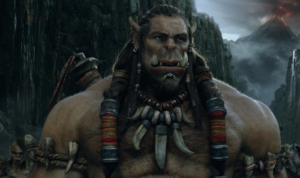
Jones came to Warcraft from Moon and Source Code, two small, clever science-fiction films, and spent about three years on the adaptation. His big swing was sympathy. The film splits its time between humans and orcs, and the orc chieftain Durotan, played by Toby Kebbell through performance capture, gets the richest arc in the movie.
Kebbell, fresh off playing Koba in Dawn of the Planet of the Apes, gives Durotan real weight, and ILM’s digital orcs still hold up. So does the film’s refusal to wink at its material. Nobody jokes about wizards. Characters discuss portals and fel magic with total sincerity. Jones clearly loved this world, and the result plays like a letter written to people who already speak its language.
Why America Shrugged
That language was also the problem. Warcraft drops viewers into a crowded cast, rival factions and a lot of lore with very little hand-holding. Critics were merciless, and the June 10 US release opened to $24.4 million, a disaster for a film that cost around $160 million before marketing.
Timing didn’t help. It opened in second place behind The Conjuring 2, in a summer stuffed with tentpoles. Neither did the mood around video-game movies, which in 2016 were still treated as a guaranteed embarrassment. The film ended up too faithful for newcomers and too compressed for fans, who could feel how much story had been squeezed into two hours.
Why China Didn’t
In China, Warcraft was an event. The game had been huge there for over a decade, and the film was backed by Legendary, recently bought by Dalian Wanda, alongside Tencent, China Film Group and Huayi. It opened to $46 million on its first day, a midweek record, and took $156 million in five days, ahead of Furious 7‘s pace.
By mid-July, China accounted for about $220.8 million of a roughly $430 million worldwide gross, and 89 percent of the total came from outside North America. Even that wasn’t enough. Foreign studios keep only about 25 percent of Chinese ticket sales, so the film still lost money. But it proved a point Hollywood took years to absorb: a game adaptation can draw a mass audience when it plays to people who already care.
The Game Kept Going Without It
The sequel that the film’s ending set up never came. The game didn’t need it. Since 2016, World of Warcraft has shipped expansion after expansion, from Legion, released just months after the movie, to the current Midnight, which is still adding content in 2026. Blizzard also learned to sell nostalgia, relaunching the 2004 game as WoW Classic in 2019.
World of Warcraft: Forever is the next step. Announced at BlizzCon in September, it treats the game’s first year as a permanent foundation and builds on top of it: four new zones including Mount Hyjal, more than 1,000 quests, nine dungeons, two raids, a new Skyborne race and a level cap fixed at 60. It comes with a standard subscription. For anyone who left the 2016 film curious about Azeroth, WoW Forever leveling may be the best way in: the same slow climb to 60 that made the game a phenomenon in 2004, now running through zones nobody has explored yet. The Azeroth the 2016 film was drawn from is getting a second life. The film is still waiting for one.

A Better Movie Than Its Reputation
The last ten years have been kind to Warcraft in one specific way: the world caught up with it. The Super Mario Bros. Movie, The Last of Us and Fallout showed that game adaptations can win over audiences and critics alike, and they did it partly by trusting their source material. That was Jones’s instinct all along. His mistake was never sincerity. It was assuming the audience already shared it.
Watched today, Warcraft is a flawed, overstuffed and often gorgeous fantasy film with one genuinely great performance at its center. It’s worth revisiting this fall, ideally before November 4, when a lot of people will be logging back into the Azeroth it tried to put on screen.