
It also explains why many viewers found its pacing unusual. They expected a relentless action picture, while the filmmakers were attempting something closer to a space western or a character study. The narrative is driven not by escalating spectacle but by conversations. Ironically, the film’s greatest weakness comes from the same source as its greatest strength.
Tom King’s Woman of Tomorrow is among the finest Superman world comics of the last decade because it tells Kara’s story indirectly. The reader experiences her through the eyes of Ruthye Marye Knoll, a young girl pursuing Krem of the Yellow Hills after he murders her father. Ruthye slowly discovers that beneath Kara’s immense strength lies a person still struggling with profound loss. Distance becomes part of the comic’s emotional design. Film operates differently.
The adaptation occasionally allows Kara to drift away from the dramatic centre of her own story. During parts of the third act, other characters receive the emotional speeches and narrative focus that might have belonged to her. The issue is not that there is too little action. The problem is that there are too few moments in which Kara actively defines the story through her own choices.
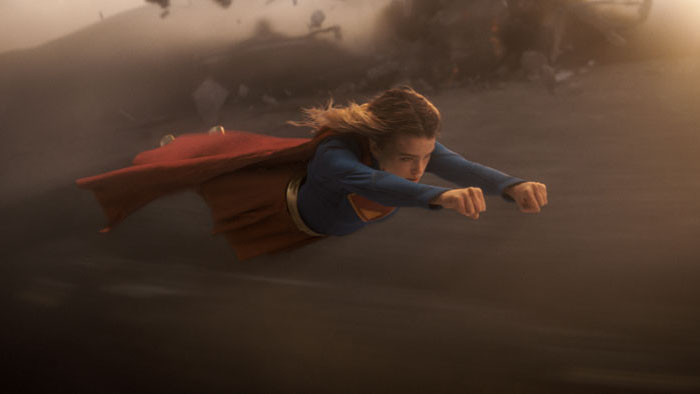
Milly Alcock portrays Kara not as a female version of Superman; she presents someone carrying the emotional weight of survival. There is impatience in her performance; flashes of recklessness and earthiness of a worn voice. Her different physical appearance from her predecessors adds to this ever-present quality of a confused person seeking relief from inner pain and confusion.
That emotional complexity separates Alcock’s interpretation from many previous screen superheroes. She is neither the relentlessly optimistic symbol of hope nor the brooding anti-hero who mistakes cynicism for maturity. Instead, she plays a young woman who has lived long enough to understand that extraordinary power cannot erase grief. It is an unusually restrained performance for a genre that often rewards speeches over silence.
“I would rather watch a superhero film reach for emotional truth and occasionally stumble than another technically efficient spectacle that mistakes destruction for drama.”
Eve Ridley’s Ruthye is equally important. She is not merely a sidekick or a plot device but the moral engine of the story. Her desire to avenge her murdered father continually forces Kara to confront difficult questions about justice, vengeance, and responsibility. While the screenplay occasionally gives Ruthye too much narrative space, Ridley herself is never the problem. She provides the emotional counterweight that prevents Kara’s journey from becoming simply another exercise in superhero violence.
Matthias Schoenaerts’ Krem also benefits from the film’s refusal to simplify morality. He is more than another obstacle waiting to be punched through a wall. He embodies violence stripped of heroism or ideology. His cruelty is personal rather than cosmic, which fits the film’s smaller emotional scale. By making Krem a recognizably human monster instead of an abstract world-ending threat, the story reinforces its central belief that individual suffering matters.
The quieter rhythms of Supergirl have been mistaken by some critics for a lack of momentum. In truth, the film is asking audiences to pay attention to different kinds of action. Emotional decisions matter as much as physical confrontations. Heroism here is measured not only by strength but by empathy.
That does not mean the film escapes criticism. The third act remains its weakest section. Dialogue occasionally replaces dramatic movement, and Kara’s presence diminishes just when it should become most commanding.