
Gambling has long been a subject of fascination for filmmakers. The combination of strategy, chance, and high-stakes decisions makes for compelling storytelling. Whether it’s poker, blackjack, or slot machines, many films explore what unfolds beyond the surface-level excitement. These stories often shift focus from the games themselves to the people who play them, highlighting how decisions made in a moment can ripple into much larger consequences.
That dramatic tension often mirrors what attracts people to gambling environments in the real world. With the rise of online gaming, sweepstake-style casinos have become a notable part of that landscape, offering a distinct format where players engage through promotional credits rather than direct cash bets.
But not all platforms offer the same experience. Some have limited game selections or unclear security measures, which is why many players check the best deals on sweepscash.com before getting started.
It’s one way to find options that balance game variety, bonuses, and platform reliability without needing to sift through dozens of sites blindly. However, let’s focus on movies, the ones that bring all this tension, decision-making, and risk to the screen in unforgettable ways.

Exploring Characters Through the Gambling Lens
Film has a unique way of unpacking character development through the act of gambling. It’s not just about winning or losing money, it’s often about what a character is willing to risk, and why. Sometimes it’s portrayed as a calculated move, other times as a decision made under pressure. In either case, the table becomes a setting for personal turning points. These scenes help frame how individuals handle control, uncertainty, and opportunity.
A number of films dive into underground games, backroom poker sessions, or competitive casino environments. These settings aren’t just chosen for dramatic effect, they serve as backdrops for nuanced stories that reflect decision-making under uncertainty.
The Role of Setting and Atmosphere
Casinos, both real and fictional, often carry a distinctive atmosphere, structured yet unpredictable, open to the public yet intensely private. Films use these environments to heighten tension, drawing viewers into spaces where everything from lighting to silence influences the mood.
In Casino (1995), directed by Martin Scorsese, the floor of the Tangiers casino isn’t just a backdrop, it’s a character in itself. The overhead shots of cash counting rooms, the quick transitions between high rollers and security staff, all build a sense of control constantly under threat.
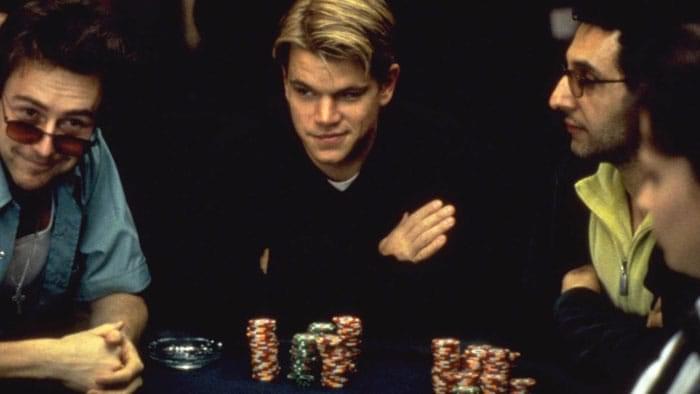
In Rounders (1998), the atmosphere is entirely different. The underground poker rooms are dim, smoky, and close, making the tension between players feel personal and immediate. The stakes aren’t only about chips on the table, they’re about debts, trust, and survival. When Matt Damon’s character faces off with Teddy KGB, the small, closed-off setting amplifies the psychological edge of the match far more than a flashy casino ever could.
Even slot machines get their cinematic moments. In The Cooler (2003), the setting is a run-down Las Vegas casino with fading lights and aging carpets. This isn’t the bright, high-energy vibe associated with modern gaming, it’s quieter, more intimate, and central to the film’s tone. The casino’s low-key ambiance reflects the emotional state of the main character, whose very presence seems to bring bad luck until his circumstances begin to shift.
Cultural and Global Perspectives
Gambling isn’t portrayed the same way in every country’s cinema. Films from different regions offer a wide spectrum of perspectives, often tied closely to local values, traditions, and societal pressures. A story about a high-stakes card game in one culture might center on personal honor and legacy, while another may lean into themes of skill, deception, or economic survival.
In South Korea, Tazza: The High Rollers (2006) presents gambling as a high-stakes subculture filled with strategy, betrayal, and family tension. The game of “Hwatu” becomes more than just cards, it’s a tool for status, revenge, and identity. The film’s tone is serious, almost operatic, emphasizing how deeply gambling can be woven into personal history and social standing.
In Japan, Kaiji: The Ultimate Gambler (2009) explores gambling in a dystopian context, turning games into brutal tests of logic, risk tolerance, and psychology. It’s not glamorized, instead, it’s used to comment on class division and desperation, where losing doesn’t just mean walking away broke but falling further into debt or danger. The games themselves are fictionalized, but the emotional stress mirrors real-life financial struggles.