Attraction and compatibility are two separate systems that happen to operate on the same two people. One is fast and involuntary, and it finishes inside a minute. The other is slow, negotiated and only measurable after months of ordinary friction. Film is unusually well suited to showing the gap, because a script can run both systems on one couple and then cut forward 5 years to display the result. 6 of them do it more plainly than the genre usually allows, and none arrives at a reassuring answer.
The Two Timelines of Blue Valentine
Derek Cianfrance built the entire structure of his 2010 film around the distinction. Scenes of courtship were shot on 16mm and scenes of the marriage collapsing were shot on RED, so the two periods look physically different on screen. He wanted to wait 6 years between the two halves of the shoot to let Ryan Gosling and Michelle Williams age into the roles. The producers gave him a month and $1 million.
The film returned $16.6 million on that budget, which is a lot of tickets for something this unpleasant to sit through. What makes it useful here is that the attraction sequences are genuinely persuasive. Dean and Cindy are charming together. Nothing in the early footage predicts the later footage, and the film refuses to plant a warning.
Cianfrance’s argument is structural. The evidence that would have predicted the ending was never available during the courtship, because that evidence only exists once two people have lived somewhere together.
Projection in 500 Days of Summer
Marc Webb made the 2009 film for $7.5 million and it took $60.7 million worldwide, most of it from audiences who understood it as a romance. Webb has described it as a coming-of-age story instead, and the film says so in its opening narration.
Tom’s attraction to Summer is powerful and almost entirely self-generated. He assembles a person out of a shared taste in music and a lift ride, then spends 500 days defending that construction against the woman standing in front of him. Summer tells him repeatedly what she wants, and he treats each statement as an obstacle rather than information.
The film’s cruelty is that Tom behaves exactly the way attraction behaves. It fills in the missing 90% of a stranger with material drawn from the observer’s own head, and it does so without asking permission. Compatibility would have required him to read the 10% he actually had.
Harry Sanborn’s Correction
Nancy Meyers made $266 million worldwide on an $80 million budget in 2003 with a premise that has aged strangely well. Harry Sanborn is 63 and has spent 40 years going out with women under 30. Marin is the one dating someone older when the film opens, and the script treats that pairing as pleasant and weightless.
The heart attack is the plot device that forces the comparison. Harry is stranded in a beach house with Marin’s mother Erica, who is his own age, and the film then does something most romantic comedies avoid. It shows the two relationships running at the same time. One is effortless and contains no conversation of any substance. The other is irritating, argumentative and produces a person Harry recognises.
Meyers puts the fault in a different place entirely. Harry had never once tested a partner against anything harder than a weekend away.
Competing Ambitions in La La Land
Damien Chazelle’s 2016 film cost $30 million and its box office profits were substantial enough to make it one of the most commercially successful originals of the decade, on the way to 14 Academy Award nominations and 6 wins.
Mia and Sebastian are extremely compatible. They share a work ethic, a sense of humour and a tolerance for each other’s obsessions, and the film never suggests otherwise. What they do not share is a geography. His career requires touring and hers requires auditions, and the incompatibility is entirely logistical.
That is the harder case, and the reason the ending works. Two people can pass every compatibility test available and still be defeated by a calendar. The final sequence shows the version where they made the other choice, and it is noticeably less interesting than the lives they actually built.
The Slow Divergence of Marriage Story
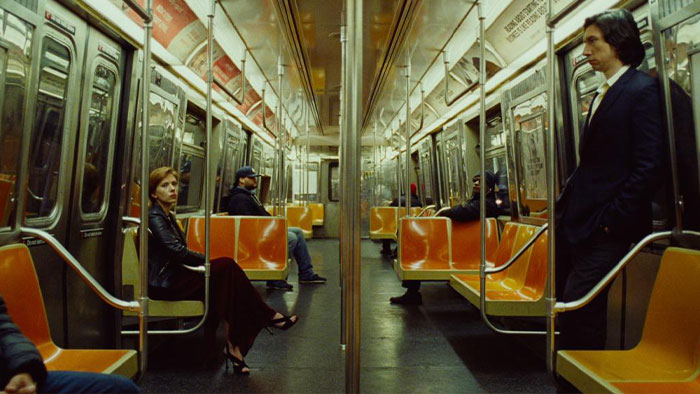
Critics treated Marriage Story as Noah Baumbach’s breakthrough after 10 features. It collected 6 Academy Award nominations and a win for Laura Dern, on a theatrical release that took $334,000 before moving to streaming, and it opens with two lists of things each spouse loves about the other.
The lists are accurate. Charlie and Nicole are compatible in almost every way the word normally means, and they still cannot remain married, because compatibility measured at one moment says very little about compatibility 8 years later when one person’s ambitions have moved and the other’s have not.
A 2020 analysis covering 43 longitudinal studies and more than 11,000 couples reached the same place from the opposite direction. The strongest predictors of how a couple fares concern how those two specific people behave together, and none of them can be measured before the couple exists. Baumbach got there without the datasets.
The Control Case in Silver Linings Playbook
David O. Russell’s 2012 film reached a box office milestone of $100 million domestically on the way to $236 million worldwide against a $21 million budget, with 8 Academy Award nominations and a Best Actress win for Jennifer Lawrence.
It belongs here because it runs the experiment in reverse. Pat and Tiffany spend a long stretch of the film finding each other abrasive and mutually inconvenient. What they have underneath that is an unusual amount of overlap in how they handle bad days, which the dance competition makes literal by forcing them to practise together for weeks.
Attraction arrives last in this film, assembled out of accumulated evidence. That ordering is rare on screen and common in life.
Compatibility on a Longer Clock
Cianfrance was right to want 6 years between his two shoots. The information needed to judge a relationship arrives after the decision has already been made, which is an awkward fact for a genre built on decisive endings and a worse one for anybody living outside a cinema. Research on the honeymoon phase points the same way, since the intensity of early love turns out to predict very little about what a couple looks like a decade on. The couples who last in these films are the ones the camera found irritating first, and the camera had to wait years to find that out.