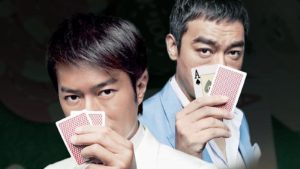
There is a certain kind of poker scene that cinema still loves. Someone sits in silence. Another player smirks. A hand trembles just enough to be noticed. Then comes the line, the stare, the read, the big reveal. It is a great film language. It gives poker a face, a rhythm, and a myth. Rounders built much of its reputation on exactly that energy, turning underground poker into a drama of nerves, instinct, and personality. It is still the film many people picture first when they think of poker on screen.
But the modern version of poker looks very different; it is less smoke-filled room and more software stack. Less soul-reading, more range analysis. This shift is precisely why the architecture of a modern online poker website matters so much today. The game’s center of gravity has shifted from cinematic tells to calculators, hand solvers, and data-heavy decision-making, and the platforms hosting that world now function as the new set where the drama unfolds. WPT Global’s own positioning leans heavily on AI detection, integrity systems, and player-matching logic, which tells you a lot about where the culture has gone.
That does not mean poker has become less dramatic. It means the drama has changed form. The old poker movie sold the fantasy that a great player could read a stranger’s soul from across the felt. The newer reality is harsher and, in its own way, stranger: a serious player is more likely to be studying ranges, probabilities, and game theory than staring into anyone’s eyes. The “poker face” of 2026 is not a stoic expression. It is a balanced strategy that gives away as little as possible.
The Hollywood myth
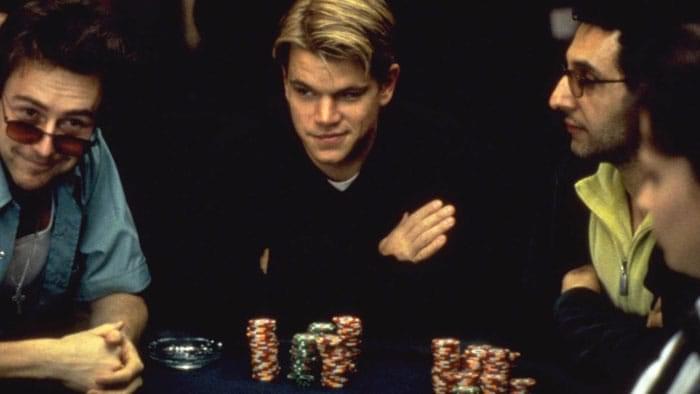
Cinema needed poker to be human-sized. That is why Rounders still works. It turns poker into a character drama. Mike McDermott is not really solving game trees on screen. He is battling ego, debt, friendship, and self-destruction. Roger Ebert even described the film as essentially a sports picture, which is exactly right. It is built around talent, pressure, setback, and one more shot at redemption.
And the old myth is useful on screen because it is so easy to understand. The player wins because he is cooler, sharper, more psychologically dangerous than the man across from him. That gives us a clean visual story. It also happens to be a pretty poor guide to what high-level poker now looks like.
That is not to say live reads do not matter at all. They still do. But the era when poker could be sold mostly as an art of instinct has faded. The players who last are not just intuitive. They are analytical. They spend time with software. They review hands. They work through probabilities. The romantic version of poker never really disappeared, but it has been pushed aside by something much colder and more precise.
Enter the algorithm
This is where modern poker culture begins to look less like a film noir and more like a math lab. The rise of calculators, solvers, and GTO thinking changed the language of the game. GTO, or Game Theory Optimal play, is not about soul-reading. It is about building strategies that are difficult to exploit, even if they are not always the most theatrical. That makes for excellent long-term poker. It also makes for much less romantic storytelling. A balanced betting range is strategically beautiful, but it is not quite as cinematic as Matt Damon staring down John Malkovich.
Still, that is the world the game now lives in. And the platforms built around it have adapted accordingly. WPT Global, for example, promotes AI-based integrity systems, bot detection, and player-matching logic as part of the product itself, not as background admin. That is a useful signal. It suggests that the modern poker environment is increasingly being framed not around glamour, but around fairness, system design, and trust at scale. That is a long way from Rounders. But it is probably closer to the truth.
The calculator as hidden protagonist
In older poker media, the hidden protagonist was usually intuition. The gifted player sensed weakness, smelled fear, or understood the room better than everyone else. In the modern game, the hidden protagonist is often the calculator. That sounds less glamorous, but it is probably more honest. Serious players now think in equities, frequencies, and ranges in a way that would have seemed impossibly dry in a 1998 screenplay. The drama is still there, but it has migrated from the face to the structure. The tension now comes from whether the player understands the spot well enough to make the right decision, not whether they can detect a twitch.
There is something quietly funny about that. Poker films spent years pretending the game was all about body language. Meanwhile, the actual game kept becoming more statistical. The bluff did not disappear. It just got absorbed into a larger system.
Gamification brings the story back
What is interesting is that modern platforms seem to understand that raw math, on its own, is not enough. That is where some of the newer digital formats get clever. WPT Global’s Poker Flips, for instance, uses two non-playable characters, the Cowboy and the Bull, to stage a much faster, more visual form of confrontation. According to the game page, players predict who will win a hand and what kinds of hands will emerge, all inside a 15-second window. It is still poker logic underneath, but the presentation is much more character-driven.
That matters because it shows the culture trying to reintroduce narrative into a game that has become increasingly mathematical. In a strange way, Poker Flips feels like an answer to the boredom problem created by perfect strategy. If pure GTO is too cold to sell as entertainment, then give the audience avatars, tension, and a visual hook. Let the Cowboy and the Bull carry some of the cinematic weight that the old poker movie once carried through human faces. This is where poker media gets interesting again. It is no longer just turning into software. It is turning into software that knows it still needs a story.
The new poker face
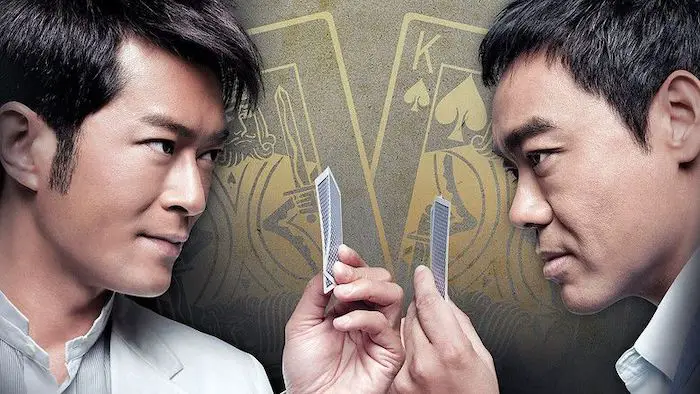
The old poker face was silence. The new poker face is structure. It is a strategy clean enough that it does not leak too much information. It is a decision tree that looks ordinary on the surface but holds together under pressure. That may not be as seductive as the old film version, but it is the real thing.
And maybe that is the actual reason poker remains compelling. The props keep changing. Back rooms become streams. Cigarette smoke becomes clean UI. The soul-read becomes the solver. But the basic attraction survives. Poker is still about pressure, uncertainty, and the effort to stay coherent when the stakes rise.
So yes, modern poker media has traded some of its bluffs for calculators. But it has not killed the drama. It has simply moved it. The old showdown happened in the eyes. The new one happens in the numbers, and then gets dressed back up in characters, pacing, and software so we still have something to watch.