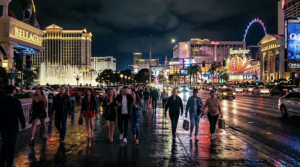
An atmospheric look at Las Vegas as one of Hollywood’s most iconic film locations. The city’s neon lights, casino energy, and surreal architecture have shaped countless movie scenes, blending glamour, chaos, and emotional intensity into a cinematic symbol of risk and reinvention.
How Las Vegas Became One of Hollywood’s Most Iconic Film Locations
Las Vegas doesn’t really behave like a normal city. That’s probably the first thing filmmakers noticed. It glows at 2 a.m. like it’s noon. It promises luck, disaster, glamour, heartbreak — sometimes all in the same night. And honestly, Hollywood loves places that already feel larger than life.
Back in the early days of American cinema, Las Vegas was still finding its identity. The casinos were growing, tourists were arriving, and the desert town was slowly turning into a symbol of excess. Directors saw potential almost immediately. Why build giant sets when a real city already looked like a movie scene? The flashing marquees, endless carpets, tuxedos at blackjack tables, exhausted tourists holding giant cocktails at sunrise — it all had texture. Real texture. Somewhere in that growing cultural mix, even phrases and brand echoes like “ワンバイベット” started to feel like part of the broader neon noise of modern gambling language, almost blending into the rhythm of the city itself.
What’s funny is that Vegas became iconic on screen partly because it felt fake. Let me explain. The city was designed to create fantasy. Paris sits next to ancient Rome; Venice floats inside air-conditioned casinos; pyramids rise from the Nevada desert like someone lost a bet with history itself. Filmmakers adore that contradiction. Vegas feels artificial, yet emotionally real. People go there to reinvent themselves for a weekend. Movies do the same thing.
And viewers? They instantly recognize it. You can show ten seconds of the Strip and audiences already know the mood. Trouble is coming. Or romance. Or a terrible decision involving poker chips and tequila.
That kind of shorthand is cinematic gold.
The Mob Years — Yeah, They Changed Everything
Truthfully, Las Vegas might never have become a Hollywood obsession without organized crime. Strange sentence, but history’s messy like that.
During the mid-20th century, mob-connected investors helped shape many of the casinos that later appeared in classic films. The city developed a reputation that mixed danger with glamour. Frank Sinatra performed there. High rollers arrived in tailored suits. Cash moved around quietly and quickly. Reporters whispered stories that sounded half true and half invented after midnight.
Hollywood couldn’t resist.
Movies started portraying Las Vegas as a place where ordinary rules dissolved. In many ways, that image stuck permanently. Even now, decades later, casino scenes often carry a little edge — a sense that someone’s hiding something behind a smile.
Films like Casino, Ocean’s Eleven, and The Hangover didn’t just use Las Vegas as a backdrop. The city became a character. A loud one. Sometimes charming, sometimes chaotic, occasionally dangerous.
Martin Scorsese’s Casino especially changed how audiences viewed Vegas on screen. The movie showed the glitter, sure, but also the machinery underneath: surveillance rooms, hidden deals, quiet violence behind expensive curtains. It reminded viewers that Vegas has always balanced spectacle with secrecy. Honestly, that tension keeps filmmakers coming back.
And here’s the interesting part — the city itself leaned into the mythology. Casinos understood that movies made Las Vegas even more attractive to tourists. People wanted to stand where famous scenes were filmed. They wanted the fantasy to spill into real life.
That relationship became mutually beneficial. Hollywood amplified Vegas; Vegas amplified Hollywood.
Not bad for a city sitting in the middle of the desert.
Why Directors Keep Returning to the Strip
You’d think filmmakers might eventually get tired of Las Vegas. Yet decade after decade, they return. Different genres, different eras, same city.
Why?
Because Vegas can become almost anything a script needs.
It can look glamorous and expensive in one scene, then lonely and slightly tragic in the next. A casino floor at 4 p.m. feels completely different from the same room at 4 a.m. That flexibility matters on camera. Directors love locations that shift emotionally without needing much explanation.
There’s also the visual side of things. Neon signs bounce color across faces. Giant fountains erupt behind conversations. Hotel interiors range from elegant to completely absurd. One hallway looks like luxury; another resembles a fever dream designed by an exhausted architect who drank six espressos.
And audiences never seem bored by it.
Part of that comes from the city’s rhythm. Vegas moves constantly. People arrive excited, overconfident, nervous, heartbroken — often all at once. You can feel that energy in films. Even quiet scenes carry background motion: slot machines chiming, distant music, elevator doors opening every few seconds.
A lot of cities look beautiful on film. Las Vegas feels alive.
That’s a huge difference.
Directors also appreciate the practical side. Large resorts can host film crews, provide varied interiors, and allow multiple shooting locations without crossing an entire city. One hotel alone might contain restaurants, bars, theaters, pools, penthouses, and gaming floors. For production teams, that’s incredibly useful.
But honestly? The emotional symbolism matters more than logistics.
Las Vegas represents risk.
Not just gambling risk — emotional risk. Characters go there to escape marriages, celebrate success, hide from problems, fall in love too quickly, spend too much money, or reinvent themselves completely. The city instantly raises stakes in a story. Audiences understand that instinctively.
A breakup in suburban Ohio feels sad. A breakup beside the Bellagio fountains somehow feels cinematic.
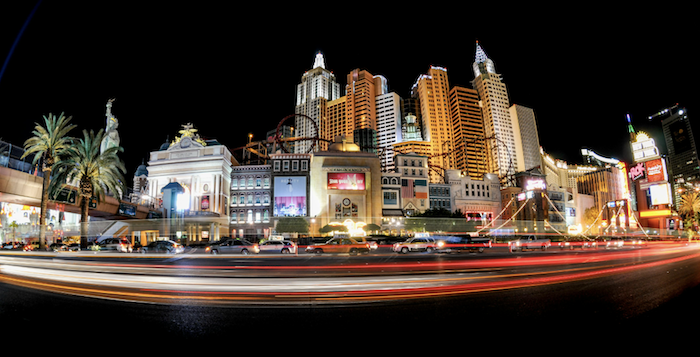
The Strange Magic of Vegas on Screen
There’s another reason Las Vegas keeps surviving cinematic trends: it adapts surprisingly well.
In the 1960s, it represented cool sophistication. In the 1990s, filmmakers leaned into crime and excess. By the 2000s, comedies transformed Vegas into a playground for chaos and bad decisions. Today, modern films often show a slightly more reflective version of the city — flashy, yes, but also aware of its own mythology.
That self-awareness matters.
Vegas understands its reputation better than almost any city on Earth. It knows people arrive expecting stories. So the city performs a little. Not in a fake way exactly; more like a magician who understands the audience wants mystery.
Hollywood responds to that energy beautifully.
And let’s be honest — viewers enjoy it too. Even people who have never visited Las Vegas feel familiar with it because movies have shaped the city’s image for generations. The fountains, poker tables, wedding chapels, rooftop parties, endless neon reflections after rain — they’ve become cultural shorthand.
There’s comfort in that familiarity. Yet there’s unpredictability too.
A Vegas scene can suddenly turn hilarious, romantic, tense, or disastrous without feeling unnatural. That emotional flexibility is rare in film locations. New York has attitude. Paris has romance. Los Angeles has ambition. Las Vegas? Vegas has possibility.
Sometimes ridiculous possibility.
And maybe that’s the real secret. Las Vegas embodies the kind of heightened reality cinema naturally gravitates toward. Movies thrive on extremes: bigger emotions, brighter lights, higher risks. Vegas already operates that way in real life, or at least something close to real life.
So filmmakers keep returning to the desert. Cameras keep capturing neon reflections at midnight. Audiences keep watching people win fortunes, lose fortunes, fall apart, start over.
Different stories. Same glowing skyline.
Honestly, at this point, Las Vegas and Hollywood are tangled together so tightly it’s hard to imagine one without the other.