
There is something endlessly enchanting about the green hills of Ireland, particularly when they are viewed through the lens of fantasy cinema. For generations, filmmakers have found themselves drawn back to the rich, misty wellspring of Celtic and Irish mythology. It is easy to see why. The ancient tales are not merely stories of whimsical creatures and hidden pots of gold; they are epic dramas filled with tragic heroes, ancient battles, and a deep reverence for the natural world. From the sorrowful beauty of the Children of Lir to the warrior exploits of Cú Chulainn, these myths carry an emotional weight that translates beautifully to the big screen.
When we watch fantasy films, we are often looking at Celtic myths in disguise. Directors have long used these legends to give their fictional worlds a sense of ancient history and weight. Consider John Boorman’s classic film Excalibur, which, whilst telling the story of King Arthur, relies heavily on Celtic mysticism, ancient stone circles, and a deep connection between the land and its ruler. On a more modern scale, Guillermo del Toro’s Hellboy II: The Golden Army draws directly from Irish folklore, featuring Prince Nuada and King Balor as leaders of the ancient, magical Tuatha Dé Danann. By filming key scenes against the dramatic backdrop of the Giant’s Causeway in Northern Ireland, the production seamlessly blends real-world geography with ancient myth.
These cinematic adaptations succeed because they understand that Celtic folklore is fundamentally about the boundary between our world and the supernatural. In these stories, the “Otherworld” is never far away; it sits just behind a veil of mist, waiting for a wanderer to take a wrong turn. Cinema captures this transition through sweeping camera movements, ethereal lighting, and dramatic orchestral scores. We are invited to step out of our ordinary lives and enter a space where ancient laws still apply, where spirits guard the forests, and where the land itself has a memory. By wrapping these old stories in the visual grandeur of modern cinema, filmmakers keep the oral traditions of the past alive, reshaping them for a global audience that still craves a sense of wonder.
Deconstructing the Hero’s Journey in Short-Form Interactive Formats
If you have ever sat through a three-hour cinematic epic, you will be well acquainted with the hero’s journey. This narrative framework, popularised by mythologist Joseph Campbell, details a protagonist who is called away from their ordinary life, faces trials in an unfamiliar world, and returns home transformed. Whilst this structure has been the backbone of traditional cinema for decades, a fascinating shift has occurred in recent years. We are no longer just passive observers watching a hero on a silver screen; instead, we are increasingly stepping into the hero’s shoes ourselves through short-form interactive formats.
This transition from spectator to active participant changes the way we experience stories. In a cinema, the hero’s journey takes hours to unfold, allowing for slow character development and grand subplots. However, in modern casual games and interactive media, this massive narrative loop is cleverly condensed into much shorter sessions. The classic stages of the journey are still entirely present; they are simply delivered at a faster pace.
When you start a brief gaming session, you are crossing the threshold into the unknown. The “Call to Adventure” is instantaneous, represented by a prompt to begin or a sudden change in the visual environment. The trials and obstacles are represented by quick challenges, puzzles, or rotating symbols that require immediate decision-making. Instead of waiting hours for a dramatic climax, you experience a series of mini-climaxes, each offering a small resolution and a sense of achievement.
This bite-sized approach to storytelling works because it respects our time whilst still satisfying our innate desire for narrative structure. We do not always have the luxury of spending a whole evening in a cinema, but we still crave that sense of progression and triumph. By shrinking the hero’s journey into a format that can be played on a train journey or during a quick break, developers have made ancient mythological structures accessible to the modern, busy individual. It shows that whether a story is told over three hours on an IMAX screen or in three minutes on a device, the fundamental human desire to overcome challenges and seek rewards remains exactly the same.
The Graphic Appeal of Modern Thematic Reels: Visual Artistry and Animation
To make these condensed narratives work, developers must rely heavily on visual storytelling. Without the luxury of long dialogue scenes or character monologues, the visual design of an interactive game has to do some incredibly heavy lifting. This is where the graphic appeal of modern thematic reels comes into play, blending classic Irish artistry with high-end animation.
The visual palette of Irish folklore is instantly recognisable. Deep emerald greens, misty mornings, weathered grey standing stones, and the bright gleam of gold coins immediately transport us to a mythical version of Ireland. Designers use these elements to establish the setting in a fraction of a second. Every symbol on a spinning reel, from the intricate curves of a Celtic knot to the mischievous wink of a leprechaun, acts as a visual shorthand for a much larger story.
Modern animation has elevated these static designs into living, breathing worlds. When a player achieves a winning combination, the screen does not just display a static number; instead, stone ruins might crack open to reveal hidden paths, rainbows might stretch across the screen in a burst of colour, or ancient runes might glow with magical energy. These animations mirror the special effects we see in fantasy cinema, creating a sense of physical weight and magical realism. By focusing on high-quality artwork and fluid movement, these interactive formats ensure that even the briefest session feels visually rich and satisfying, holding our attention in an increasingly crowded world.
Folklore Reimagined: The Interactive Storytelling of Modern Slots
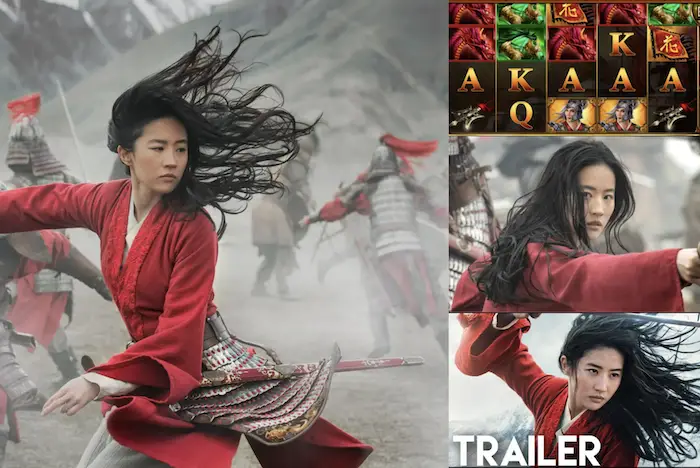
When we look at the evolution of these ancient stories, it is fascinating to see how they have found a natural home in modern entertainment. The transition from traditional cinematic myths to interactive media is beautifully illustrated in how modern online slots at Rainbow Riches Casino utilise thematic progression, visual cues, and Irish folklore to offer an active narrative experience that mirrors the hero’s journey in fantasy film.
Instead of watching a cinematic protagonist seek out a hidden treasure on a distant island, players find themselves actively participating in the search. The game features act as narrative milestones; a bonus round becomes the “road of trials,” and the ultimate goal represents the completion of the mythical quest. By combining rich graphics with the unpredictability of the spin, these platforms transform old tales into living, breathing adventures. It proves that whilst the medium of storytelling may change from a flickering cinema screen to an interactive interface, our love for the ancient myths of Ireland remains as strong as ever.
Please play responsibly. Only those aged 18 and over should participate in online gaming. Ensure you set limits to keep your entertainment fun and safe.