
Playing casino games has been a favorite pastime for decades. For many, it’s less about the outcome and more about the feeling: the atmosphere, the stakes, the excitement.
Thanks to new technologies, online platforms made that experience even more accessible. With a few taps, anyone can start playing games at any time of day. Also with the help of features like loyalty perks, live dealers, and generous promos, the best online casino sites have helped turn casual curiosity into lasting interest (if you want to learn more about these sites, check the table here).
At the same time, films about casinos have offered their own perspective. They’ve quietly explored what really goes on beneath the surface: how people think under pressure, how emotions shift with each gamble, and what risk does to the mind.
Now that casino gaming is more mainstream than ever, it’s a good time to look back at what these stories have been telling us all along.
That First Bet Feeling
There’s something about risk that just sticks with people. That moment when a bet’s in motion, and your stomach tightens because anything can happen. It’s not always about the money. Sometimes it’s just about feeling something.
In Casino Royale, when Bond is locked in that poker game, he’s not just trying to win chips. You can see it on his face: he’s calculating, reading everyone at the table, trying to stay one move ahead.
Telling Yourself You’ve Got It
Ask any serious player, and they’ll tell you: half the game is mental. It’s not just the cards you’re holding. It’s what you think they mean. And that’s where things get tricky.
In 21, Ben starts out playing it safe. Then he finds his edge, card counting, and suddenly, he sees the whole game differently. It’s not luck anymore. It’s logic. Patterns. Control. The wins boost his ego, the close calls push him harder, and before long, he’s in too deep. That I’ve got this voice in his head just won’t shut up.
Same goes for Rounders. Mike plays with a calm, surgical approach. He reads faces like books. But his friend Worm plays based on his instinct. Watching the two of them, you realize how easy it is to start seeing patterns where none exist. One hot hand turns into a streak. One bluff that works makes you feel untouchable. It’s how the mind plays tricks, feeding the idea that if you just try again, the next one’s yours.
These films show what happens when people start believing too much in their own story, even when the odds say otherwise.
The Quiet Game of Influence
There’s more going on in a casino than just chips and cards. It’s not all solo moves; sometimes the real action is in the connections, the side glances, the quiet alliances made and broken in seconds.
In Ocean’s Eleven, the job isn’t just about robbing a vault; it’s about getting the crew to move like a single unit. Danny Ocean gathers people who don’t normally play by the same rules, but once they buy into the plan, they trust each other with everything. The job works because the team does. It shows how shared goals, especially big, bold ones, can make people push limits they might never touch alone.
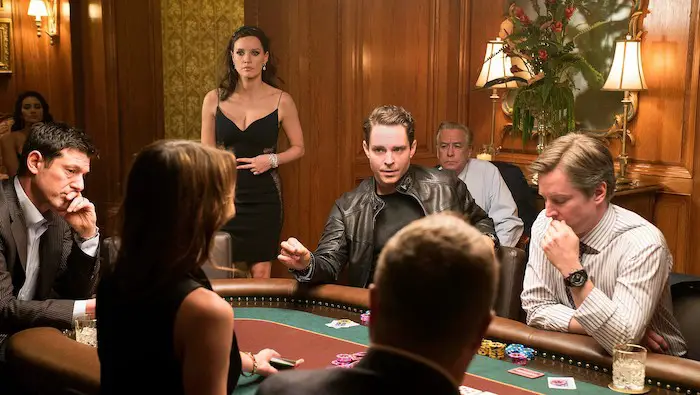
Then there’s Molly’s Game. Molly builds her empire one player at a time, reading the room, watching egos flare, and managing personalities like a chessboard. Every night is a new mix of regulars and strangers. Some chase status, others crave control. What ties them together is the pull of being part of something exclusive. That atmosphere changes the stakes. People start betting bigger, acting bolder, just to stay in the circle.
What These Stories Really Leave Us With
Casino movies stick around because they touch on something real. They don’t tell us what to think. They just let the characters play it out and leave us with the question of what we’d do in their place.
Maybe that’s why they’re so popular. They hold up a mirror without asking us to explain ourselves.
Finally, it’s about balance. These stories remind us that every game has two sides: the excitement that makes your heart race, and the self-awareness that helps you know when to step back. Control is about staying grounded, even when the room is spinning.