On every small crew I’ve worked on, nobody has just one job. The person breaking down the script is also building the shot list, calling the DP about a lens, and producing. Nobody talks much about that prep, so I want to walk through it using a real production.
The production is Each Other’s Country, a contained thriller feature we shot in Austin, TX in May 2026. It has 45 scenes, almost all inside one apartment complex, and we shot it in ten days.
Five documents carry a shoot from the page to the set: the script, the shot list, the storyboards, the shooting schedule, and the call sheet. On this film, all five lived in Cinelog, a film pre-production software that keeps them in one project, on every device the crew carries. I’m Olexiy Kryvych, the writer/director of Each Other’s Country and a co-founder of Cinelog. Let’s get into it.
1. Start with a production-ready script
A script breakdown is the process of tagging every cast member, prop, wardrobe item, and location in a screenplay so each department knows what it needs. I like to do it before anything else, because a scene that reads simple can hide a prop, a costume change, or a stunt.
When I broke down Each Other’s Country, I found four locations: the hallway and elevator of an apartment complex, the main character’s apartment, a small ceramics studio, and a second apartment. Four locations means four company moves at most, and most days had none. Then I tagged cast and props, all inside Cinelog. We couldn’t afford a props person, so tracking every prop in one place saved us on the day.
In the Script Editor, you select text and tag it as cast, props, wardrobe, location, and so on. Every tag rolls up into one breakdown list. A new draft comes in as a scene-by-scene diff, so the breakdown and the shot list survive the rewrite.
2. Turn the scene into a shot list
A shot list is the list of setups a crew needs to cover a scene so it works in the edit. Each setup answers three questions: what’s the shot, what’s the lens, and how long will it take?
Take one scene from the film: a short, tense moment in an elevator, where the main character is threatened by two men. The shot list came to five setups:
-
A medium close-up from behind the main character as the doors close.
-
A close-up of the floor indicator counting up.
-
A high Dutch-angle medium shot of all three characters.
-
A profile medium shot of the three.
-
A medium shot of the three from behind.
Each setup was tagged with lens, estimated time, equipment, camera move, shot type, and blocking notes. That detail matters on a micro-budget production, because every minute counts. The key is separating the shots that are nice to have from the coverage you actually need, because in film, things happen.
In Cinelog’s Shot List, you fill in those details and set time estimates that carry straight into the shooting schedule.
3. Storyboard the sequences that need it
Storyboards are a sequence of drawn or photographed frames that show how a scene will be shot. Not every scene needs them. But when a scene has complicated blocking, a storyboard settles the argument before you get to set.
The elevator was that scene for us. I pre-vised it with the actors and put the pictures into Cinelog’s Storyboards. Each frame sits on its shot and connects directly to the shot list. A linear view shows the shots in order, and a grid view shows the whole sequence at a glance. My DP and I went from “does the sequence work?” to “what do we shoot first?” without re-entering anything, and when we reordered frames, the shot list followed.
4. Build the shooting schedule around reality
A screenplay is organized for storytelling. A shooting schedule is organized for survival. You group scenes by location, cast availability, and time of day, because a miscalculation can cost you coverage or, worse, a reshoot.
On Each Other’s Country, we built a schedule that fit 45 scenes into ten shoot days, with 10-hour days and complicated sequences, without sacrificing coverage.
We used Cinelog’s Shooting Schedule, a stripboard with one strip per scene showing the set, the cast, and the time estimate from the shot list. The board shares its production days with the shot list, and each day feeds its call sheet. When a scene had to move, I dragged it once, and the shot list and call sheet moved with it. The week before a shoot is where small productions lose days, because the schedule gets rebuilt again and again. Here, one drag did the work.
5. Make the call sheet simple and easy to follow
A call sheet is the daily document that tells cast and crew when and where to report and what is being shot. Its job is to be clean and concise, so when your gaffer opens it at 9:54 p.m., they find what they need in seconds instead of wading through pages of noise.
In Cinelog, the Call Sheet already has the day’s scenes and cast from the schedule. You set the crew call, every scene gets a start time from the estimates above it, and you send once. Each person gets their own PDF and confirms with one tap. Before you leave for set, you can see who has been delivered, who has opened it, and who has confirmed, so you know by call time who hasn’t seen the plan.
What happened to the five on set
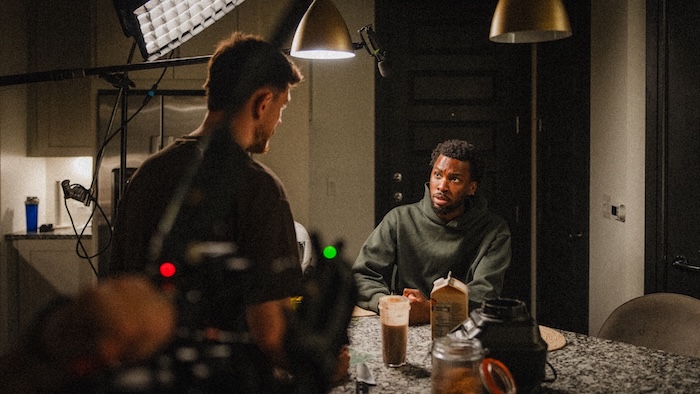
Prep is where most production software stops. It’s where Cinelog is strongest. The same five documents came to set on our phones, because Cinelog runs as a native app on iPhone and Android, and collaborators don’t take a paid seat, so the whole crew is in the project, and the shot list stayed open even in the elevator, syncing once we regained signal.
When we got a setup, somebody tapped the circle on the shot, and it showed as done on every phone, because Cinelog syncs changes to every device in real time. When I dropped a setup between takes, my DP saw it go without a text message. The updates feed shows who changed what, so the next morning I could review the day in about two minutes.
What preparation buys you
The hard part was never any one document. It’s keeping them consistent while the production changes, and it always changes, usually on set. When the script, shot list, storyboards, schedule, and call sheets live in one Cinelog project, a change happens in one place. Better preparation doesn’t remove surprises from a set. It gives you room to answer them without losing the day.
Olexiy Kryvych is a Ukrainian-born film director, writer, and actor based in Austin, Texas, and a co-founder of Cinelog. Each Other’s Country is a contained thriller feature he wrote and directed in May 2026.