
From Scorsese’s Casino to Uncut Gems, see how gambling culture has shaped some of cinema’s most iconic films and moments.
Casino Culture in Cinema: Movies Shaped by Gambling
Hollywood has spent nearly a century filming green felt tables, spinning roulette wheels, and the long shadows of neon-lit casino floors, and the fascination shows little sign of fading. From mob-era dramas to jittery modern character studies, gambling remains one of cinema’s most dependable engines for tension, ambition, and ruin, and few genres capture gambling culture as vividly as the films built around the casino floor itself.
That fascination increasingly runs both ways. Audiences who once only imagined the mechanics of a casino floor from a cinema seat are now checking those details against reality, comparing dramatised odds with how tables actually play out. Review platforms offering BetinIreland casino reviews have reported a steady rise in visitors arriving from film discussion boards, curious whether the tension on screen holds up once the cards are dealt for real.
From Noir Shadows to Neon Vegas
Gambling’s cinematic roots stretch back further than the glossy Las Vegas epics audiences picture today. Mid-century pictures such as The Cincinnati Kid (1965) framed the card table as a proving ground for nerve and ambition, pitting Steve McQueen’s rising star against Edward G. Robinson’s aging veteran. Three decades later, Maverick (1994) took a lighter, comic approach to the same territory, sending Mel Gibson’s card sharp on a cross-country chase toward one final high-stakes game. Both films established a template that later gambling stories would keep returning to: a lone gambler, a legendary opponent, and a single hand that decides everything.
Scorsese’s Casino and the Mob-Era Blueprint
No film shaped the modern image of the casino floor more decisively than Martin Scorsese’s Casino (1995). Adapted from Nicholas Pileggi’s non-fiction account of organized crime’s grip on Las Vegas, the film cast Robert De Niro as a numbers-obsessed casino boss and Joe Pesci as the volatile enforcer whose violence eventually unravels the operation. Sharon Stone’s performance added a tragic emotional core to the sprawling narrative. Scorsese’s sweeping tracking shots through the counting rooms and gaming pits turned the casino itself into a character, and the film remains the reference point for nearly every mob-adjacent gambling story that followed.
Rounders and the Poker Table as Character Study
Where Casino dealt in spectacle, Rounders (1998) went small and personal. Matt Damon and Edward Norton starred as two friends navigating New York’s underground poker scene, with John Malkovich’s Russian mobster “Teddy KGB” serving as the film’s most quoted villain. Rounders arrived just as televised poker was preparing to explode in popularity, and the film is widely credited by poker historians with helping seed the boom that followed the early-2000s World Series of Poker broadcasts. Its lasting appeal comes less from the card play than from the story underneath it: a familiar tension between responsibility and the pull of one more hand.
Ocean’s Eleven and the Glamorous Heist Formula
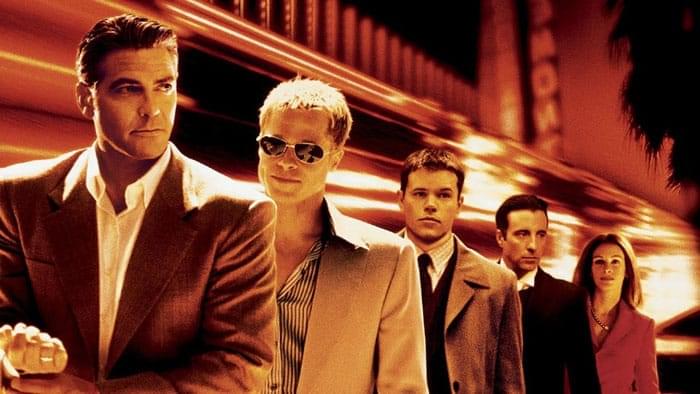
Steven Soderbergh’s Ocean’s Eleven (2001) took gambling cinema in a different direction entirely, trading psychological weight for style. George Clooney and Brad Pitt led an ensemble of con artists plotting to rob three casinos simultaneously, turning the Las Vegas Strip into a glossy playground rather than a site of ruin. The film’s slick heist mechanics, rather than the gambling itself, became the draw, and its success spawned two sequels and a wave of imitators. As Film Threat has previously explored, the appeal of these films often has little to do with gambling mechanics and everything to do with watching characters make one irreversible decision after another.
The Modern Anxiety Era: Uncut Gems and Molly’s Game
The most recent wave of gambling films has traded glamour for anxiety. The Safdie brothers’ Uncut Gems (2019), starring Adam Sandler as a Diamond District jeweler chasing one parlay bet too many, immerses viewers in nonstop noise and mounting dread rather than any big payoff. Aaron Sorkin’s Molly’s Game (2017), based on the true story of Olympic skier turned high-stakes poker host Molly Bloom, examined the business and power dynamics behind private games rather than the games themselves. Both films arrive at a moment when gambling has become more accessible than ever. The American Gaming Association reported that U.S. commercial gaming revenue hit a record high in 2025, with online gaming among the fastest-growing segments, a shift that has given today’s filmmakers new settings, from betting apps to late-night phone screens, to explore the same old themes of risk and consequence.
The Bet That Never Changes
Nearly sixty years after The Cincinnati Kid first put a poker table at the center of a Hollywood story, casino culture continues to give filmmakers a reliable shorthand for a character standing at the edge of ruin or reinvention. Whether the setting is a smoke-filled Vegas pit or a phone glowing in a dark bedroom, the underlying question hasn’t changed: what happens when someone bets everything on a single outcome. As always with gambling, on screen and off, the stories work best when audiences remember it’s meant to stay entertainment, not a strategy. 18+. Please gamble responsibly.