
Casino halls have fascinated people for centuries. There is something about the lights, the tension at the tables, the weight of a chip in your hand, and the silence before a card is turned that no other entertainment can replicate. Today, that world is even more accessible, thanks to top-rated casino sites reviewed online, which give players clear insight into which platforms offer the best games, bonuses, and overall user experiences worth their time and money.
These places attract all kinds of players: the cautious recreational gambler, the seasoned professional, and at the top of the food chain, the whale. In casino language, a whale is a high roller who bets enormous sums, commands VIP treatment, and can single-handedly move a casino’s nightly revenue. Real Vegas casinos court these players obsessively.
Gambling and cinema have always had a tight relationship. Hollywood loves a casino scene; the drama is built in. But here is something most people have not seriously considered: which movie characters would actually last about ten minutes on a real Vegas casino floor before security walked them out? Real casinos have sophisticated surveillance systems, trained pit bosses, and strict house rules. Several film characters, for all their cinematic glory, would be flagged, detained, or permanently banned before they finished their first drink.

Pexels.com
Raymond Babbitt
Raymond Babbitt is arguably the most famous gambling character in cinema history. Dustin Hoffman’s portrayal of an autistic savant who can count cards through a six-deck shoe almost single-handedly convinced a generation of moviegoers that card counting was both easy and legal.
The famous blackjack sequence in Rain Man is electric. Raymond sits at the table, processes every card dealt, and quietly gives Charlie the counts that turn a small bankroll into a fortune. It feels unstoppable on screen.
In reality, Raymond would be identified within two or three hands. Modern casinos do not rely solely on pit bosses watching the table; they use software that tracks bet-sizing patterns and compares them with card counts in real time.
Raymond’s tells would be obvious: his flat affect, his mechanical betting adjustments, and the fact that he would almost certainly not mask his counting behavior with any natural social camouflage. Card counting is not illegal, but casinos are private property, and they absolutely reserve the right to ask anyone to leave. Raymond would be politely but firmly escorted away from the blackjack pit before Charlie could finish celebrating.
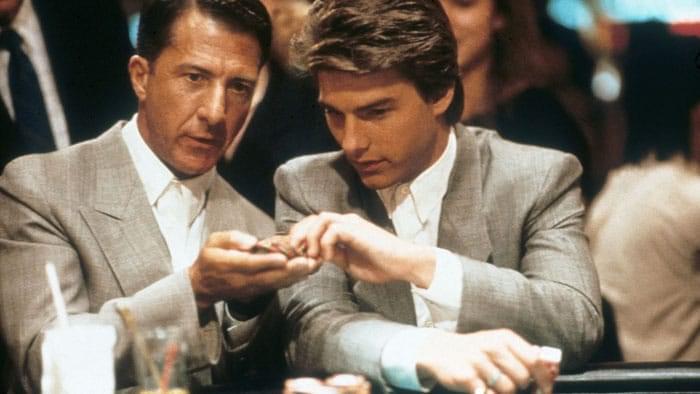
Ben Campbell
Ben Campbell is the college student recruited into an MIT card-counting team in the film 21. Unlike Raymond, Ben has training, discipline, and a system; the team uses signals, distractions, and rotating positions to avoid detection. For a while, it works brilliantly. Ben lives a double life, flying to Vegas on weekends, winning big, and keeping his academic career intact. The film makes the operation look polished and nearly airtight.
However, the actual MIT Blackjack Team, which the story is based on, was eventually dismantled precisely because casinos got smarter.
By the time 21 was released, the Griffin Investigations database already contained photos and profiles of known card counters. Ben’s fictional operation would face the same fate. His bet-spreading strategy (small bets while counting, then large bets when the deck runs hot) is one of the most basic red flags a casino surveillance team looks for. Add in the team-play signals, and a trained eye in the camera room would have Ben’s group identified across multiple visits. He would be back-roomed, photographed, and added to a shared industry database. Banned across the Strip within a season.
Mike McDermott
Rounders is a poker film that changes the dynamic slightly. Mike McDermott, played by Matt Damon, is not a card counter; he is a reader of people, a technically skilled poker player who can pick apart opponents at the table.
In the film’s world, his talent is framed as a gift, and his inevitable return to the high-stakes underground game feels earned. Poker skill is not something casinos penalize the way they penalize card counting.
But Mike’s specific problem is behavioral. His compulsive need to play, his inability to walk away from a bad situation, and his pattern of going broke and rebuilding would make him a flagged player for reasons entirely different.
Modern casinos work closely with responsible gambling programs and maintain internal watch lists for players who show signs of problem gambling. Mike’s documented history, losing his entire bankroll, borrowing money from dangerous people, repeatedly returning despite catastrophic losses, would land him on a self-exclusion list or trigger a welfare intervention. Casinos are increasingly required to act on these patterns.
Danny Ocean
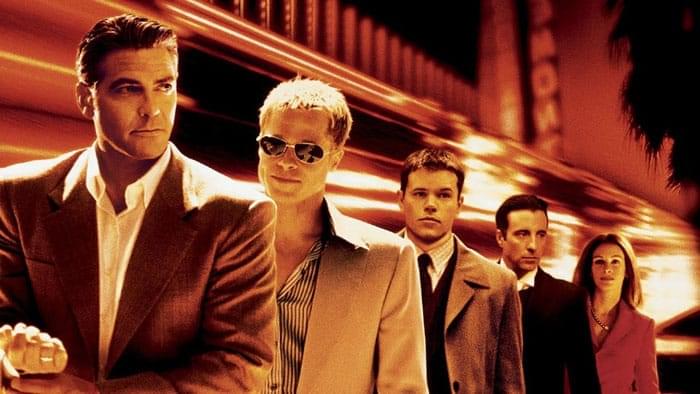
Danny Ocean runs a coordinated heist on three Vegas casinos simultaneously, using a team of specialists, inside information, and technology that exploits the casinos’ own systems.
As a gambling character, he is not really a gambler; he is a thief with exceptional planning skills. But his inclusion here is warranted because Ocean’s operation would trigger every modern security protocol a Vegas casino has in place before his team got within 50 feet of the vault.
Today’s casino surveillance is not the static camera grid shown in the film. Properties on the Strip use facial recognition technology that cross-references arrivals against databases of known criminals, banned individuals, and persons of interest.
Ocean’s criminal record, which the film establishes clearly at the start, would flag him at the entrance. His team’s coordinated movements, earpieces, and unusual clustering around key areas would trip behavioral analytics software within minutes.
Les Grossman
If there is one character in modern cinema who embodies the concept of the out-of-control high-roller, it is Les Grossman. In casino terms, Grossman is the definition of a whale by attitude alone, the kind of man who arrives with enough money to command immediate attention, demands a private table, orders the most expensive everything, and expects the entire establishment to reorganize itself around his presence.
Vegas casinos tolerate an enormous amount from genuine high-rollers because the financial incentive is real and significant. But there is a threshold, and it is enforced far more harshly in reality than Hollywood ever depicts.
Aggressive behavior toward staff, physical contact with dealers, intimidating other players, or making any threats results in immediate removal, regardless of chip count. Casino security at major Vegas properties is trained to de-escalate and remove permanently. The moment a player becomes a liability (to staff, to other guests, or to the property’s reputation), the money stops mattering entirely. Grossman would not survive one hand before grabbing a dealer’s wrist or reducing a pit boss to tears. Security would have him in the lobby within sixty seconds.