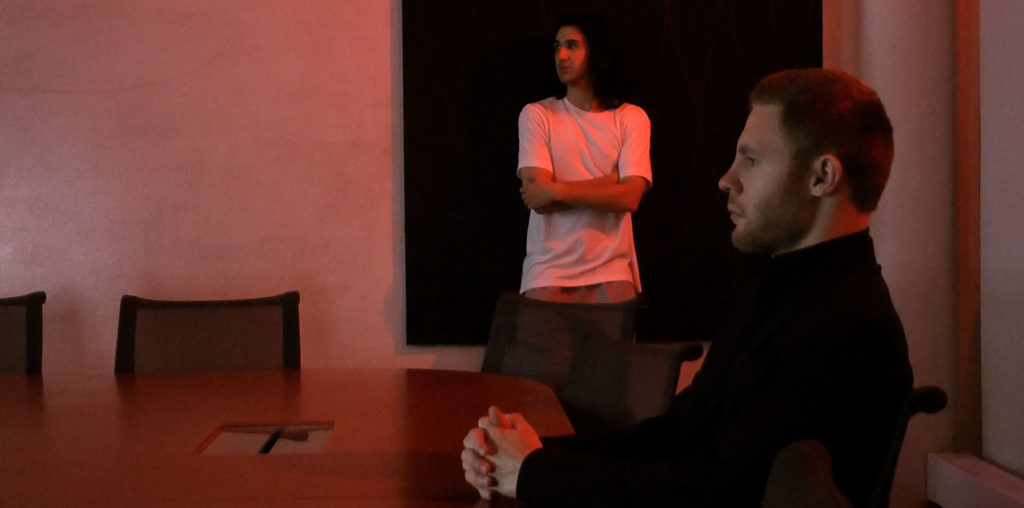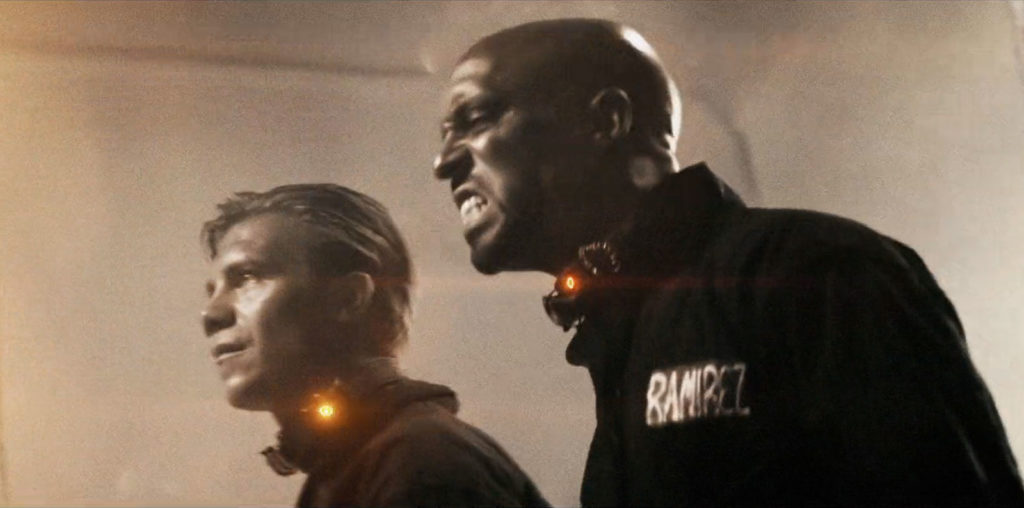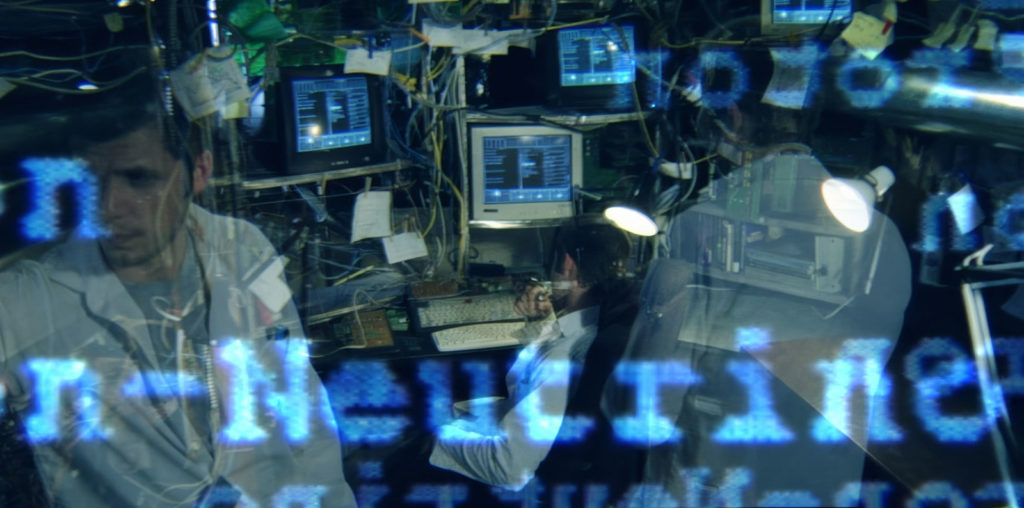
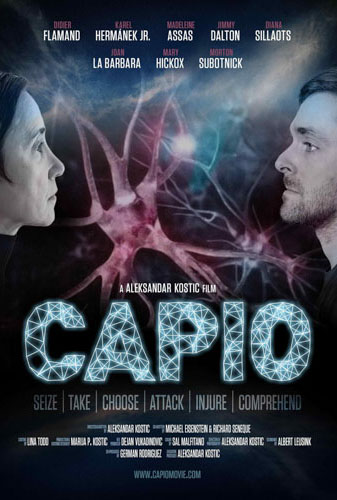
Writer-director Aleksandar Kostic’s Capio is a surreal, slow-burning descent into obsession, technology, and the fragility of perception. Blending mystery, sci-fi, and psychological tension, this indie sci-fi thriller pulls us into the mind of a man who discovers something in the sky and something far more unsettling beneath it.
An amateur astronomer named Ian (Karel Heřmánek Jr.) spends his nights scanning the skies through his telescope from his apartment. One evening, he spots a new star that doesn’t appear on any known maps. Dismissing others’ skepticism, Ian becomes consumed by his new discovery. His fascination turns into an obsession as he shares the discovery with close friends. Yet things are not as they seem, as his discovery is accompanied by power surges, eerie signals emanating from the new star’s coordinates, and a mysterious figure that follows him.
We soon find that it’s not that a new star has appeared, but that something is going on with reality. Ian’s friend, Katherine (Diana Sillaots), offers to help discover that a vast conspiracy is happening right under their noses. Ian begins to suspect that his thoughts and devices are being monitored. Soon, each revelation draws him further into a labyrinth of conspiracies linking human consciousness to artificial intelligence.
When Ian realizes that the star itself is part of a vast experiment to exploit humanity’s reliance on technology, his mind overloads as he finally sees reality versus the simulation that everyone else is living through. But who is behind it, and will Ian be tempted to return?
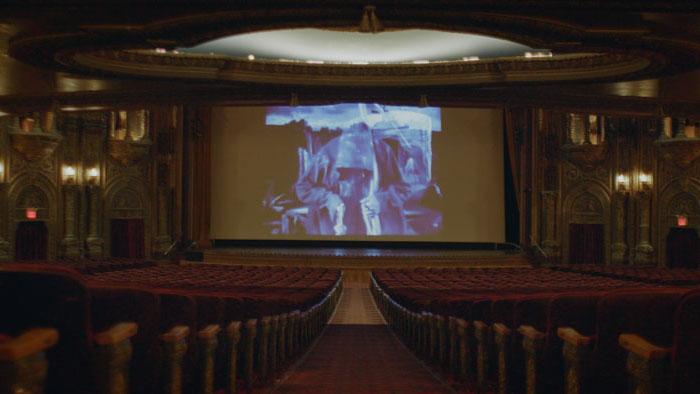
“Ian begins to suspect that his own thoughts and devices are being monitored.”
Kostic conceived Capio from a recurring dream and a single page of notes he wrote back in 2008 while living in Astoria, Queens. The Latin title, meaning “to seize, to take, to capture, to injure,” embodies the central idea: how technology has ensnared the human spirit. Inspired by real-world reports of corporations investing in behavior-manipulating tech, Kostic channeled his uneasiness into a story about how digital dependence erodes privacy, freedom, and emotional connection. Over nearly two decades of development and self-financing, he shaped the film into a surreal vision of a society losing touch with memory, empathy, and reality itself — a meditation on what happens when our tools begin to own us.
As a sci-fi thriller, Capio gets pretty heady at times. Filmmaker Kostic hits hard the idea of class and how the divide between the rich and poor grows wider, almost eliminating the middle class. He also shows how our dependence on devices is subtly replacing reality with a fantasy designed to keep us content as the world falls apart around us. Kostic’s inclusion of AI as the so-called villain is quite forward-thinking for an idea that was sparked in 2008.
The tone and production design feel like they come from the 1980s and ’90s. It gives off serious Tron vibes, plunges us into this surreal world… this surreal reality. Capio doesn’t pull any punches with the questions this sci-fi thriller asks. It’s only held back the Kostic’s limited resources and budget.
Not a perfect movie, Capio makes inventive use of Kostic’s limited budget through striking visuals, moody sound design, and a haunting CG world in the end. It’s a testament to what a visionary filmmaker can achieve with imagination and persistence, even with finite resources.
"…makes inventive use of Kostic's limited budget through striking visuals, moody sound design, and a haunting CG world..."