Turning a stage play into a film is not an easy task. Hollywood did it for years during the silent and Golden Age. Today it’s a video game. Tape, directed by Bizhan M. Tong and co-written with Salena Lee, updates Richard Linklater’s 2001 film, originally based on Stephen Belber’s stage play of the same name. This new version moves the action to a Hong Kong hotel room and proves that the themes of memory, consent, and morality remain as vibrant as ever. It is a crushing work of psychological confrontation; with the same sledgehammer intensity one associates with other play-to-film adaptations like Glengarry Glen Ross or The Dresser.
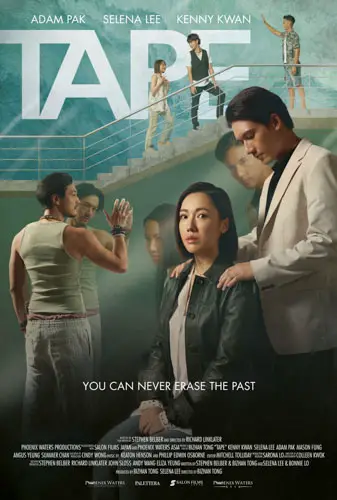
The story concerns three former classmates who reunited after fifteen years and gathered in a hotel room. Jon (Kenny Kwan), a filmmaker riding the crest of career success, has returned to Hong Kong for a festival screening. His old friend Wing (Adam Pak) is now a dark figure who divides his time between volunteer lifeguard shifts and drug dealing. The two come together as high school friends to reminisce about the glory days when life beckoned. But Wing has other plans. The conversation soon turns to Amy (Salena Lee), Wing’s first high school crush, and Jon’s brief romantic entanglement during a high school party. When Amy arrives, the evening spirals into a reckoning with past choices, taped confessions, blurred memories, and the uncomfortable terrain of what constitutes consent.
The film thrives on its claustrophobic setting. The single-room location becomes a battleground, trapping the characters in each other’s presence until truth and deception rear their ugly heads. What this version adds, however, is cultural specifics. Relocating the story to Hong Kong is not a gimmick, as it brings with it the weight of society, reputation, and the entrenched silences around sexual misconduct that still prevail in much of Asia. Whereas the American version, as a product of its time, reflected skepticism about truth and confession, this new word resonates in the aftermath of the #MeToo movement, particularly in regions where speaking out is considered wrong.
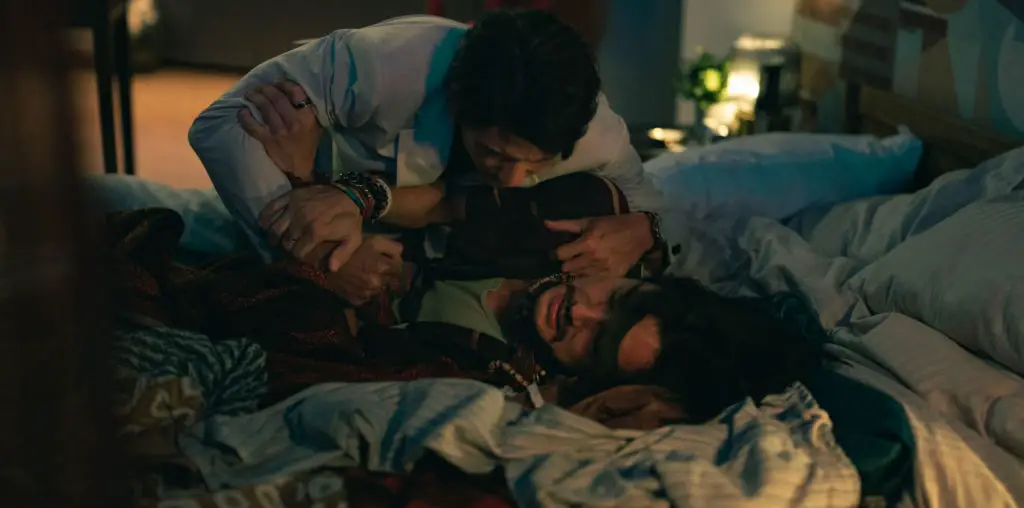
Adam Pak and Kenny Kwan face off in Tape, escalating old wounds into a night of reckoning.
“Three former classmates…gathered in a hotel room.”
Tape opens with flashbacks, brief sequences showing the three characters in 2009, captured on camcorder tape. This contrasts the youthful expectations of graduation with the confrontations of adulthood, and the film becomes the story about different event perspectives and how memory itself mutates. The “two tapes,” the old high school footage and the new recording of this night’s revelations, become the story’s focus.
Jon (Kenny Kwan) and Wing (Adam Pak), in their roles, circle each other with energy. Jon’s success barely conceals deep insecurity, while Wing’s bitterness is calling Jon names, getting him to get “High”, are all leading to a dark place for vindication. Their verbal and, at times, physical sparring has the nervous unpredictability to it. Yet the film’s true center of gravity is Amy, who is off-screen for most of the picture till the final act. Salena Lee, who also had a hand in the writing as the now-grown Amy, gives a performance of control with fragility, anger, and a certain amount of dignity. Her presence shifts the film from a macho duel into a story about a woman reclaiming her voice, refusing to be a memory shaped by others.
The camera often lingers uncomfortably, forcing the audience to inhabit silences like being a person eavesdropping. The confined space never feels visually dull as the light and framing with closeups, security camera views, and levels all the characters’ shifting power dynamics. The result is a chamber piece that is both intimate and suffocating, a slow-burning escalation that keeps viewers perpetually on edge. The Hong Kong setting sharpens this exploration, situating it in a culture where silence is often prized over confrontation. For audiences in Asia and perhaps the world, this may feel like a story finally speaking aloud what has too long been left unspoken.
Tape is not merely a remake containing three brilliant performances; it transforms a one-room drama into a piercing cultural critique. At 90 taut minutes with subtitles, the film leaves the viewer with the feeling they had just witnessed a revelation of a truth that they thought they knew. It very much shows the saying that the Past is a prison, and you never really can go back home
"…a battleground trapping the characters in each other’s presence until truth and deception rear its ugly head..."