The story of Vice magazine, its rise and fall, as captured through insights and tales told by former contributors and founders in Eddie Huang’s Vice is Broke. The documentary plays out like the millennial equivalent of Grove Press and the Evergreen Review as depicted in Daniel O’Connor and Neil Ortenberg’s film Obscene, charting the life and career of Barney Rosset. What both films do is show the story of how a ragtag group of anti-establishment youths with a wealth of creativity, coupled together with a trove of ideas and enthusiasm, captured the zeitgeist and became the rebels yelling out loud for their generation.
Vice gave its writers free rein to push the boundaries and defy convention at every turn. The workplace was an open-plan space, and every outsider felt like they had finally found a place where they belonged. And for a while, everything was good. But soon their voice grew strong enough for big business to catch wind of the sound of the jungle drums they pounded on at their leisure. When the mainstream can’t successfully tap into the rising tide of youth culture, which rises and lays waste to the old roads rapidly aging, they figure, if you can’t beat ‘em, join ‘em.
Thus, Vice magazine started working for the man. That’s precisely when and where the game changed. For once, you’ve overseers shadowing you to maintain a watch over their investment, suddenly the integrity and ingenuity that originally drove them became secondary to expansion, both in reach and in obtaining greater revenue streams.
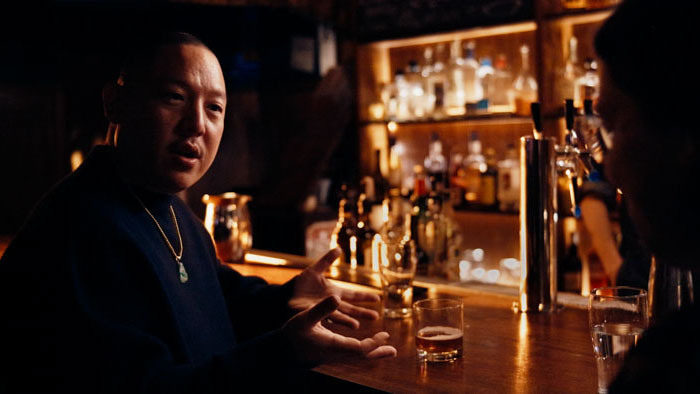
“Vice gave its writers free rein to push the boundaries and defy convention at every turn.”
There’s a sorrowful side to Vice is Broke. They warned him not to go to Vice, but the lure of such diversity and freedom (or so it seemed) of expression was enough to be blinded. But the remaining founder, Shane Smith, positioned himself much like Steven Seagal did in his series Lawman — the real cops do all the grunt work, whilst he gets to causally waltz in when the hard work is done, slap on the cuffs, and read them their rights.
Indeed, Huang even jokes at the outset that his journey’s findings might make the film come off like an Alex Gibney documentary on par with Enron: The Smartest Guys in the Room. But what happened to Vice was the same thing that happens to anything that is co-opted by a corporation. Little by little, they homogenize anything and everything that made it unique till it becomes a vacuum designed to suck as much cash as it can, or as Huang states, “fueling the freak-show.”
Certainly, in its dying days, the once gripping and impactful, raw and unfiltered style that helped them make their name disintegrated, leaving behind a trail of bitterness and bad debts. Yet, Huang, the once pronounced bad boy of bao buns, is equally proud of what he did and what Vice used to represent. It’s difficult to watch something you poured so much of yourself into lose its way and surrender to decay. Still, Vice is Broke isn’t the “hit piece” of its maker assets. It’s a valentine to the youth and the exuberance with which movements, literary or otherwise, ascend, make their mark, and then are heard from nevermore.

"…a valentine to the youth and the exuberance with which movements, literary or otherwise, ascend..."