Stephan Portland’s script for Universal is layered in philosophical inquiry, owes more to Playwrights Harold Pinter (Minus the pauses) and David Mamet than to film drama. The dialogue is filled with references, interruptions, battles for Leo’s attention, power plays over what to serve for dinner, and moral battles. Every word matters. Every silence, doubly so.
The verbal sparring here discusses not the subject of real estate but life itself. There are no monologues about leads, closers or “winning a set of steak knives.” Instead, there are reflections on the origin of life in the spirit of Erich von Däniken, who claimed extraterrestrial influence in early human existence, and Arthur C Clarke, who speculated about Jupiter.

Ricky (Kelley Mack) shows Leo (Joe Thomas) her DNA discovery in Universal
“…a film more akin to a play than a traditional movie.”
At its core, Universal looks at the nature of discovery. Is knowledge always good? What happens when we uncover something not meant to be found? Through Ricky’s findings and Leo’s increasingly obsessive reaction, the films show that science can become a kind of religion—and that data, once proven correct, can remove doubt and morality alike.
This is not a film about what is discovered but what discovery does to the discoverers. The nature of the “code” remains opaque; what matters is how each character responds: Leo with obsession, Ricky with urgency, especially towards the end of the film, and Naomi with alarm.
There are no reveals, no CGI flourishes. Just people, place, and words—enough, when wielded with such control, to evoke an emotional and intellectual battle.
Universal will frustrate those seeking plot mechanics, resolution, or spectacle. It is a film about process, not payoff, questions, not clarity. Like a great stage play, its power lies in suggestion—in the unseen world trembling just beneath the dialogue.
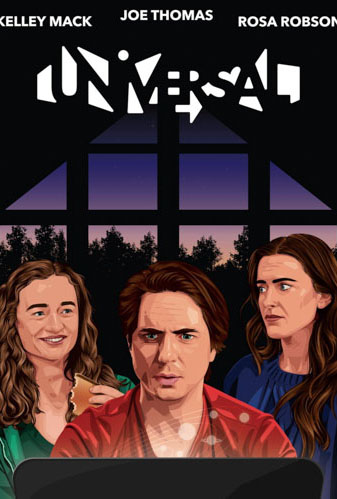
"…the collision of scientific ethics, romantic loyalty, and dread."