TORONTO INTERNATIONAL FILM FESTIVAL 2025 REVIEW! Writer-director Sergei Loznitsa’s Two Prosecutors drops us into Stalinist Russia in 1937, a time when trials weren’t about uncovering truth but about proving loyalty to the state. The film is adapted from Georgy Demidov’s novella of the same name, and while it may look like a courtroom drama on paper, it is more like an important reminder that the law is just there for show.
Kornyev (Aleksandr Kuznetsov) is a young prosecutor who is asked to defend Stepniak (Igor Filippenko), an older revolutionary accused of working against the state. Kornyev believes he can argue justly that his case can matter, but the longer he tries, the more he runs into dead ends. The real force behind the trial is Procurator General Vyshinsky (Anatoliy Beliy), a man who never raises his voice and still controls the room. The film follows Kornyev as he slowly realizes the courtroom is really only there to keep up appearances.
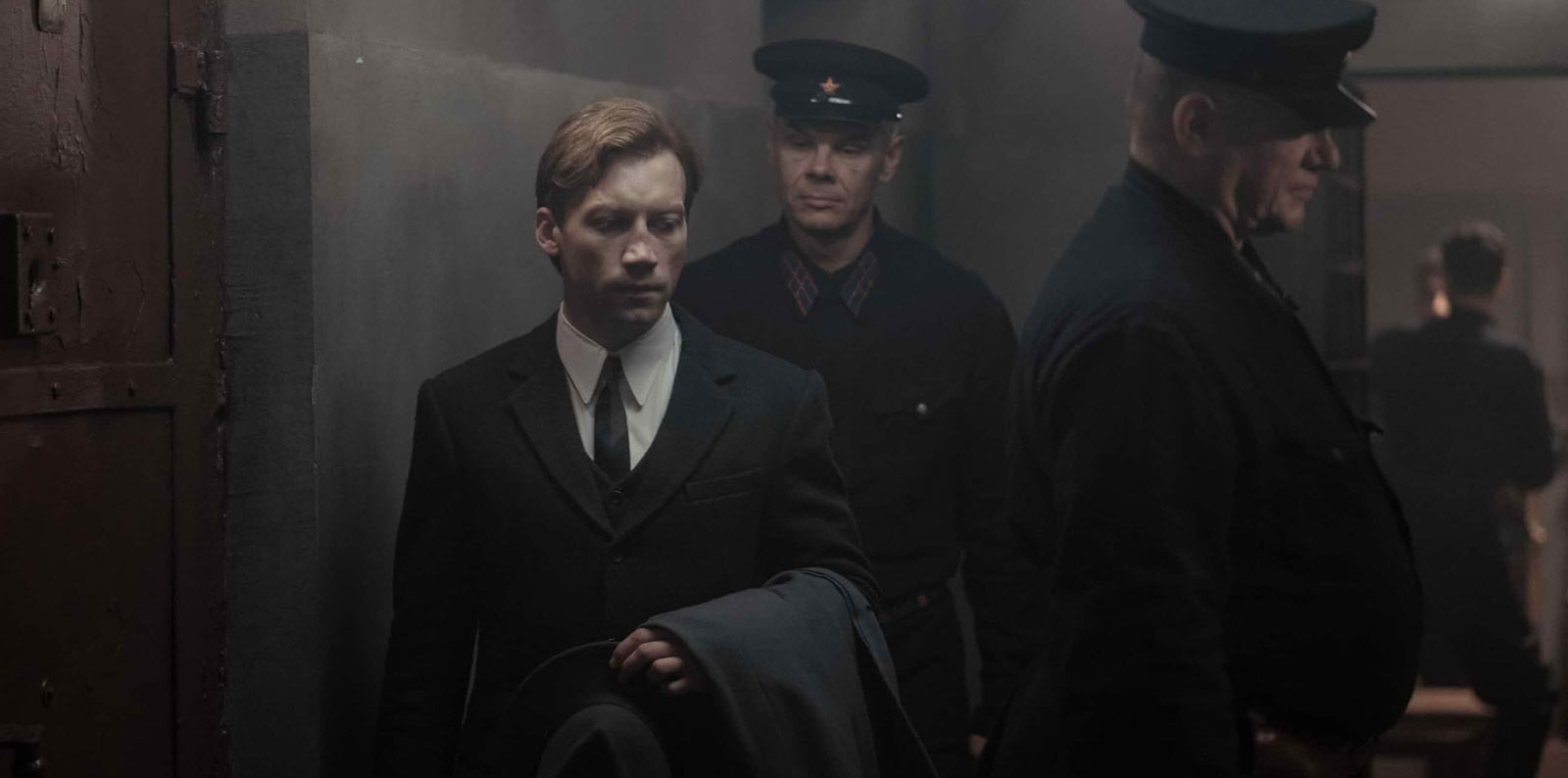
Loznitsa directs with patience. Scenes stretch on longer than you think they will. Hallways drag out slowly. Conversations awkwardly turn into silence. The lighting is dim, the rooms look muted and drained of life, and the desks are buried under piles of paper. Nothing here moves quickly, which mirrors Kornyev’s own frustration; we’re dragged through the same waiting game he’s caught in.
“…Russia in 1937, a time when trials weren’t about uncovering truth but about proving loyalty to the state.”
Throughout Two Prosecutors, Kuznetsov plays Kornyev with a slow and steady arc. At first, he looks fresh and speaks like someone who trusts the rules and truly believes in the law. By the end, he’s drained, depleted, and beaten down, like he knows that he’s just going through the motions. Filippenko, as Stepniak, barely speaks, but still leaves a strong impression, carrying himself like someone who already knows what’s coming and chooses to endure it. Beliy, as Vyshinsky, is the most chilling; he doesn’t need to raise his voice or slam a desk to show his position of power. His stillness makes it obvious who’s in charge.
The film is slow, and there’s no way around that, but that is part of the design. Kornyev spends the story waiting for permission, for paperwork, for the chance to speak, and that waiting actually becomes the punishment. We feel the same dread, despair, and hopelessness that he feels, right there with him. As it goes on, the trial keeps dragging forward, slow and heavy, and you start to feel how it wears out every single person caught up in it. Near the end, Kornyev seems to have stopped fighting for his client; he speaks almost like he’s testing whether anyone is even listening.
Even though the story takes place in 1937, it doesn’t stay in the past. Loznica roots it in that time, but it pushes you to think about now, and how fragile institutions become when they start serving power instead of people. Loznitsa doesn’t try to be subtle with this; it’s intentional. And that’s what makes it stick with you. Everything happens inside the courtroom, and that choice keeps us cut off from the characters. A reminder that it’s all about the process rather than people. We don’t need to know their personal life or anything that would give us the opportunity to see them in a better light. This distance emphasizes the point that individuality doesn’t matter in a system that has already chosen the outcome. It leaves you sitting with the same emptiness Kornyev feels.
Two Prosecutors does not offer the audience easy answers or an emotional release; this restraint is exactly what gives it power. It’s a heavy film, one that is important and deserves to be seen.
Two Prosecutors screened at the 2025 Toronto International Film Festival.
"…demands to be seen."