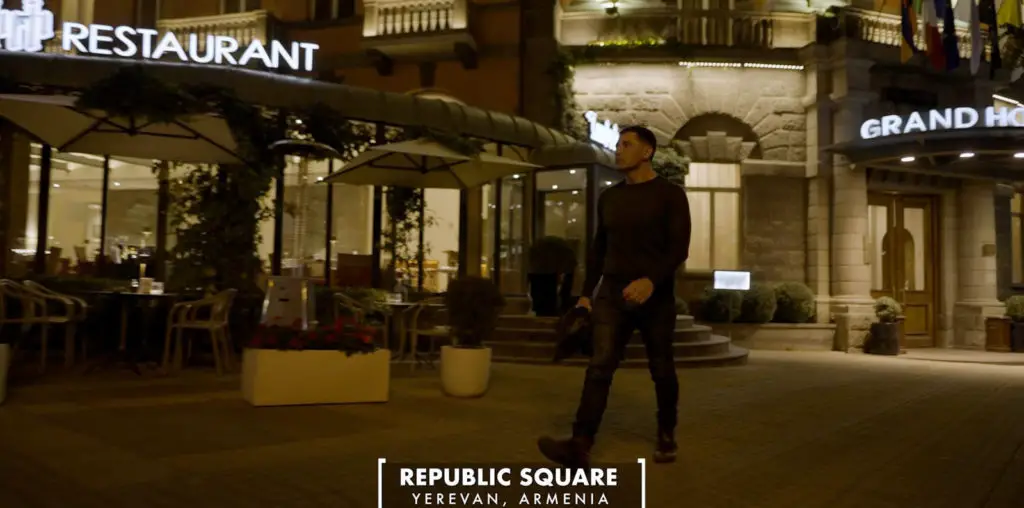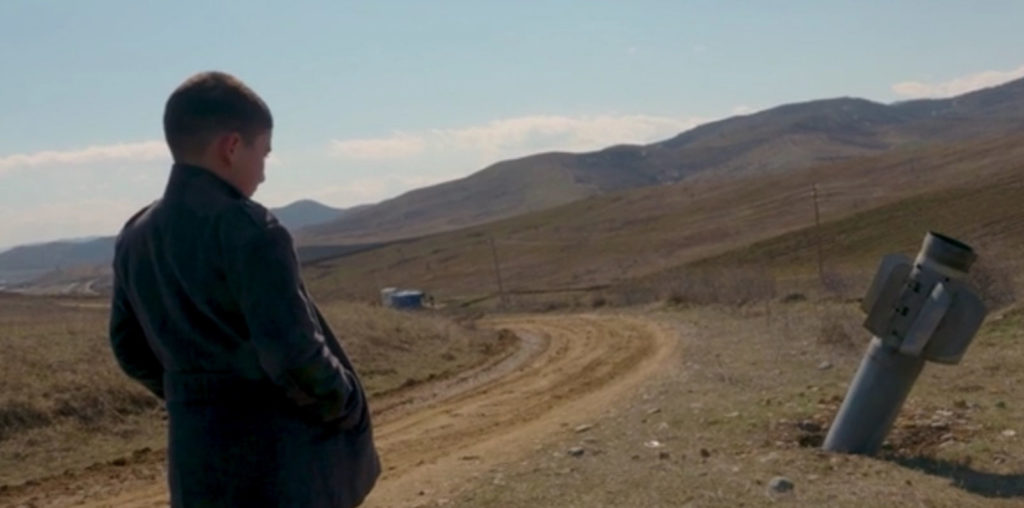
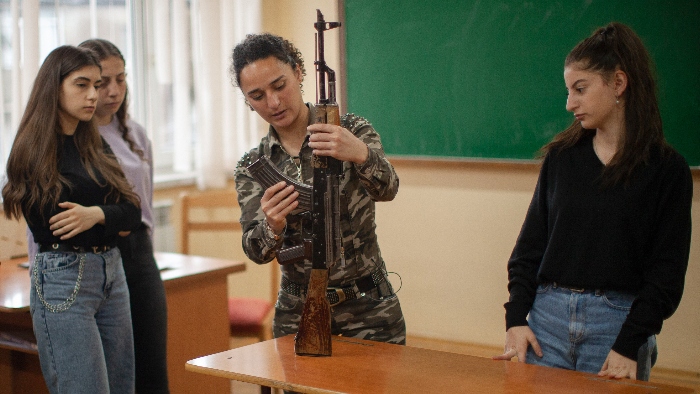
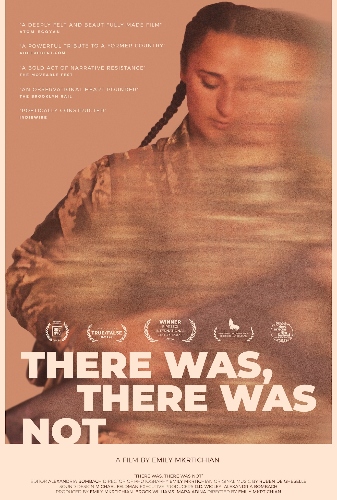
For how all that turned out, look up recent history. This is about the documentary. The second half of There Was, There Was Not is an eye-opening and devastating portrait of a people in chaos. Each person reacts differently, yet in a relatable manner. Balasanyan is hopeful that her country will come back stronger than ever. Sargsyan, mirroring the director, feels called to document the atrocities taking place. Harutunyan is empathetic to all, practically crying herself to sleep every night. Hambardzumyan does what she always does, but in a place where supplies and necessary items are increasingly scarcer. These women are not just four strong people with close ties to Artsakh and its culture. They represent everyone, everywhere, as all watching will relate to at least one facet of each of them at some point or another.
“…eye-opening and devastating…”
In Armenia, fairy tales don’t begin with “Once upon a time,” but rather “There was, there was not.” This is where the title originates, now imbued with an eerie, prophetic sensibility that was never intended. However, the director manages to convey a strange, fairytale vibe, even amidst the dropping of missiles. By the end, audiences realize that this entire thing has been a dark fairytale that just happens to be real life. The cinematography is stunning, capturing the natural beauty of the landscape with great skill. Most crucially, though, Mkrtichian brings Artsakh culture to the forefront, allowing audiences to gain a genuine sense of its beauty and values. And here lies the film’s greatest strength: sadly, due to unjust governments and political maneuvering, the documentary serves as an archive of Artsakh, its people, culture, and more. Repeat viewings make this point hit harder, as once the ending is known, waltzing in and out of everyday life is a luxury one pines for.
There Was, There Was Not is a necessary and important watch. Yes, it gets a little dull in the first half, but persevere. The second half and ending have a punch rarely attained by documentaries. Artsakh deserves to live on, and thanks to Mkrtichian, it can, even if only for 94 minutes at a time.
"…a necessary and important watch."