The WASPS: Taking Flight, directed by Matthew Hausle, written by Jay Miracle, and narrated by Jacqueline Bisset, follows Nadine Ramsey, one of the female pilots who flew during WWII. She was a member of the Women’s Air Force Service Pilots, an experimental program for women pilots, abbreviated to WASPs. They worked ferrying materials and soldiers, or positioning warplanes. Ramsey became an aviator in 1937, flying the mail and performing in airshows. In 1940, she crashed and was severely injured, almost having her leg amputated, but recovered quickly and was back to flying six months later.
As the U.S. entered WWII, movie star James Stewart, who was also a bomber pilot in the Army Air Forces, made newsreel-style films encouraging “young men” to become pilots, but women heard the message as well. Ramsey joined the WASPS in 1943. She went on to pursue school, where she learned to fly fighter planes, graduating in 1944. She flew a variety of aircraft, including trainers, transports, and challenging fighter planes. She was also one of the 26 WASP pilots entrusted with the high-performance Lockheed P-38 Lightning. The WASP pilots were only allowed to fly in non-combat roles. Ramsey was stationed at Love Field, Texas, but asked to be transferred to the Long Beach Army Air Base in California, where she ferried fighter aircraft and served as an instructor in “preflight transition,” helping pilots become familiar with new aircraft.
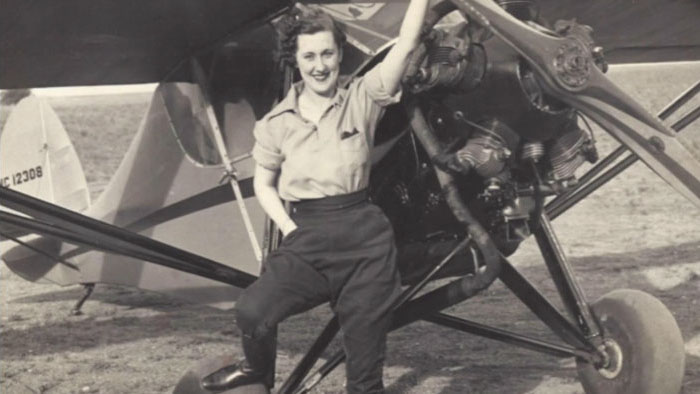
“…the Women’s Air Force Service Pilots, an experimental program for women pilots, abbreviated to WASPs. They worked ferrying materials and soldiers, or positioning warplanes.”
Public opinion weighed against the women pilots during the war. Time and other media outlets ran articles condemning the WASP program, insisting women should be looking after the home and children while men went off to war. When it was clear that the tide of the war was turning in favor of the Allies, the WASPS were disbanded and dismissed. The women were not offered travel expenses to return home, and there was no recognition for their service as pilots and flight instructors. After the WASP program ended, Ramsey stayed on with the Sixth Army Ferrying Group.
The WASPS: Taking Flight highlights an obscure aspect of aviation during WWII and illuminates the critical role of women pilots supporting the war effort. The information is conveyed by vintage film clips and through interviews with (primarily women) aviation historians. Both entertaining and informative, Hausle has created a lively look at Nadine Ramsey’s extraordinary life in the context of the evolution of women pilots. Clocking in at just over an hour, the documentary is edited to keep the pace moving along. It will particularly speak to aviation nerds, but has broad appeal for everyone interested in the history of the war, and of the poorly recognized contributions of women pilots.
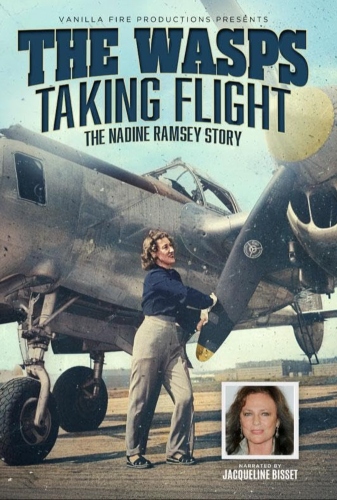
"…a lively look at Nadine Ramsey's extraordinary life..."