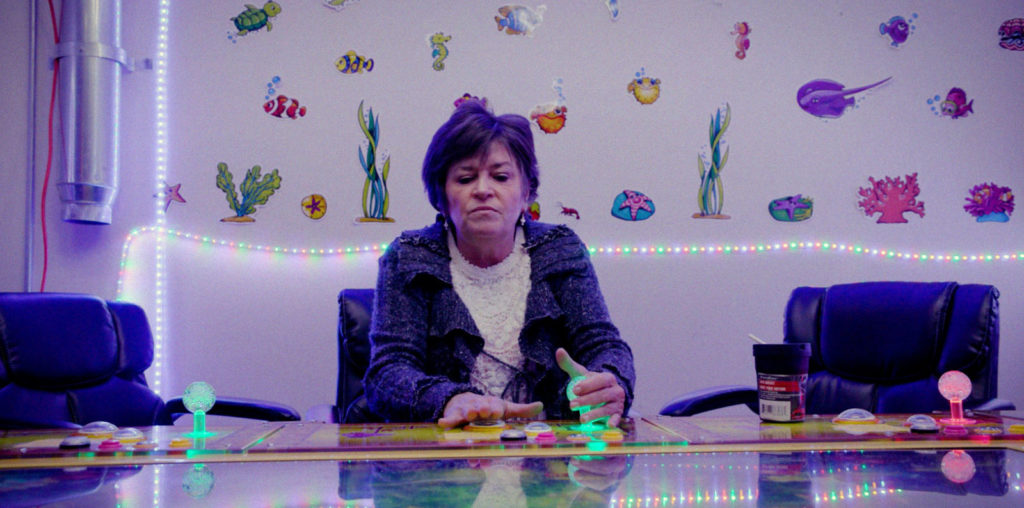
SLAMDANCE FILM FESTIVAL 2026 REVIEW! In The Tallest Dwarf, director Julie Forrest Wyman goes on a deeply personal quest to understand where she fits within her family history and inside a community that has long had its identity defined by outsiders. What starts as a search for answers becomes a larger story about belonging, representation, and the uneasy crossroads between embracing difference and trying to “fix” it.
All her life, Wyman never felt normal. She interviews her parents, who tell her she was physically normal, and they’re surprised to hear she was bullied as a child for being short, though not Little People (LP) short, and for having arms and legs that seemed disproportionate to her body. As she digs through old photos, she remembers rumors that she may have “partial dwarfism.” The possibility explains why she doesn’t feel accepted by her “normal” friends and isn’t fully accepted in the LP community.
Wyman embarks on a personal journey that leads her to the Little People of America (LPA) organization, where she uses her camera and storytelling to meet artists, advocates, and families in the community. She connects with dwarf artists like Sofiya Cheyenne, Mark Povinelli, Katrina Kemp, and others, and together they confront how little people have been treated as spectacle — then and now — using archival material and creative collaborations to push back against that legacy. Meanwhile, Wyman’s investigation keeps moving forward until genetic testing gives her a diagnosis of hypochondroplasia, reframing her family story as something multi-generational that may be reaching its endpoint with her.
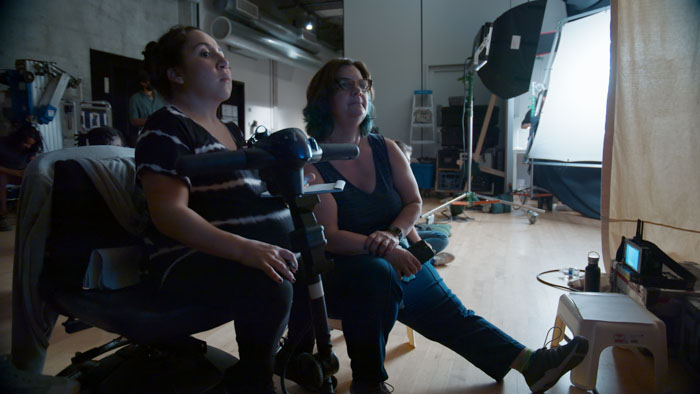
“Wyman embarks on a personal journey that leads her to the Little People of America organization…”
Wyman’s personal journey is only half of The Tallest Dwarf. She also explores issues the LP community faces, including new pharmaceutical treatments designed to make little people taller that are reshaping conversations about identity, parenting, and the future. Some families see these drugs as a medical breakthrough, while others fear the culture and pride they’ve built could be erased one prescription at a time, especially since the choice often lands on parents while kids are still very young.
Wyman also explores tensions within the LP community. Researchers have identified genetic causes of dwarfism in specific cases, which raises the eugenics debate. Others debate limb-lengthening procedures, with some believing they allow them to live more “normal” lives, while others question the very idea of what normal is. One political debate centers on Pfizer’s sponsorship of the LPA organization and conference. Although Pfizer has never told the organization how to spend its money, many feel it’s a conflict of interest. It also gets to the heart of how the world perceives Little People, from unwanted pats on the head to the struggle to bring honor and give voice to all members of the community. It asks what “normal” even means as it sifts through both the blessings and the curses that come with being seen as different.
The Tallest Dwarf does two things that, to me, all documentaries should do. First, it educates. The film goes deep while also only scratching the surface of the lives of little people. When the movie ended, I learned a lot of new information, and many of my assumptions were challenged, and some were answered. Second, it asks tough questions and presents arguments on both sides. In the case of the LP community, these questions are still unanswered, but the conversation must continue. If there’s a third thing I want in docs, it’s leaving me asking even more questions by the end.
The Tallest Dwarf screened at the Slamdance Film Festival.
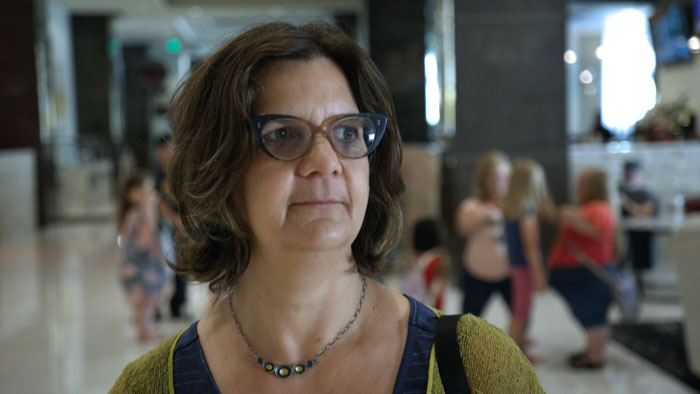
"…does two things that, to me, all documentaries should do."