
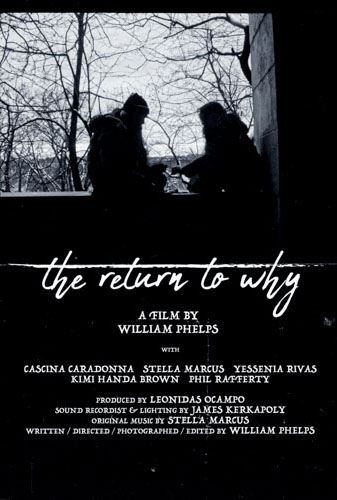
In William Phelps’s The Return to Why, Lyria (Cascina Caradonna) returns to her hometown a year after the sudden death of her younger sister, Iris (Stella Marcus), hoping to mend broken relationships and find closure, at the behest of her ailing father.
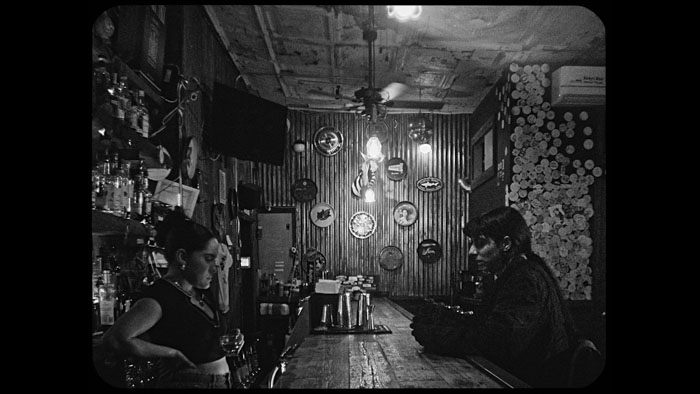
Lyria’s first stop is a bar where her ex, Casey (Yessenia Rivas), works. Lyria’s struggles with addiction complicate their history. Casey demands that Lyria get to the point, prompting her to apologize for the pain she caused and the way she ended their relationship. This visit is followed by an encounter with another former partner, Rachel (Kimi Handa Brown), from whom she had also drifted apart during her addiction.
As the film unfolds, it becomes clear that all these fractured relationships circle back to the loss of Iris, leaving everyone haunted by “what if” scenarios in which Iris might still be alive. Each meeting forces Lyria to confront her guilt, her past choices, and the ways grief has shaped them all.
The Return to Why is a great example of how to use film to enhance storytelling. Phelps uses the camera to tell the story, not merely capture it. Having Lyria move from place to place, simply talking about her sister, would have been bland and boring. Instead, the filmmaker creates a tone that keeps you off-balance and places us in Lyria’s shoes. His use of quick-cut flashbacks evokes emotions of grief and shame. We understand the emotional impact of every step of Lyria’s journey.
Screenshot
“Lyria returns to her hometown a year after the sudden death of her younger sister…”
According to Phelps, The Return to Why was inspired by his own PTSD diagnosis and a Nietzsche quote about thanking the monster that didn’t destroy you. Shot over the course of a year in and around New York City for about $5,000, the project was entirely self-funded through a commercial acting job and savings from his Broadway theatre work. Phelps chose the Digital Bolex D16 with vintage C-mount lenses to capture a Super 16mm film look, crafting a slow-burn meditation on grief, trauma, memory, and acceptance in the spirit of Jim Jarmusch, Yasujirō Ozu, and Agnès Varda.
The Return to Why quietly examines the messy intersections of grief, addiction, and reconciliation. Through Lyria’s tentative steps toward mending old wounds, the film offers a portrait of how loss can fracture relationships but also create space for healing. William Phelps’s debut leaves its audience with the sense that even in the aftermath of tragedy, there is still room to seek peace and understanding.
For screening information, visit The Return to Why official website.
"…a great example of how to use film to enhance storytelling."