Normandy still gets stormed each year. Among the servicemen and politicians at its D-Day commemorations comes an army of re-enactors, streaming in in military vehicles, uniforms, and vintage dresses. I know, man. I was there. I’ve felt the confusing sting from cheering an estate agent for standing in the back of a slow-moving Jeep.
But re-enactments connect us to heroism. And that heroism, as well as what looks a wealth of very well-sourced re-enactment equipment, are present and correct in this piece by actual ex-service men, director Terry Jansen and writer Danny Crossman, in their military drama The Liberation Men.
The Liberation Men is the sort of plucky underdog feature that gets put together against most known laws of nature; a serious, accurate, period war film, packed to the gills with scary green metal and made for what looks less than I spend on streaming each year. This is a true tale of bravery about Canadian soldier Léo Major – here renamed to Roy for not entirely clear reasons – who left parts of himself in Normandy and then went on to some legendary soldiering in Holland.
The story opens with a flashback to Roy (Michael Ruhs) being horribly injured when his transport is blown up just weeks earlier, a scene well realized, with its aftermath of crinkling hot metal that seems to singe the viewer’s ears.
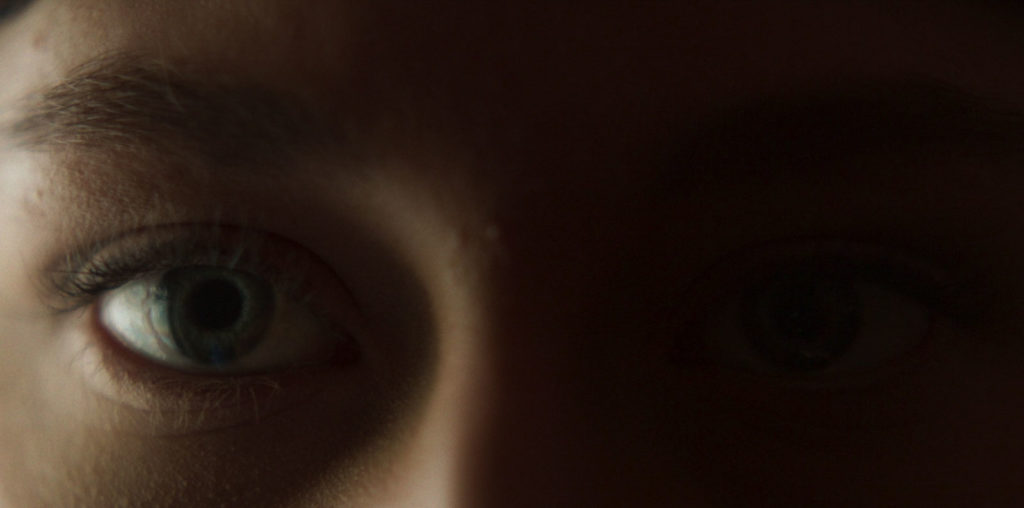
Despite now having a serious back injury and minus the eye he lost in Normandy, Roy volunteers to contact the resistance in the occupied city of Zwolle in the dead of night with his buddy Jack (Jacob Oerkins), just hours before a planned assault.
Jack is soon killed by a German patrol, but the setback of the skirmish is parlayed brilliantly by the indefatigable Roy. He continues on and makes the occupying force think a full assault is underway among their positions, tricking them into a bloodless pre-dawn withdrawal and saving the town from planned Allied artillery.

“Despite now having a serious back injury and minus the eye he lost in Normandy, Roy volunteers to contact the resistance in the occupied city of Zwolle…”
Ruhs brilliantly, sensitively, and soberly presents the distinction Roy held himself with. Perkins is winning and believable. The rest of the cast works well with some very difficult multi-lingual dialogue in German, Dutch, and English.
The costumes, hair, and makeup are very good indeed. The score is intermittently very effective, injecting just the right doses of weariness and tension.
However, The Liberation Men struggles against the extraordinarily difficult business of realizing a period war drama on an indie budget. While the stage has been set well, and despite being armed with a terrific story, some key scenes just struggle to milk the drama. Like the decisive scene of the first act, where Roy rationalizes disobeying his orders, served here as a rushed-looking, cramped two-shot with a blanket as a backdrop. It should stir us, but of course, that hastily hung blanket says it all – the challenges with hiding modern anachronisms in a feature film are colossal.
But the staging comes undone in other ways, like soon after, when our heroes have a loud conversation about a German soldier they are planning to kill despite him looking near enough to light cigarettes. People can be mean, and I’m ashamed to admit I rewound the film to double-check (with weedy satisfaction) that the movement on Roy’s watch was quartz. There were serious problems with the photography, too, with the actors never quite sitting pretty.
But who cares? Jansen and Crossman are geniuses. I speak Dutch and watched this in Holland, and I still didn’t notice it was shot in Canada. Yes, the weed in Holland is that good, and this film is that clever.
I look forward to their future ventures. The Liberation Men is an astonishing piece of work. The drama can struggle a little here and there, but the fact that this exists at all is mightily impressive.

"…an astonishing piece of work."