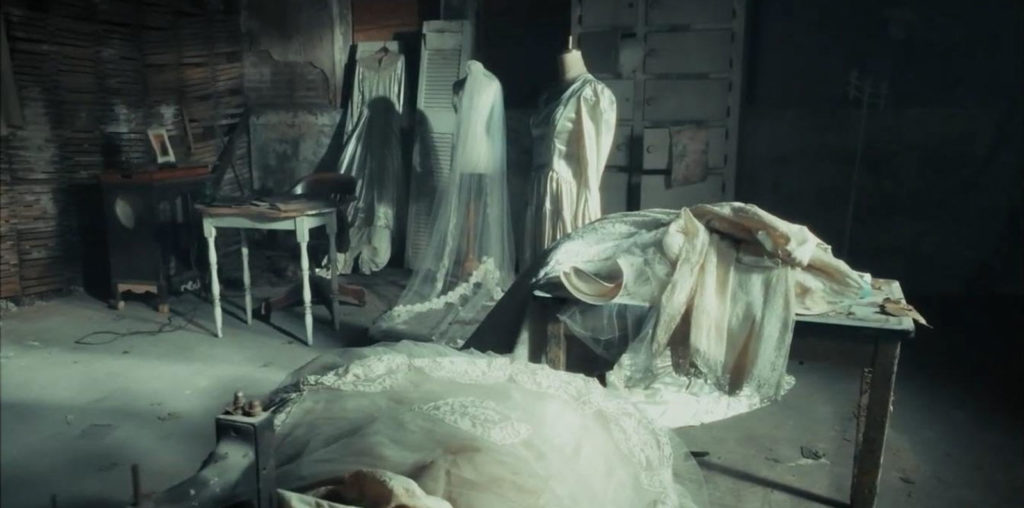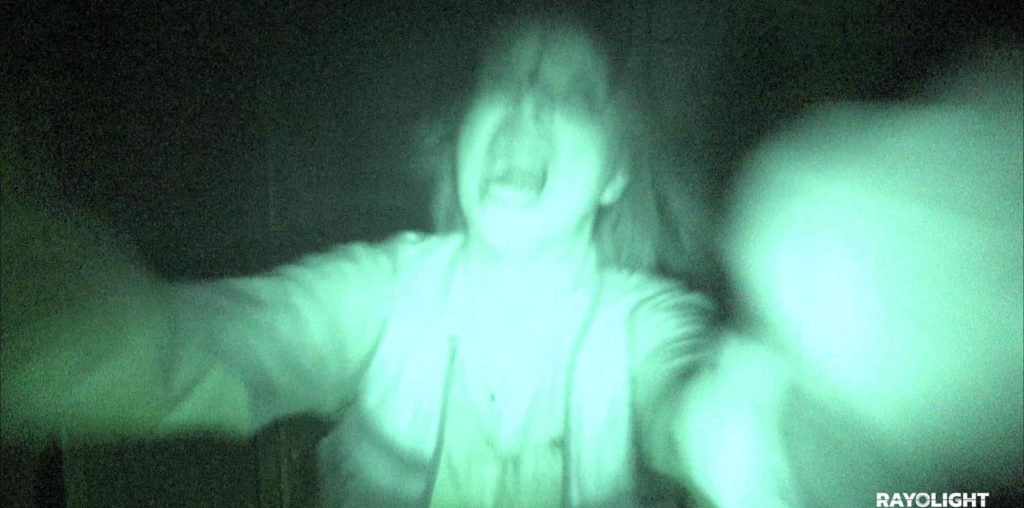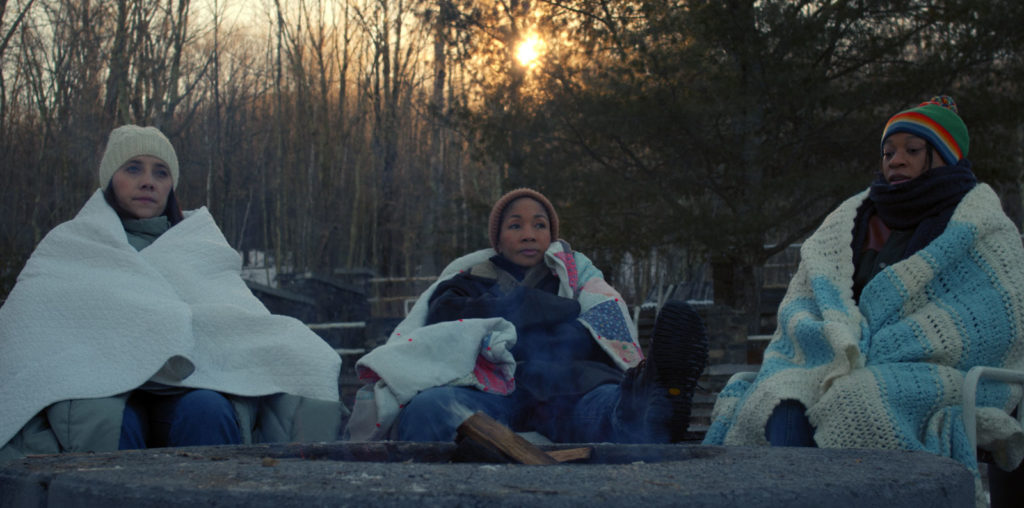
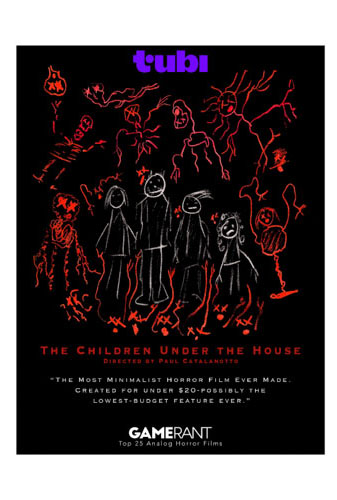
No crayons were harmed during the filming, but your nervous system will be attacked from all sides by the horrifying found footage feature The Children Under The House, written and directed by Paul Catalanotto. The winner of a repossessed storage locker’s contents finds some videotapes hidden in the false bottom of a dresser drawer. On the tapes are a series of transcribed child therapy sessions by the now-retired Julia Luu (Mary Nguyen Catalanotto) that were supposed to be used decades ago for a possible book.
The subject is Jess (Everly Catalanotto), a little 7-year-old girl who doesn’t speak. Jess only communicates through written answers and pictures, which Luu edits into the tapes as Jess’s answers to the questions asked. Jess and her father, mother, and brother all moved to Louisiana from Houston, into a house that Jess says has children living under it. Her family can’t see or hear them, but Jess gave up her voice so that she could see them. One of the children, Mia, is Jess’s best friend and follows her everywhere. Mia is a little girl whose bloody torso hangs in the air where her legs were cut off.
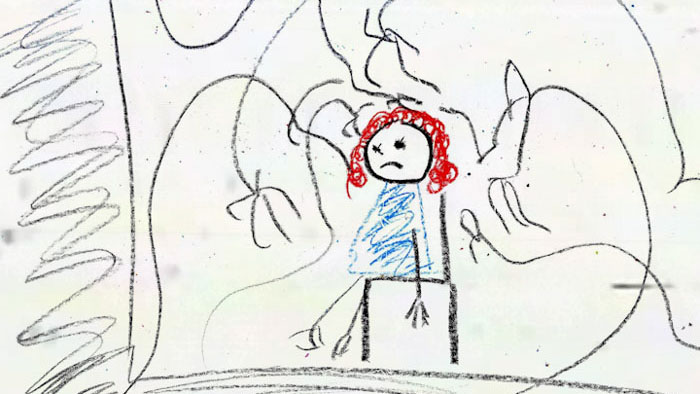
“…Mia, is Jess’s best friend and follows her everywhere. Mia is a little girl whose bloody torso hangs in the air…”
Jess draws pictures of Mia locked in the trunk of a car when the accident that cut her in half took place. Jess draws pictures of other children as well, all of whom have names and are now trapped under the house in various broken states. There are also other children who don’t have names that have even less left of them. These children are angry and want to hurt people. Jess then asks Luu about something Mia told her, something Jess should not have had any idea about. Luu begins to believe the children under the house are not just Jess’s imagination…
If you think the found footage genre is just a low-budget gimmick for cheap horror, The Children Under The House will make you drop that opinion faster than a hot Blair Witch. Look back, and you will find the stories of H.P. Lovecraft, considered the greatest horror achievements in literature during the 20th century, were found footage pieces. Of course, back then, you had journal entries and news articles standing in for the old VHS tapes, but it was still the same concept: a series of documents that, when examined together, reveal a previously unseen ghastly horror. In this case, filmmaker Catalanotto uses the single creepiest document possible in the drawings of a disturbed child. The whole movie is illustrated, a unique and potentially perilous experience, as you are trying to keep your attention on still, non-animated pictures for the length of a feature. Catalanotto manages to pull it off and makes it work brilliantly.
"…one of the scariest things in the stream."