Nowadays, I do enjoy jazz a lot. So I was immediately floored when Loewenthal rolled out guitarist Kenny Burrell right away, as I didn’t know about his Detroit connection. Nor did I know that Detroit was the birthplace of jazz harp, which was later mastered by Detroit native and jazz super heroine, Alice Coltrane. In fact, after seeing The Best Of The Best: Jazz From Detroit, I realized I had very little idea about anything at all.
Now I know everything and found it out in the embers of this city that is famously in constant demise. The historical significance of how jazz flourished in this one spot is only matched by the ferocity with which gentrification attempted to blot out any sunlight that fed it. The Best Of The Best: Jazz From Detroit pays a lot of attention paid as to how that history feeds the jazz torch that is still, amazingly, carried on to this day by the great lakes.
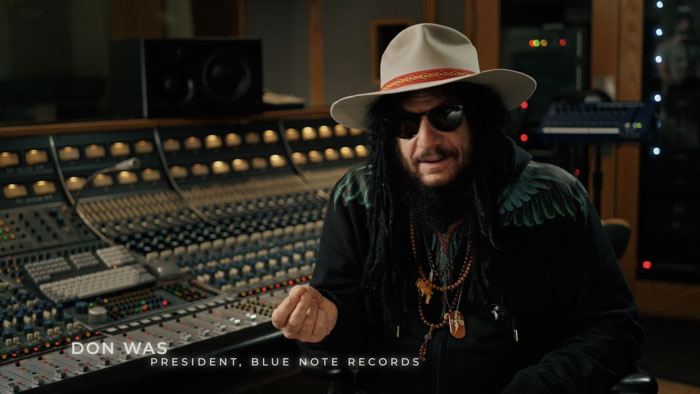
Don Was, President of Blue Note Records, discusses Detroit’s jazz legacy in The Best of the Best: Jazz from Detroit.
“You will go from a jazz hating Johnny to feeling like a cold blooded hep cat in no time.”
That jazz is still alive there is as much of a surprise that Detroit is still standing, as both always seem to be doomed to dance with extinction. Of course, you don’t need to give a fig about jazz to totally love this movie. That is because the material here is built as meticulously as cities are developed, with each section establishing another floor with more stairs carrying you higher.
The Best Of The Best: Jazz From Detroit summons up memories when documentaries were only shown on what was called “educational TV.” It has the same bread and butter basics for the structure as the old school PBS doc, but material this rich doesn’t need structural innovation or even nifty animated sequences. The power this doc wields is that it gives the warm glow of knowing you just became smarter by watching it. You will go from a jazz-hating Johnny to feeling like a cold-blooded hep cat in no time. At one point, the film explains the asymmetrical rhythm of bebop with how Michael Jordan gets the ball to the basket.
The Best Of The Best: Jazz From Detroit also does a great job of explaining why jazz matters; how it lives in the DNA of music that you never associated with jazz. You could have knocked me over with a black leather feather when Wayne Kramer of the MC5 appeared onscreen, talking about the drumming of Elvin Jones. You also get to see how this unique American art form mirrors the history of all that is wonderful and terrible stateside. If you don’t know what I am referring to, you will by the time you finish The Best Of The Best: Jazz From Detroit. This will open worlds upon worlds for the viewer, the likes of which even the Bird has never seen. Feed your head this film immediately.
For more information, visit the The Best of the Best: Jazz from Detroit official website.
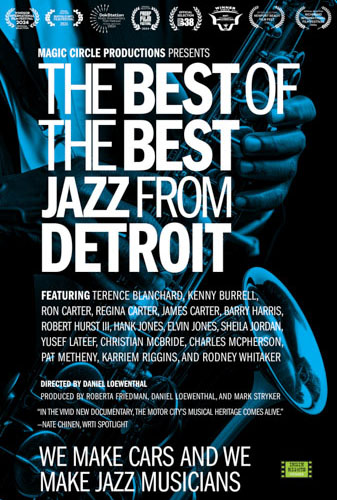
"…you don't need to give a fig about jazz to totally love this movie."