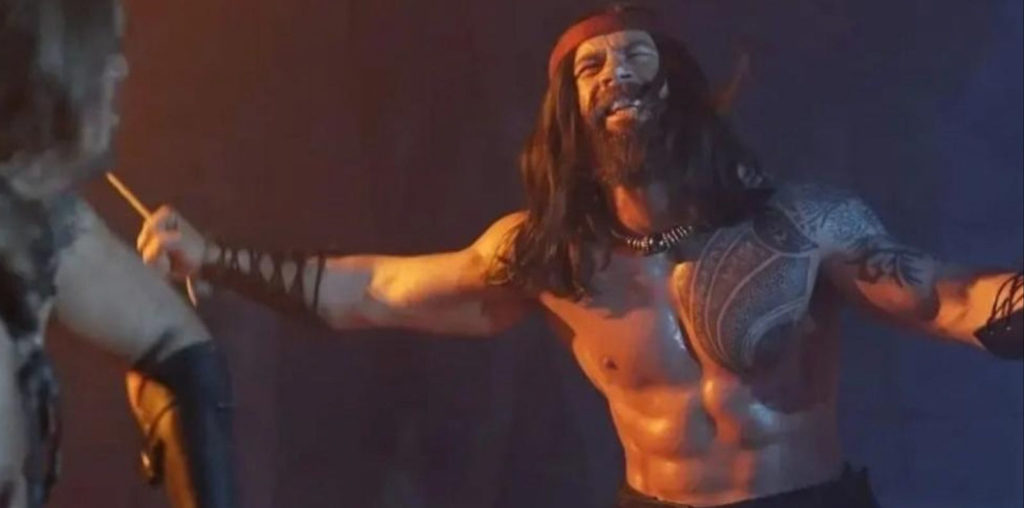
In co-writers and co-directors Kerry Carlock and Nick Lund-Ulrich’s Suffer, the land of Amberly has fallen into darkness following the betrayal and murder of the beloved Queen Emmeline. Her killer, the Scarlet Prince (Scott Beehner), now rules through fear and dark magic, silencing dissent by imprisoning rebels in enchanted masks that steal their voices. Only one is willing to step forward against the darkness. Ida Blye (Naomi McDougall Jones), the Queen’s loyal handmaiden, has been exiled and sentenced to die in the desolate Barren Cross. Left for dead with a stab wound, chained to the remnants of a wrecked wagon, and sealed inside a mask that renders her mute — for it is her voice that gives Ida her true power and confidence — Ida sets out on a quest, carrying only the Queen’s final command: destroy the four statues that anchor the Prince’s power.
Surviving against brutal terrain and the relentless pursuit of the Prince’s deformed warriors, Ida begins a solitary journey across the wasteland. Through visions and dreams of Queen Emmeline, Ida learns to wield a dangerous magic that slowly consumes her even as it keeps her alive. The Scarlet Prince watches her every move, sending monstrous forces to crush her and her movement. Along the way, she encounters other exiles and rebels trapped behind the same silencing masks. She helps them escape their pursuers while offering them hope that the Prince will be defeated. In the meantime, Ida must survive the wilderness and end the Prince’s violent rule before she succumbs to the dangerous magic that is slowly killing her.

“…Ida sets out on a quest, carrying only the Queen’s final command: destroy the four statues that anchor the Prince’s power.”
According to Carlock and Lund-Ulrich, Suffer was directly inspired by the Suffragist Movement, particularly the speeches of Emmeline Pankhurst and other women who fought publicly and relentlessly for the right to vote. As Pankhurst says, “When you have warfare, things happen; people suffer… (But) If we win… this hardest of all fights, then.. it is going to be made easier for women all over the world to win their fight!”
The quote drove the central themes: the stripping away of women’s autonomy, the silencing of dissenting ideas, and, creatively, the use of a single “hero” narrative. Through Ida Blye’s journey, the filmmakers challenge Joseph Campbell’s singular Hero’s Journey. They argue that social change is more effective when shared with others, fostering community and collaboration for a common cause. Fantasy serves as a symbolic framework for reflecting today’s battles around gender equity and social justice.
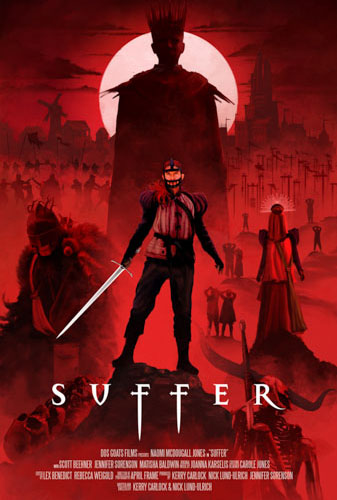
"…shows that power doesn’t come from lone saviors but from the shared struggle of a community."