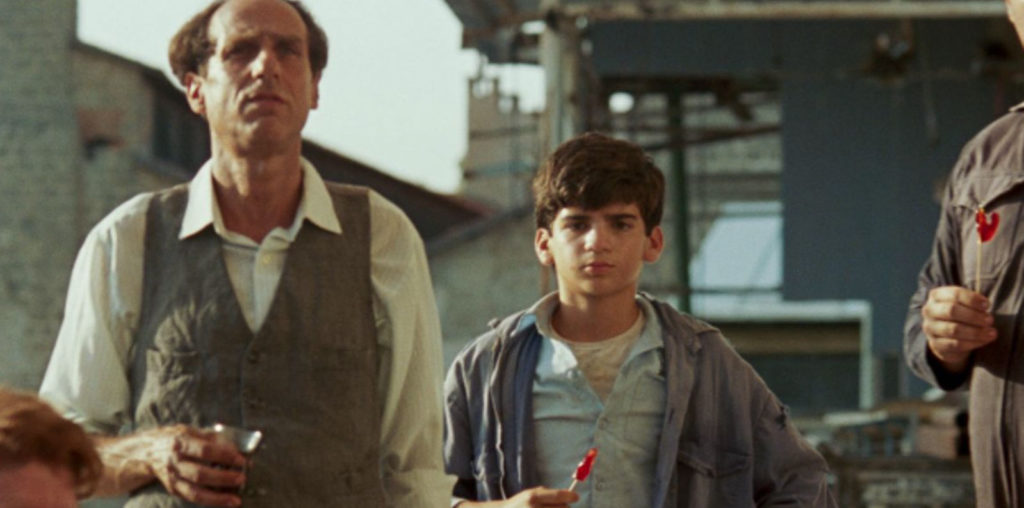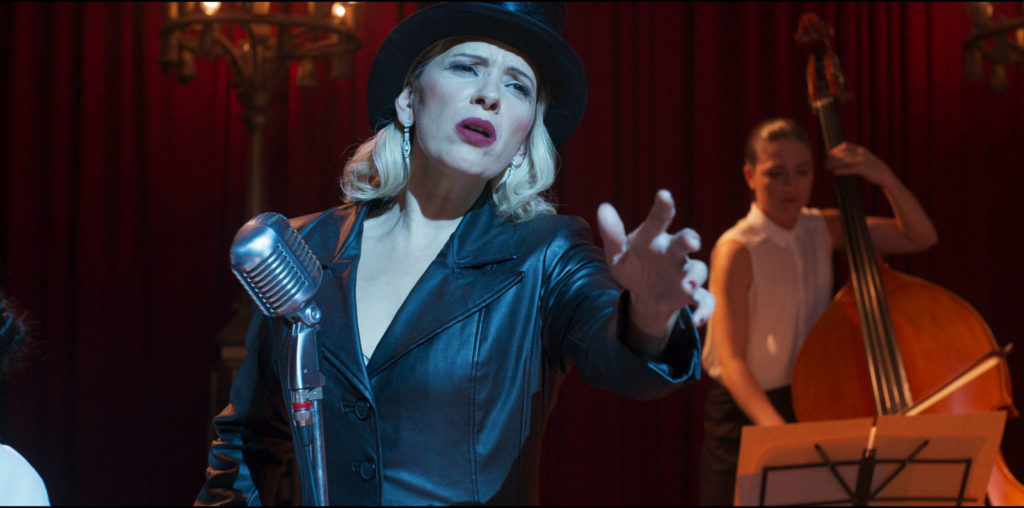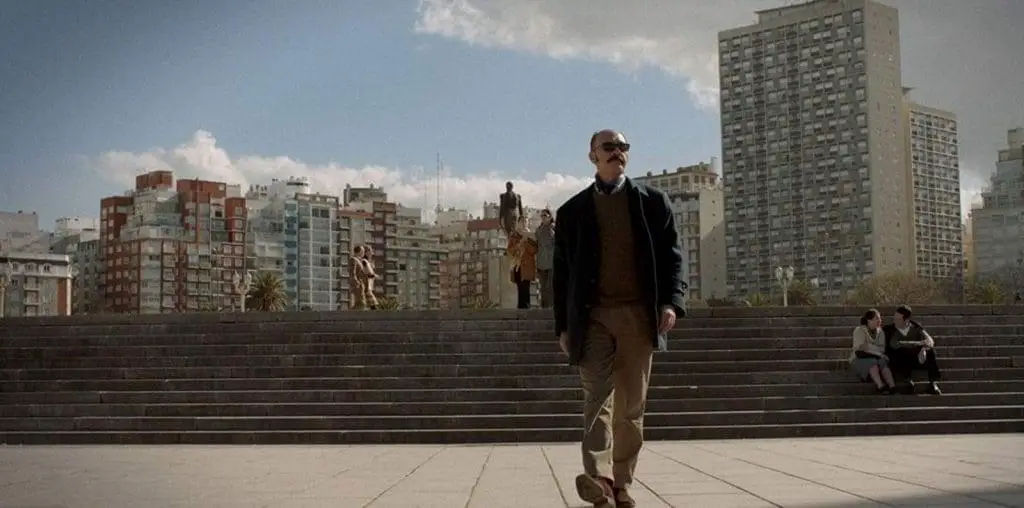
Slaughterhouse (Matadero) is the feature-length directing debut of screenwriter Santiago Fillol. Co-written by Fillol, Lucas Vermal, and Edgadro Dobry, the film begins at a screening of a film that was shelved in 1975 due to its extreme content. The event is marred by protestors chanting “murderer” at the filmmaker. However, the bulk of the narrative is a flashback to the production of that film and what would make it so controversial in the present.
Jared (Julio Perillan) is a B-movie director in Argentina, working to create his masterwork. His producer is pissed off because he was promised this was to be a quickly shot western made on the cheap. Instead, the entire shoot so far has involved the slaughtering of cows. However, Jared refuses to deviate from his vision, aiming for something truly authentic. The director’s wife, former actress Sheila (Lina Gorbaneva), supports him and believes in the story of an early 20th-century uprising they are chronicling.
However, tensions on set and at the ranch the filmmakers are staying at escalate. Soon, life imitates art, which imitates art, and Jared’s “authenticity,” questionable though it may be, gives way to reality. Peron is on his last legs, so to speak, and the entire country is on edge. Will this be the wake-up call the selfish director needs? Or will the search for the truth behind the lens lead to heartbreak for all involved?

“…tensions on set and at the ranch the filmmakers are staying at escalate.”
Slaughterhouse is an unflinching look at artistic intent colliding with the real world. There is certainly a place for both, but when one interferes with the other, what is the cost? In one scene, Jared and Shelia are looking over an opulent set. He’s not entirely happy with all the furniture, but does decide it would be the place to shoot the rape scene. “Imagine the last thing she will see is the chandelier hanging from the ceiling,” is roughly the line he says about it. Even in the middle of a logistical talk about the film he’s making, Jared only seeks to capture misery and pain. In an especially poignant moment, he grabs footage of those around him sleeping outside just after dawn breaks. Jared is not interested in how they look, but instead focuses the camera on the refuse and dirt surrounding them. The man can turn beauty ugly, a feat that’s no easy task.
To be honest, if this were told from Jared’s point of view, the story would be insufferable. That is because he is largely insufferable and selfish. That is not a knock against Perillan, who is very good in the role. It is just that the part is written to be a sorry excuse of a human being. No balancing him out is Shelia, who set her dreams aside for her husband. She’s far more understanding than he, and it is through her that the weight of what is happening is felt. Gorbaneva is perfectly cast, embodying the love and determination that mark the best of humanity. The supporting cast is also fantastic, with no false moments acting-wise to be found during the 106-minute runtime.
Fillol captures it all with an astute understanding of art, human nature, politics, and how they all intermingle. While a few scenes feel like padding, nearly everything serves a purpose, as it expands on the turmoil that rocks the country and threatens to destroy the filmmaker’s dream. It is all interesting stuff, told in a very artistic, expressive manner.
Slaughterhouse is a smart and well-made drama. The actors deliver raw and honest performances while the screenplay largely avoids forced drama. The themes of artistic expression, politics, and human decency are more relevant now than ever before, lending the film a timeless quality that will resonate for many years to come.

"…smart and well-made drama."