SUNDANCE 2026 FILM FESTIVAL REVIEW! Writer-director David Shadrack Smith’s Public Access tells a unique New York City story. The Big Apple and its colorful, creative inhabitants are the lead characters, and the filmmaker delves into the heart and personalities of New York City in the 1970s through the mid-1990s, when evolving media technology began to change our way of life. Unknowingly, the 1971 debut of public access through Manhattan Cable Television laid the groundwork for creative expression in the media of the time, shaping our culture and allowing freedom of expression.
Public access channels hosted porn talk shows, reggae music hours, and call-in shows on a multitude of subjects, especially psychics, and so much more. The documentary highlights that looking back at this moment in time is also a very unique history lesson you will not read about because it was from the hip and of the moment — self-expression at its best. For anyone who remembers public access from their cable provider, it was not just a harbinger of social media but also a solid commitment to First Amendment rights. Interestingly, some of the hosts or producers of these shows were unaware they were exercising that right because it was not an issue at the time. However, as channels were added to Manhattan Cable Television and money became available, public access entertainment grew, and so did the political environment.
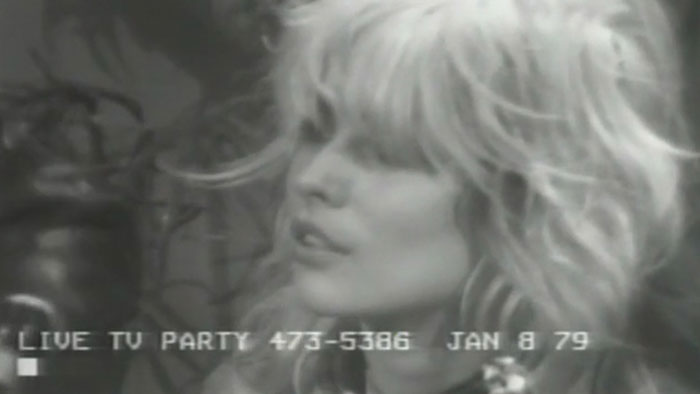
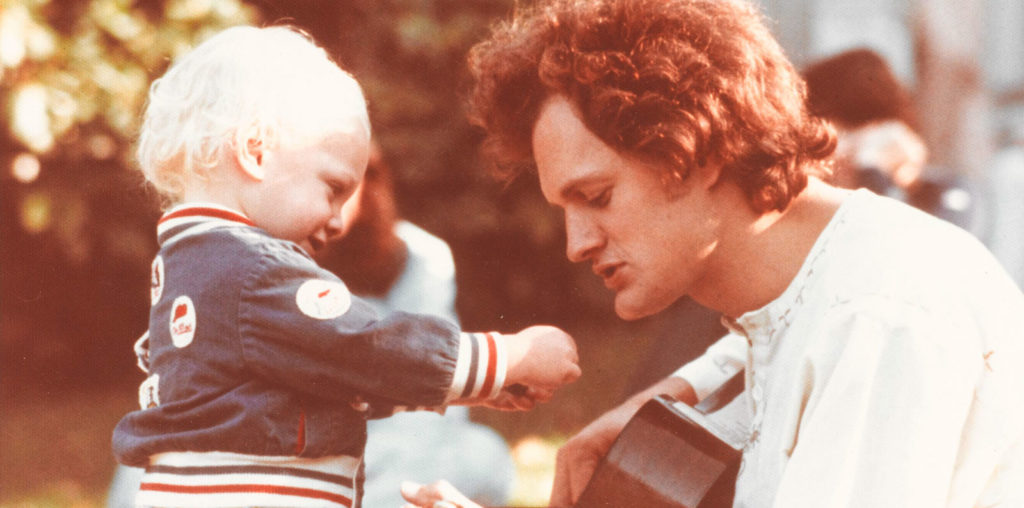
Debbie Harry appears in Public Access by David Shadrack Smith, an official selection of the 2026 Sundance Film Festival. Courtesy of Sundance Institute | photo by TV Party.
“…the 1971 debut of public access through Manhattan Cable Television laid the groundwork for creative expression in the media of the time.”
Public Access leaves no stone unturned. Smith and his dedicated, highly educated staff whittled down countless hours of VHS and whirling Beta tapes to create the film. A number of shows, such as TV Party, The Grube Tube, Squirt TV, The Emerald City, Paper Tiger Television, and Rockers TV, among others get featured. Beyond the creative license and the learning that evolved with technology, the film offers an unprecedented look inside one of the “greatest media experiments,” capturing viewers at every hour of the day and at every age, with access to cable television.
Presented as “rare archives” from New York City’s underworld arts and creative pioneers, the movie captures a world of creators who “shattered rules, defied censors, and transformed our televisions into a free-speech battleground where anyone could be a star.” These folks were, even while battling the system, from “Screw” magazine founder Al Goldstein to punk rockers and those with edgy political opinions and an open-minded acceptance of all people and cultures. Court battles were won but not always appreciated.
Unfortunately, there is so much material and so many people in the history of public access television that one documentary cannot do it justice, no matter how engaging it might be. The narrative feels like it would be better served as a history series, which could zero in on the changing cultural tide of New York City, as some of the subject lines were stretched out, creating a disconnect from others.
However, for those of us who need to connect with our youth and grew up with cable access, David Shadrack Smith strikes a nostalgic nerve you cannot ignore. Unlike today’s social media, it was real, honest, and created by the hands and minds of those in front of and behind the camera and at the editing bay. Perhaps there is more to come from Public Access outside of a one-time documentary film, as I would like to see more depth giving to how cultural shifts gave way to and than crushed public access television.
Public Access screened at the Sundance Film Festival

"…leaves no stone unturned."