Peter Fonda provides the film’s most oddly interesting moments as the bicycle-riding Van Helsing, sporting granny glasses and long hair, ranting about Dracula’s decline like Elvis. His performance achieves dignity even with saying the most outlandish dialogue, like delivering lines about vampires blending into major cities with world-weary conviction. This was a hallmark of Peter Cushing’s work, in which he mentioned for actors, “ You must make the unbelievable believable”. Fonda also appears in distorted footage of the dying Count Baloghside moments with Bela Lugosi from White Zombie.
The comparison with Abel Ferrara’s The Addiction (1995) proves instructive also, as both films deploy black-and-white New York vampirism as a metaphor for philosophical despair, both cast vampirism as an addiction and existential condition rather than a supernatural curse. Where Ferrara (with Christopher Walken’s memorable supporting turn) channeled his vampires through Catholic guilt and intellectual pretension, Almereyda opts for cooler, more emotionally distant territory. The Addiction burns with fevered conviction; Nadja maintains elegant remove.
Executive producer David Lynch cameos as a morgue attendant, his customary weirdness making it difficult to discern when he’s supposedly hypnotized.
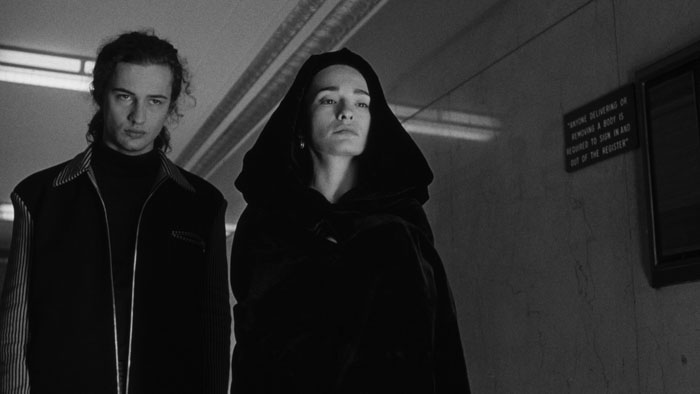
“…succeeds most when embracing its lineage, those visual echoes of Universal and Hammer Studios, with the visual weight borrowed from European art horror…”
Where the 1936 Dracula’s Daughter achieved subtle sympathy through Holden’s restrained performance and Hillyer’s efficient direction, Nadja fumbles its central character’s thoughts. Is she a tragic victim of cruelty? Destructive madwoman? Misunderstood keeper of beauty and tenderness? The film cycles through positions with clearer dramatic focus.
The human characters like Lucy (Galaxy Craze), her husband Jim, and Cassandra (Suzy Amis) exist primarily as narrative furniture, dragged through increasingly convoluted relationships. By the film’s end, Nadja marries someone who might be both legally her uncle and biologically her father, a Gothic tangle
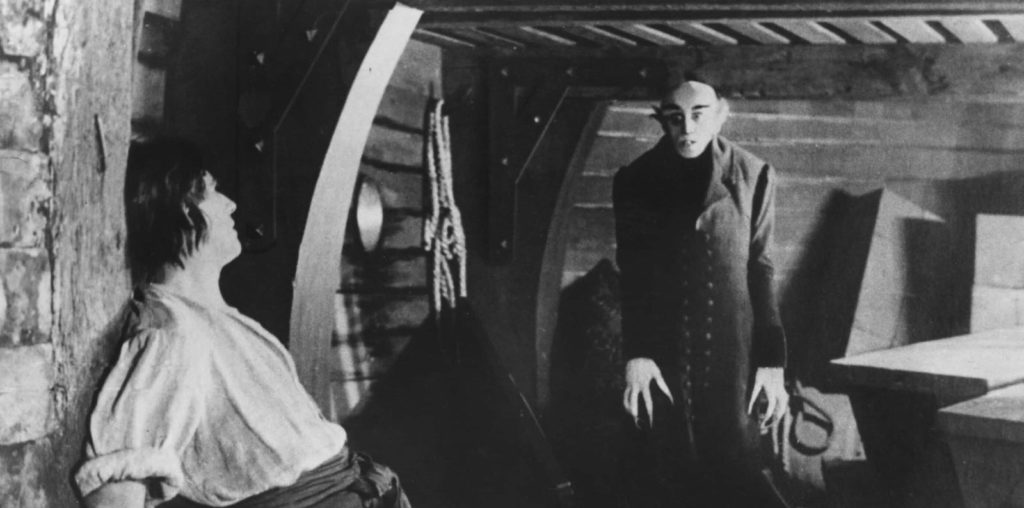
Nadja exemplifies a particular strain of 1990s independent cinema to transform the horror genre into something deeper than the Saturday matinee or Shock Theatre. Ironic engagement with genre traditions, self-conscious artistry, and deliberate pacing that risks viewer alienation. It’s vampire cinema for those who want to demonstrate they’re above vampire cinema. Nadja succeeds most when embracing its lineage, those visual echoes of Universal and Hammer Studios, with the visual weight borrowed from European art horror, yet falters when maintaining cool distance from material that demands a stronger commitment
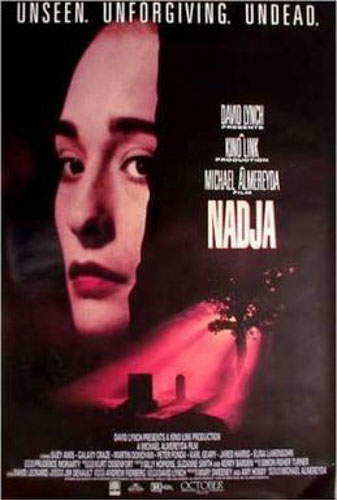
"…succeeds most when embracing its lineage those visual echoes of Universal and Hammer Studios..."