Everybody wants to live forever. Fewer have the energy to be virtuous. The vampire as modern archetype offers something perversely appealing, a path to eternal life without the burden of goodness. Joel Schumacher’s The Lost Boys did this in a more blatant way than Nadja. Michael Almereyda’s film gives you a glimpse of a film of vampirism, not as gothic romance but as more of a malaise, even if Bram Stoker is listed as co-writer.
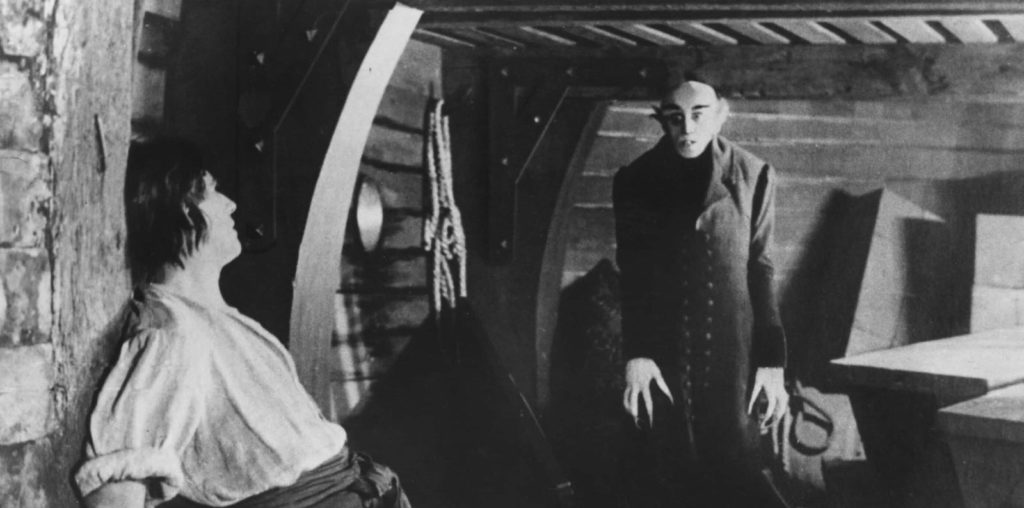
Filmed in stark black and white with grainy inserts suggesting Undead perception, Nadja announces its arthouse credentials immediately. Director Michael Almereyda takes on the look of Carl Dreyer’s Vampyr with a dash of Werner Herzog’s Nosferatu and the claustrophobic feel of George Romano’s Martin. Heavy lifting of any coffin lid for a film, the result is debatable, even with David Lynch as an executive producer. What’s undeniable is the film’s visual Noir City look of Brooklyn, New York, becomes a landscape of shadows and isolation, with Staten Island locations standing in for Eastern European Gothic spaces.
Nadja works the same areas as a remake of Lambert Hillyer’s underrated 1936 Dracula’s Daughter, one of Universal’s most psychologically complex horror films, next to The Black Cat, The Raven and Murders In the Rue Morgue. Libby Villanova’s costuming of Elina Löwensohn in the role of Nadja echoes Gloria Holden’s elegance. Löwensohn has a facial resemblance to Holden with cheekbones and far-off looks. Where Holden’s Countess Marya Zaleska struggled with self-loathing and the desire for redemption, Nadja embodies similar torment filtered through ’90s and queer desire made explicit rather than Universal Studios attempt to code the same message.
“…follows Nadja (Elina Löwensohn), daughter of the recently deceased Dracula, as she drifts through Manhattan’s night world.”
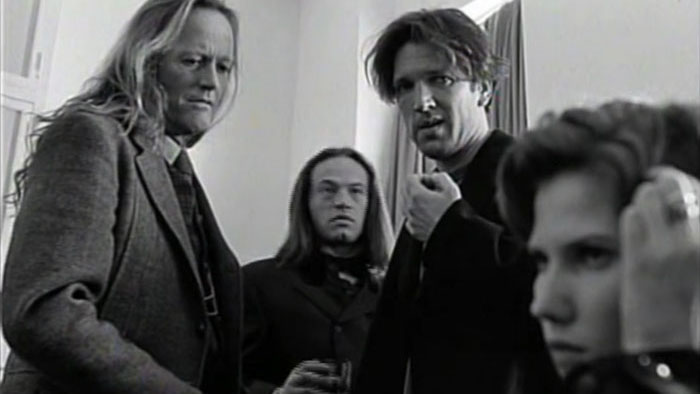
The plot follows Nadja (Elina Löwensohn), daughter of the recently deceased Dracula, as she drifts through Manhattan’s night world. She’s prowling bars with come-ons that should trigger immediate moments, yet her blank beauty proves hypnotic. Meanwhile, Jim (Martin Donovan) must bail out his eccentric uncle, Dr. Van Helsing (Peter Fonda), after the old vampire hunter stakes Dracula in a Manhattan morgue. The film treats the supernatural material with distance, making nocturnal activities, linking up with others for drinks, making it like a city of jaded souls with serve of genuine melancholy.
Almereyda’s visual choices create fascinating cross-references within vampire cinema’s history. The seashore sequence where Nadja wanders desolate beaches conjures memories, the most faithful adaptation of Stoker’s story, simply called Count Dracula, with Louis Jourdan appearing on the actual cliffs of Whitby. A Christmas ornament glimpsed in one scene feels lifted directly from Terence Fisher’s Hammer aesthetic, that peculiar Gothic domesticity the British studio perfected. These aren’t mere homages but positioning with a nod to the past of iconic vampire cinema.
The film also anticipates Ana Lily Amirpour’s A Girl Who Walks Home Alone at Night (2014) by two decades as both feature female vampires as lonely urban predators, both employ stark monochrome cinematography, and both refuse conventional horror beats in favour of mood and atmospheric displacement. Where Amirpour would later blend Iranian New Wave with spaghetti Westerns, Almereyda moves the Universal Studios Gothic with downtown New York art cinema.
"…succeeds most when embracing its lineage those visual echoes of Universal and Hammer Studios"