High school has always been hell, but in Mean Boys it’s queer, curated, and sometimes lethal. Director Alexander Gonzales gives the teen clique movie a bisexual twist, layering emotional repression, social performance, and accidental homicide beneath a high-gloss surface of charm and cruelty.
The setup feels familiar: a group of popular boys cling to power through seduction, intimidation, and passive-aggressive alliances. But when a joke goes too far, what follows isn’t chaos. It’s calculation. The cover-up becomes part of the performance. These boys know how to stage everything, even guilt.
There is murder, but it’s not a bloodbath. The tone stays quiet, the visuals soft. Gonzales avoids the neon palette and screaming montages you might expect from a film trying to be Heathers for the TikTok era. Instead, Mean Boys stays grounded. The horror creeps in slowly, through glances, silences, and the way someone always seems to be performing for someone else.
What sets Mean Boys apart is how it captures queerness in 2025 without resorting to the usual tropes. These characters aren’t tragic or triumphant. They aren’t coded or sanitized. They’re simply messy, image-conscious, and constantly recalibrating who they are depending on who’s watching. The film explores how identity and emotion become entangled when everyone is always “on.” The boys at the center aren’t just trying to survive high school. They’re trying to direct it, star in it, and control the edit.
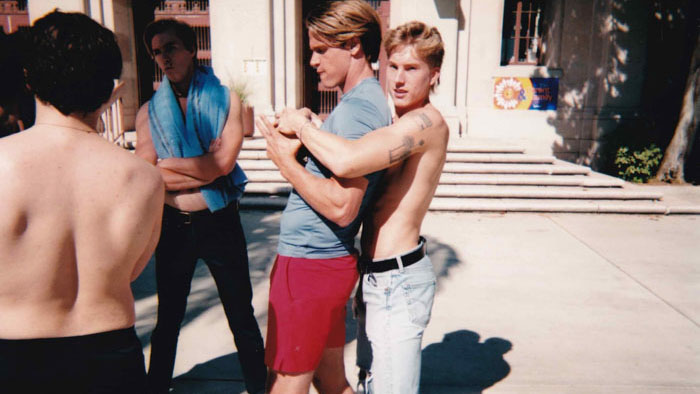
A tense embrace between characters during a schoolyard scene in Mean Boys.
“…a group of popular boys cling to power through seduction, intimidation, and passive-aggressive alliances.”
The queerness here is fully integrated into the story’s tension. These boys aren’t wrestling with coming out. They’re already out. But being visible doesn’t mean being understood. The characters navigate desire, insecurity, and betrayal with a level of calculation that feels sharp and current. They know how to cry convincingly. They know how to hurt each other in ways that don’t leave marks. And they know how to make you feel like it’s your fault.
The cast nails that balance. Ryan Wayne brings a chilling stillness to Ira, all-knowing eyes and half-finished sentences. You believe he’s holding something back, but you’re never sure what. Jake Hepner, as Duke, adds a layer of impulsive volatility that contrasts well with Wayne’s more internalized approach. The chemistry among the ensemble feels lived-in, like these boys have shared everything except the truth. You get the sense they’ve all hooked up, betrayed one another, and agreed not to talk about it.
The pacing is tight. Scenes end before they resolve, emotions shift without warning, and the final moment lands like a quiet threat. The camera lingers where it shouldn’t. It lets the audience sit in discomfort rather than pushing for clarity. Nothing is over-explained, and that’s the point.
The influence of films like Jawbreaker, Cruel Intentions, and The Virgin Suicides is clear, but Mean Boys doesn’t lean on nostalgia. It shares Jawbreaker’s bones: the friend group, the secret, the cover-up. But it trades the candy-coloured chaos for something cooler and more controlled. This isn’t a throwback. It’s a cold mirror held up to what gay youth culture looks like now. Visibility doesn’t guarantee safety. Vulnerability doesn’t guarantee closeness. These boys are not lost. They are polished, emotionally calculated, and in control of the narrative. Until they are not.

"…trades the candy-coloured chaos for something cooler and more controlled."