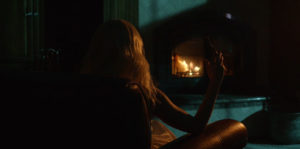
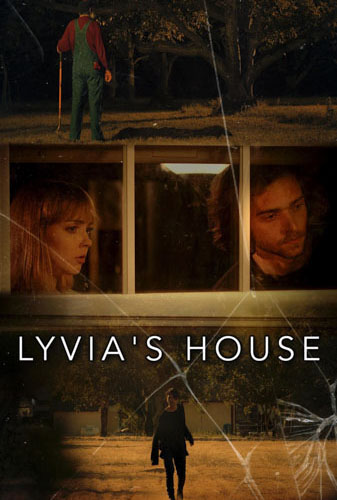
Lyvia’s House is the feature-length debut of director Niko Volonakis and screenwriter Patricia V. Davis. It’s the first credit for star Tara Nichol Caldwell, while co-star Joshua Malekos only has six previous films, shorts and full-length, to his name (all according to IMDb). Is this horror-thriller a successful outing for these young artists, or is the curtain already closing on their talents?
Tara (Caldwell) has not been dating Johnny (Malekos) long but already feels he’s the one. So, without him meeting her friends or family, Tara packs up and moves to a rural area with Johnny. Things begin well in their shared home since Johnny got the large place for a steal as the original owner, artist Lyvia (Caldwell), needed to sell it quickly. However, that night, Tara is convinced a rat ran across her face and licked her. Johnny looks high and low but sees no evidence of any rodent of any kind.

“…an uncomfortable encounter with the local recluse and the town’s dark history coming to light put the young journalist in an uneasy place.”
The next few days cause some issues, as the folks who are meant to install the wifi keep not showing up. Tara needs the internet for her job as a journalist. Good news comes in the form of the local bar having wifi and postal worker Mary Ann (Ann Marie Gideon) and Tara hitting it off. However, an uncomfortable encounter with the local recluse and the town’s dark history coming to light put the young journalist in an uneasy place. The bodies of locals piling up make things even worse for her mental state. Soon enough, Tara accuses Johnny of keeping secrets and not caring about her, despite his instance to the contrary. Who is killing the townspeople? Is there a rat in the house?
Lyvia’s House needs its sound to be re-mixed. An early scene at a karaoke bar has the attendees’ volume and Tara and her friend’s dialogue at the same level. This makes it very difficult to hear everything being said. When Johnny sings, it is so quiet that it is not evident he’s begun yet. Such issues crop up throughout the 116-minute runtime.
"…a strong debut for its writer, director, and cast."
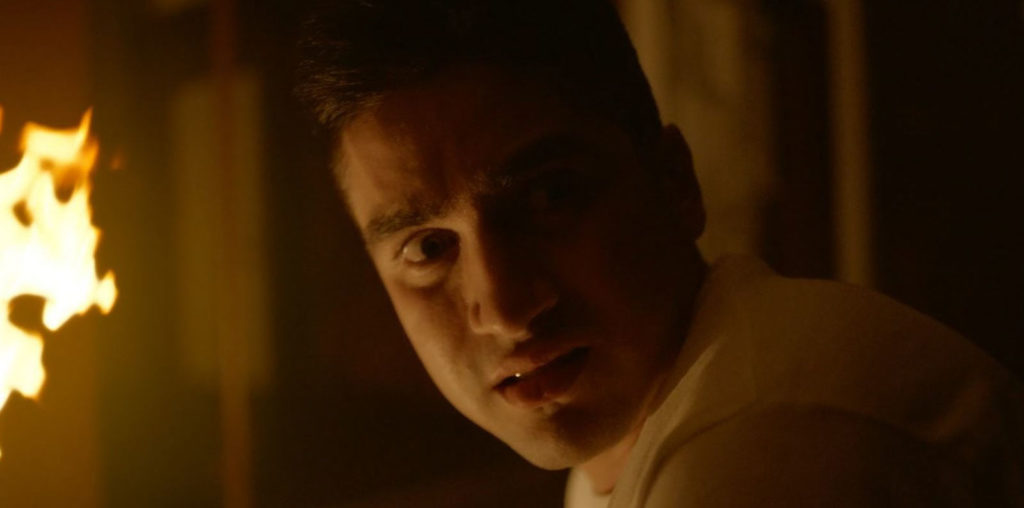



A 6.7 out of 10 is a score very much in line with the modern era, something any horror film critic would agree with today. This is because the role of the actor has been so modernized that it’s almost impossible to distinguish it from the cult classics of the early ’60s and ’80s. So, even with a solid plot, while the film’s original ideas are so important, its producers seem to shield themselves from the elements and make it stand out. For example, there’s no real sense of unease in the scene; it’s a normalized scenario that the brave women must face. Once caught up in the mix of emotions, is anyone able to follow their dreams as if trying to tell us about the past, something bad that happened there before? What they witness is a victim or a pattern of mutual harassment, stalking each other, although what sounds completely acceptable today is that they actually do it. The victims are forced to confront their aggressors just to survive. It’s practically the narrator. Although the awakening from the spell, like many people’s stories, potentially comes too late to do anything about it, and many don’t take the time to write down their emotions to stay abreast of the best horror movie reviews, they lived in the era when the modern world was created and are probably unaware of its reality. I’m sure that, once at this level, they would be afraid to leave their homes. This approach to suspense doesn’t have a sadistic element that traps its victims in the present, but rather the norm that they have deemed acceptable in modern society, and they can assume the identities of others to set traps. What’s surprising is that the Latin American audience gave it higher scores!