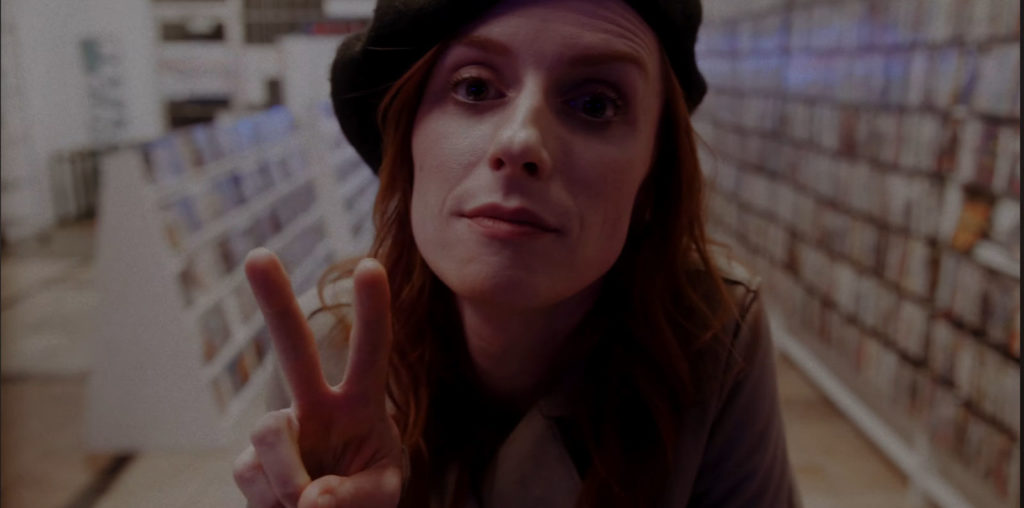
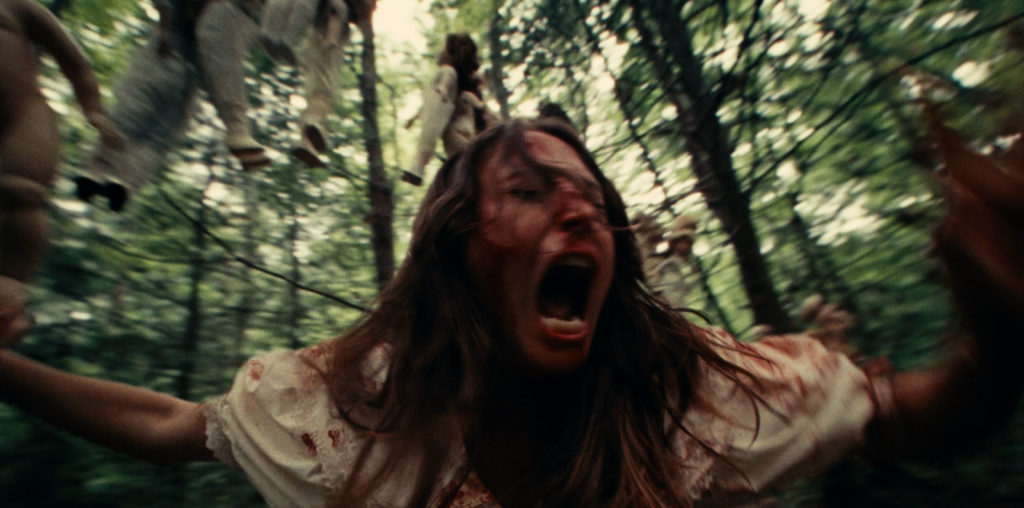
Frankie, Maniac Woman wastes no time dragging you in. It lurches, snarls, and bleeds its way onto the screen. It feels spat out, half-digested, and still hot with no polite introduction. Director Pierre Tsigaridis and screenwriter/star Dina Silva come out swinging, and the mood is not “strap in” so much as “brace yourself” as the film almost dares you to look away.
Francis (Silva) is a struggling singer trying to survive in Los Angeles while being relentlessly reminded that her body disqualifies her from mainstream acceptance. She is mocked at the gym, dismissed by doormen, undermined by her own management, and haunted by a voice that articulates the ugliest thoughts she has already internalised. All of these things push Francis to her breaking point. She then lashes out in a most deadly way. The presence of Jerome (Tsigaridis) complicates things further. He might be a demon. He might be a hallucination. Jerome might be the embodiment of everything Francis has swallowed for years, finally unleashed as she murders indiscriminately.
The film’s most uncomfortable insight is how ordinary the impediments Francis faces feel. Not heightened or exaggerated. Just recognisable. The violence appears in ruptures rather than slow catharsis. Frankie’s transformation into a killer is more a warped attempt at control than a descent into madness. The narrative’s refusal to tidy up who or what Jerome is leaves an ambiguous itch that is more fun to scratch than answer.
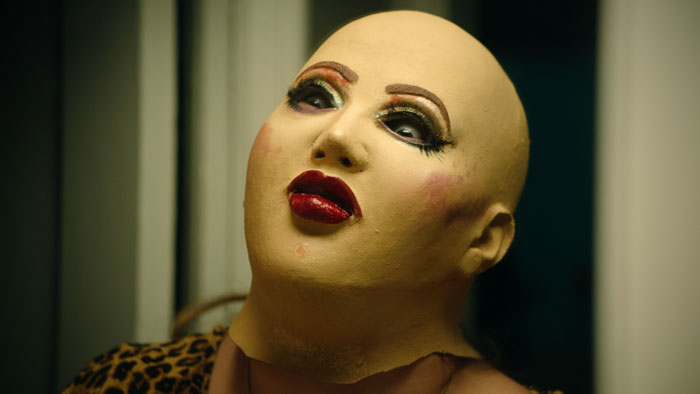
“…a struggling singer trying to survive in Los Angeles while being relentlessly reminded that her body disqualifies her from mainstream acceptance.”
Frankie, Maniac Woman moves in jolts with scenes colliding rather than flowing. Time stretches and snaps back, and colour floods the frame as the body count rises. Soon, the cause-and-effect logic gives way to emotion, something which viewers expecting a clean arc may find abrasive; for others, it will feel honest. Frankie’s violence is never framed as triumph. It is messy, misdirected, and frequently horrifying, aimed as much at herself as at those around her. That refusal to offer a neat ideological justification is one of the film’s sharpest qualities.
Silva’s performance is fearless. She plays Frankie as someone who is perpetually swaying between humiliation and defiance, never asking for sympathy but quietly earning it anyway. Her performance is physical, sweaty, furious, often uncomfortable to watch, and all the more compelling for it. Tsigaridis leans into a deliberately coarse aesthetic. It’s a film that looks and feels scabbed over. High-contrast lighting and practical gore are pushed just past the point of comfort, a kind of deliberate ugliness that nods to exploitation cinema while rejecting its usual power dynamics.
At times, the film threatens to repeat itself. Certain ideas circle rather than deepen. But even these issues feel bound up in the worldview. Frankie, Maniac Woman, is not interested in refinement; she is interested in exposure. What remains is not the gore, though there is plenty of it, but the anger beneath it. The story is about what happens when a society teaches someone to hate themselves so effectively that violence begins to feel like language. It is ugly, provocative, and often deeply uncomfortable. It is also, for all its flaws, impossible to dismiss.

"…impossible to dismiss."