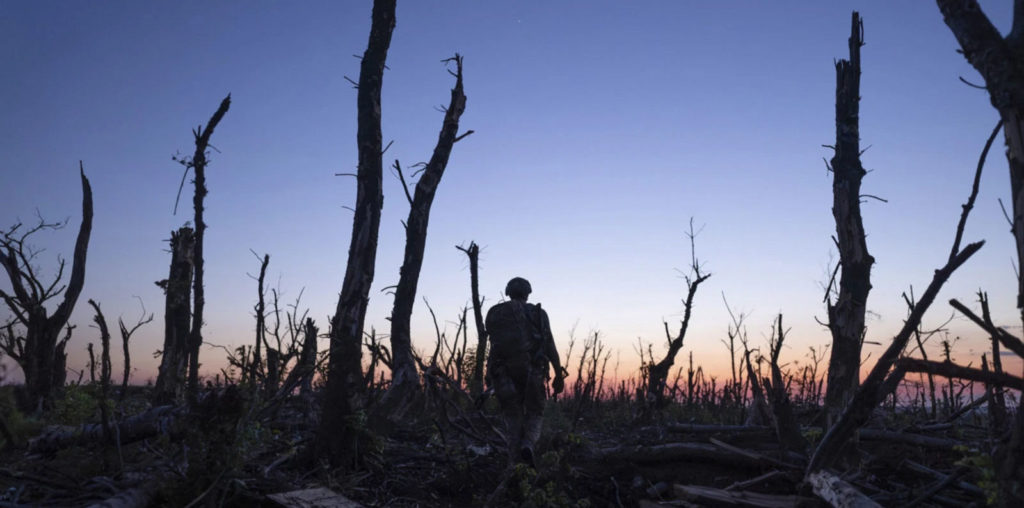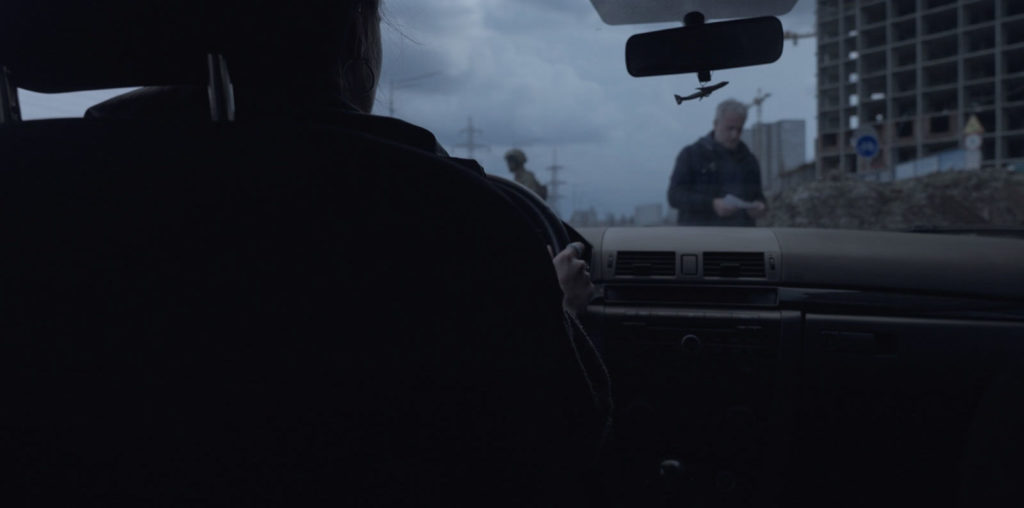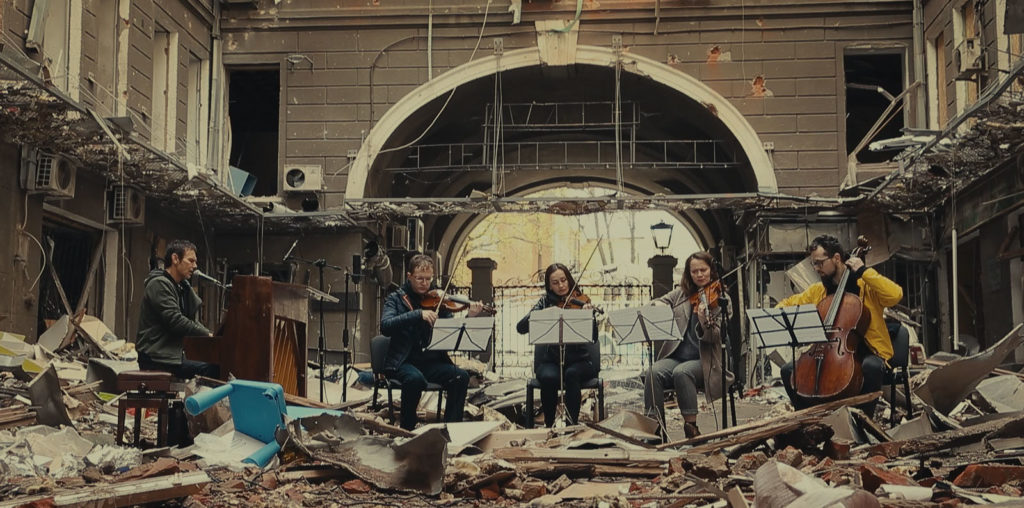
Divia is a meditative documentary directed by Ukrainian filmmaker Dmytro Hreshko, capturing the devastation of Ukraine’s natural landscape during the ongoing war. Told entirely through sound and imagery, the film opens in serenity, with drone shots of a Ukrainian forest. We see a bear wading in a river, deer and cattle roaming the forest, and birds migrating across a vast waterway. These images are accompanied by a haunting soundtrack of strings, but the tranquility is disrupted by the thunder of jets and explosions overhead and in the distance. Additional drone footage reveals scorched fields, skeletal remains of livestock, and bomb-cratered villages.
Amid the destruction, deminers, rescuers, and environmental workers move through the ravaged land, doing their small part in the country’s recovery. They dig through debris, disarm mines, and search flooded homes for survivors. Missile casings are stacked together, and defused mines are disposed of, in an explosive display of power. Nature, too, begins its slow regeneration, with grass pushing through charred soil and birds returning to nest among the tanks and ruins.
Inspired by his experience as both a filmmaker and a soldier in Ukraine’s Cultural Forces, Hreshko conceived Divia as a spiritual reflection on ecological loss and rebirth. The film takes its title from an ancient Slavic goddess of nature, symbolizing life’s defiance against war and death. Hreshko describes his minimalist, observational approach, which dispenses with dialogue and narration, allowing the sounds of wind, water, and machinery to serve as both lament and hymn.
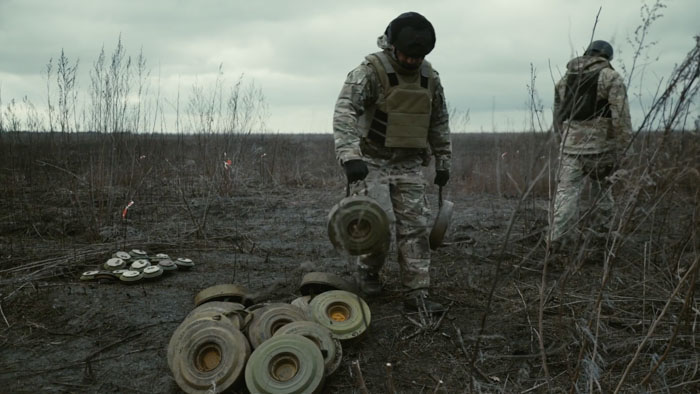
Screenshot
“…capturing the devastation of Ukraine’s natural landscape during the ongoing war.”
War is bad. Regardless of your feelings on the Russian-Ukrainian war, Divia highlights the stark contrast between nature and the conflicts of war. No matter how bad things get or the amount of forests burnt to the ground, nature has a way of overcoming the worst that man can do. In the short term, man looks like they’re winning, but nature always comes out on top in the end. The other thing the film shows is the futility of war. There are two sides, and while their leaders sit in the lap of luxury with their generals, it’s the innocent citizens who pay the price in their deadly game of chess.
As a film, Divia is a work of art. Not a single word is spoken, nor is there any commentary. It’s a portrait of beauty amid devastation. It’s a snapshot of innocence paying the price for power and diplomacy. The images are crisp and vibrant…in other words, it feels real and not just some distant images from Life magazine.
In the end, Divia is both an elegy and a reminder that even in the wake of destruction, life — both human and natural — finds a way of coming back. Through its eerie silence and breathtaking imagery, Dmytro Hreshko captures the enduring spirit of a land and a people that refuse to be defeated.

"…captures the enduring spirit of a land and a people that refuse to be defeated."