
In Nick Craven’s short film, Crying on Command, Jordyn (Nancy Kimball) waits in a narrow hallway filled with other actresses in a typical cattle call. As you’d imagine, Jordyn’s anxiety rises with every passing minute. When her turn comes, Jordyn steps into the room and delivers a monologue so moving that it leaves everyone stunned. The reader praises her performance, explains the details of the shoot, and all but assures her that she has the part. Just as Jordyn begins to relax, the director (Jake Fallon) leans forward with one final request. Before anything is official, they need to see her cry on command.
Although I’ve never auditioned as an actor, Craven sets the perfect tone for a cattle call. He opens with a narrow hallway of actors auditioning, quiet and filled with tension and anxiety. Everyone is hopeful for that big break, but then the next cow is sent to the slaughterhouse to fend for its mere existence.
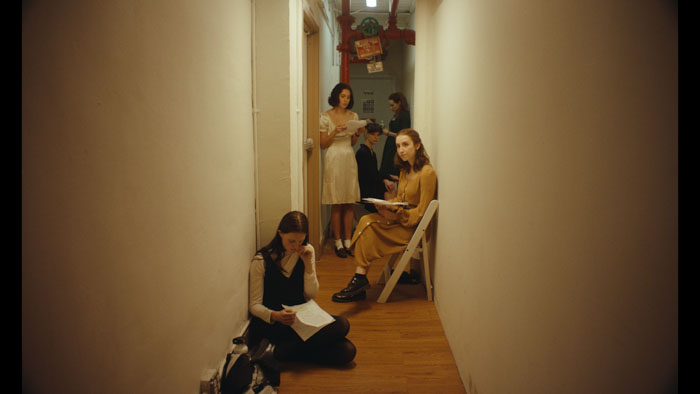
Several actresses, including Nancy Kimball, wait anxiously in a hallway before their auditions.
“…Jordyn steps into the room and delivers a monologue so moving that it leaves everyone stunned.”
Craven describes Crying on Command as an exploration of the moment when an actor is made to feel they are not enough, overwhelmed by desperation and insecurity. Drawing from his own experiences as a young performer facing rejection and anxiety, Craven wanted to capture the vulnerability of being judged in such an unforgiving space. Through minimalist sound, stark visuals, and unsettling framing, he aimed to place viewers inside Jordyn’s perspective, as if she were a subject in an experiment.
Mission accomplished. Right from the start of Crying on Command, we feel the stakes, the arbitrary nature of the winners and losers, and that feeling of knowing you’re perfect for the role, only to be told you’re not perfect. Nancy Kimball nails the emotional performance. We feel everything Jordyn feels, from disappointment to injustice.

"…we feel everything Jordyn feels, from disappointment to injustice."