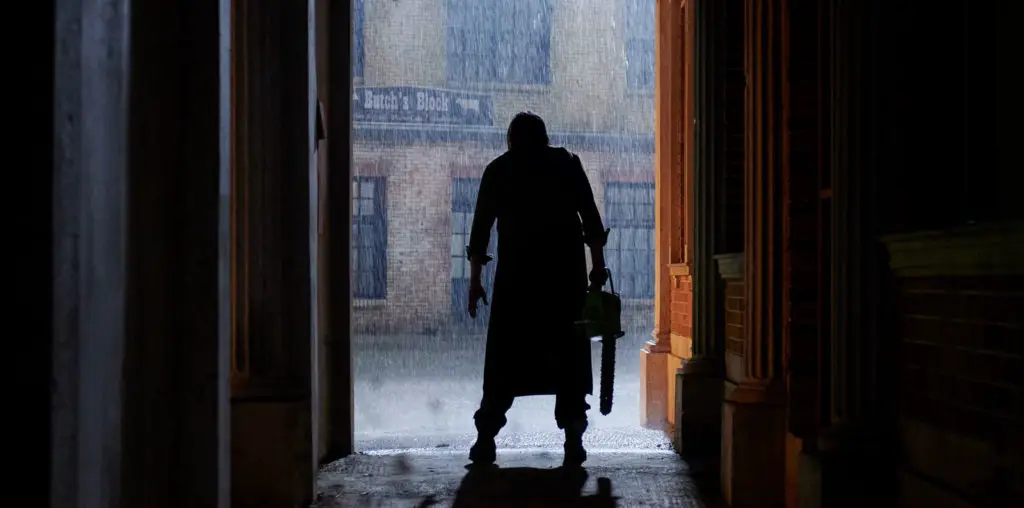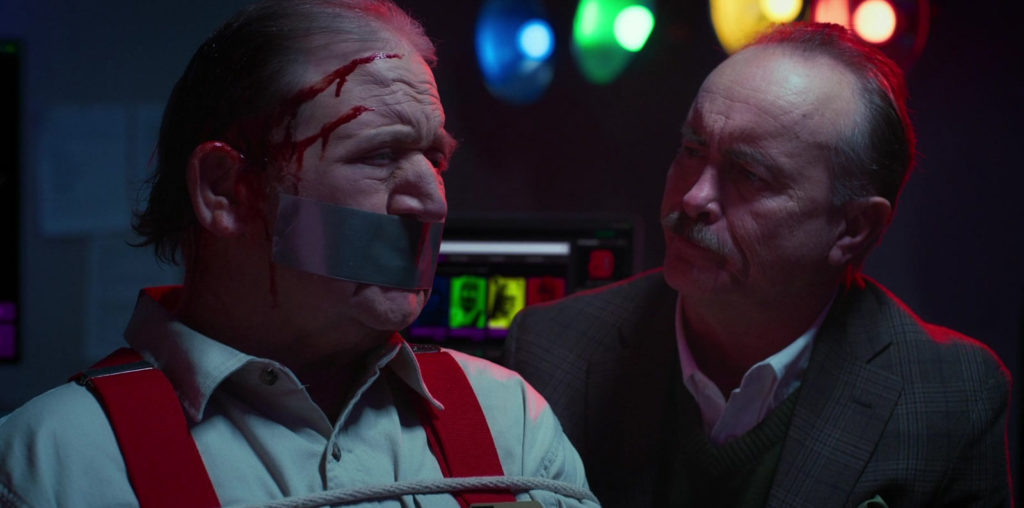
Director Alexandre O. Philippe has become a horror genre explorer of fear, obsession, and myth. Over the years, Philippe has dissected film that shaped the collective American nightmare: Psycho, Alien, The Exorcist, the work of David Lynch. His latest release, Chain Reactions, continues that tradition by revisiting one of the most infamous American horror films of all time Tobe Hooper’s The Texas Chain Saw Massacre as seen through the eyes five other prominent genre personalities
Chain Reactions feels less like digging into the faults of the work and more like complete adoration. It’s a film about influence, structured as five separate monologues by artists whose 1974 nightmare Hooper has forever changed. Comedian Patton Oswalt, director Takashi Miike, author Alexandra Heller-Nicholas, novelist Stephen King, and filmmaker Karyn Kusama each get their own chapter on how The Texas Chain Saw Massacre fired their imaginations as children, as creators, and as people.
Chain Reactions speaks of the film’s madness as a kind of spiritual starting point with the same global hysteria Romero once imagined in Night of the Living Dead. Miike draws a direct line between Hooper’s audacity and his own extreme style in pictures like Audition and Ichi the Killer. Australian Alexandra Heller-Nicholas finds kinship between Leatherface’s desolation and the isolation of her native country’s cinema, from Wake in Fright to Picnic at Hanging Rock. Stephan King praises Hooper’s lo-fi gore and violence, connecting its energy to Sam Raimi’s early work and the Hollywood system that it rebels against. Kusama eloquently articulates the film’s formal grace — its unnerving rhythm, its sense of entrapment, and the artistry behind its chaos.
Each voice is passionate, intelligent, and deeply personal, and yet, Philippe’s structure keeps them apart where a discussion might have yielded more. Each artist appears in their own uninterrupted chapter, a creative choice that encourages contemplation much like a book chapter. Chain Reactions end up feeling like an anthology rather than a cinematic conversation. You could easily watch one segment, pause, and return later without losing continuity, but a weakness in the flow. The result is a film that talks at you rather than with you.
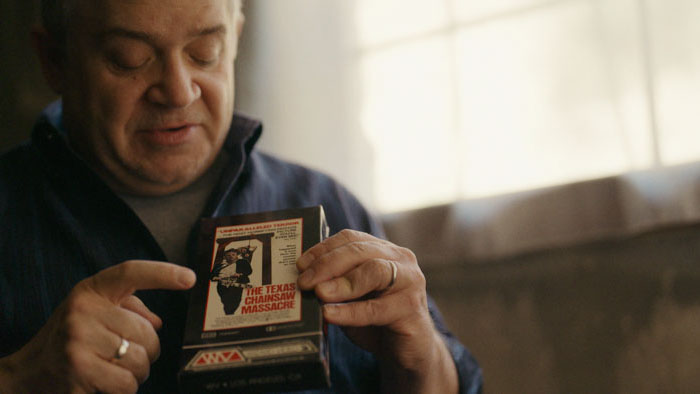
A participant examines a classic Texas Chain Saw Massacre VHS during his chapter in Chain Reactions.
Courtesy of Dark Sky Films.
“Each artist appears in their own uninterrupted chapter, a creative choice that encourages contemplation much like a book chapter.”
That static energy is compounded by the film’s visual simplicity with long stretches of talking heads and sparse intercutting. There’s little stylistic interplay — no connective ideas. For a documentary about one of the most energetic and tactile horror films ever made, Chain Reactions feels inert. The camera sits still while the minds wander.
The film’s most surprising idea and discussion point is a recurring sympathy expressed for the cannibal family at the core of the story. Several interviewees discuss Tobe Hooper’s film as a tragedy of working-class despair, a family devoured by the machinery of capitalism. They are also linked to influences from certain shots in The Texas Chainsaw Massacre to Universal Studios Monsters, Hammer Films, and early banned by a guilty Stephan King himself on school shootings.
There are also moments of unintended irony, most notably during Stephen King’s reflections, which connect with imagery from Stanley Kubrick’s The Shining, a film King famously despises. King then links it with young Sam Raimi, telling him how he did his famous steadicam move in The Evil Dead, using two guys running with a camera on two planks of wood.
Chain Reactions is not without its pleasures. Philippe remains an astute listener, and his subjects’ devotion is contagious. The documentary reaffirms how no two people ever experience the same film the same way, which is what good art in any form should do. But reverence alone can only go so far. What begins as a meditation on influence ends as a series of isolated sermons bordering on self-promotion. Chain Reactions is both a tribute and a cautionary tale about the limits of homage. For horror devotees, this works well for casual viewers; it may feel like a symposium that never quite sparks.

"…Chain Reactions is both a tribute and a cautionary tale about the limits of homage."