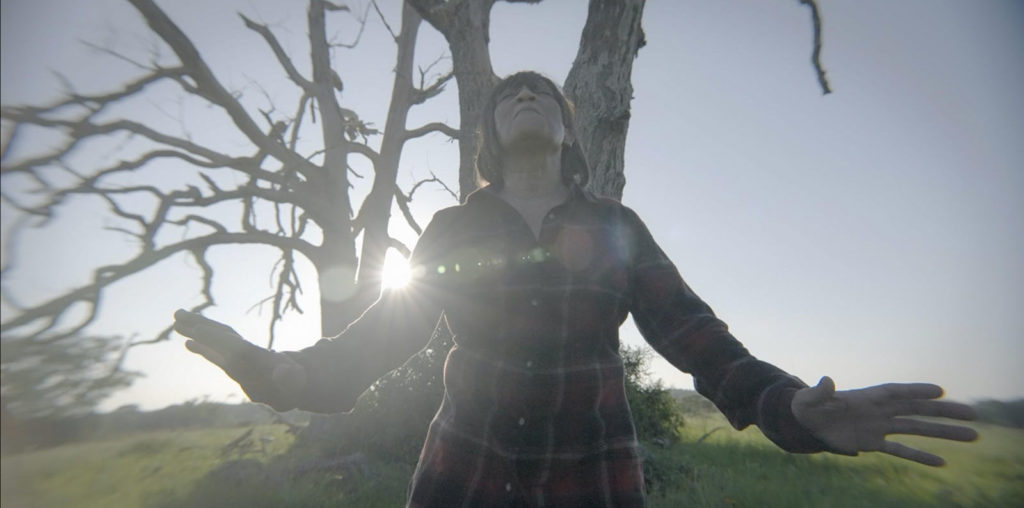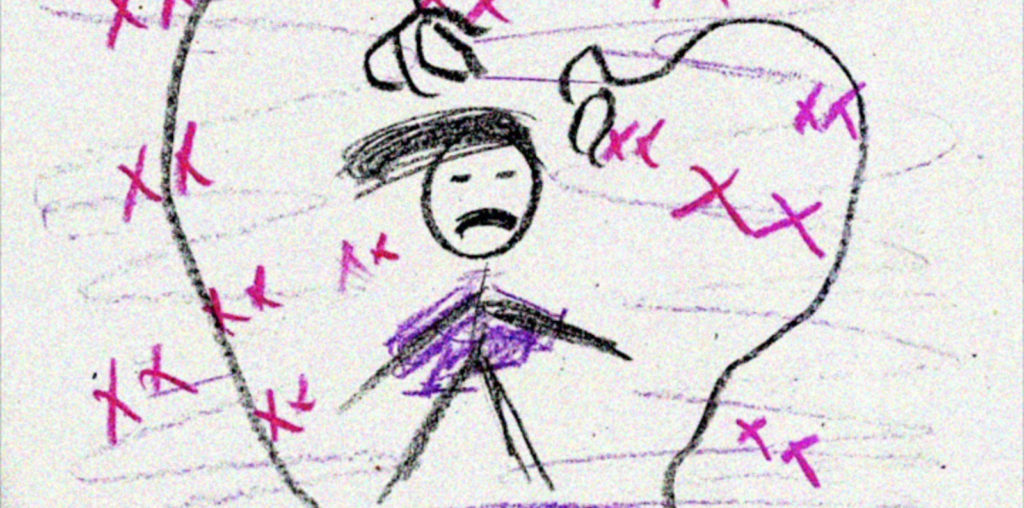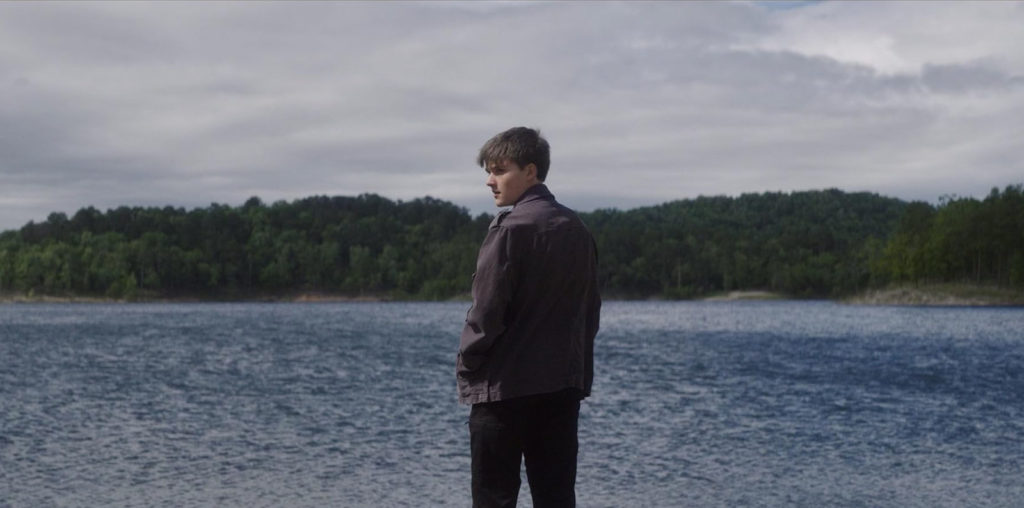
Nayla Al Khaja is the first female director in the United Arab Emirates. She returns to the big screen with her second feature-length film, Baab, written by Nayla Al Khaja, Masoud Amralla Al Ali, Felicity Evans, and Toby Venables. The fantasy drama centers on the grieving Wahida (Shaimaa El Fadul), whose twin sister died a year ago. She hasn’t gotten over it and seems adrift in life. After Nisma died, Wahida left her husband, and she and her two children, Tariq (Mansoor Alnoamani) and Amal (Meera Almidfa), moved in with Wahida’s mom, Umi Fatma (Huda Alghanem). It is here that the lady develops tinnitus so severe that it causes bleeding from her left ear.
In a hazy state brought on by grief, Wahida sneaks into Nisma’s room, which Umi Fatma keeps locked to stay pristine. Wahida discovers a green doorway, or “baab,” in the room. She decides to go through it and winds up in a place where the dead still seem to be alive. Is Wahida losing her mind due to her grief and tinnitus? What happened to Nisma, and why does Umi Fatma refuse to let anyone into Nisma’s room?
Baab is a slow-burn but it winds up in some very wild places. The motion picture takes its time observing Wahida and how grief is gnawing at her. But once the baab is found, strange and horrific events unfold. These moments are startling and tense. However, the power of the narrative lies in how it blurs the lines between reality and fantasy. Is the green doorway real? Does Wahida truly experience the rituals and other frights on the other side of it? Or is everything just grief deteriorating her mind to the point of madness?
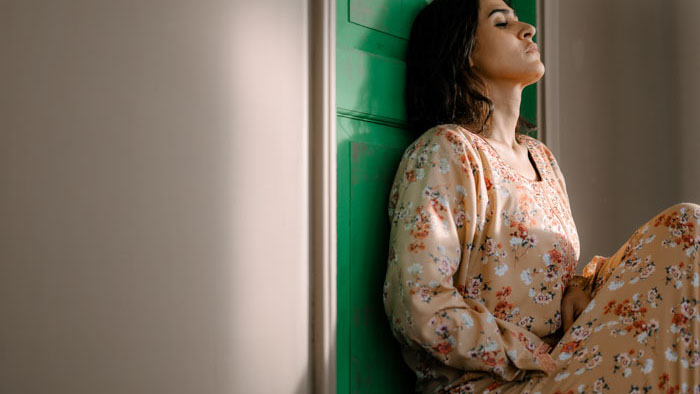
“Wahida discovers a green doorway…and winds up in a place where the dead still seem to be alive.”
Nayla Al Khaja directs with bravado. The framing of almost every scene uniquely places the camera, so that foreground and background action are given equal measure. The filmmaker makes the audience care about Wahida and proves to have a horror streak that would make John Carpenter blush. She gets excellent, natural performances from her cast, especially from Shaimaa El Fadul in the dual role of twins. Huda Alghanem turns the typical overbearing, generational gap parent into someone lovable, if misguided.
Unfortunately, not all is perfect with Baab. A scene in a living room (?) where Tariq begs his mother for a mobile phone is weirdly edited. For over half the sequence, I thought it was Amal asking for a cell. This struck me as odd because she’s using a cellphone in the scene. But the camera is on a medium wide of her, and only her, for so long, it just made sense that she’s the one talking. And if she started the conversation, then the way it transitions to Tariq begging for one is confusing, to say the least. Also, some of the family dynamics are not completely clear; though that could just be cultural differences not always translating.
Baab takes a while to establish its lead character and her mental state. Then it rams full force into fantasy-horror territory and becomes a shocking treatise on women’s rights, grief, motherhood, and independence. The direction and cinematography balance the drama and frights perfectly. The cast is universally strong, led by Shaimaa El Fadul’s heartbreaking turn. While a few moments and interplay don’t totally add up, these moments do not detract from the impressiveness on display. Finally, it should be noted that over 40% of the film’s cast and crew were female, so the messages are coming from people who know all too well what they are talking about.

"…becomes a shocking treatise on women's rights, grief, motherhood, and independence."