Andy Warhol made a career out of turning ordinary things into art, and director Lubomir Slivka’s Andy Warhol: American Dream pulls off the same trick by taking the most famous artist in America and revealing him to be something far more fascinating: an immigrant’s son who never forgot where he came from.
Andy’s story begins in the poverty-stricken villages of what is now eastern Slovakia, where his parents, Ondrej and Julia Varchola, packed up their lives and set out on a long journey to America in search of a better life. The film draws on interviews with family members, including nephews James Warhola and Donald Warhola, as well as historians and international experts such as Steven Watson, John Zavacky, and Kevin M. Beres, to piece together the intimate story of how this immigrant family laid the groundwork for a cultural revolution. The Varcholas settled in the working-class Pittsburgh neighborhood of Uptown, where Ondrej worked in the coal mines, and Julia kept the home together, doing everything they could to give their children a shot at something more.
Their youngest son, Andrew, was a quiet, sickly child who spent much time at home drawing and collecting photographs of Hollywood celebrities. Andy’s father saw something special in him and scrimped and saved to ensure that, of his siblings, Andy would be the one to go to college. He enrolled at the Carnegie Institute of Technology, where he developed his signature blotted-line drawing technique and earned a Bachelor of Fine Arts in 1949. The moment he had his degree in hand, he packed up and moved to New York City, where he quickly became one of the most in-demand commercial illustrators in the business, working for clients like Tiffany & Co., Columbia Records, and The New York Times.
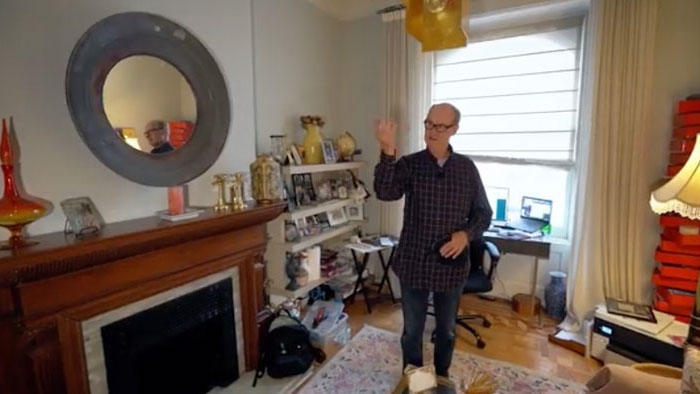
Andy Warhol’s nephew James Warhola reflects on his uncle’s life and legacy in Andy Warhol: American Dream.
“…a silver-painted warehouse in Manhattan that became the center of New York’s art and social scene…”
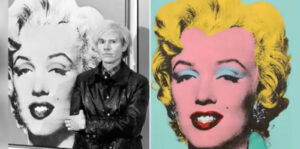
But commercial success was only the beginning. By the early 1960s, Andy — now going by Warhol rather than Warhola — had turned his eye toward modern art and begun painting everyday objects like Campbell’s Soup cans with the same cool, graphic precision he’d used in advertising. His celebrity portraits of Marilyn Monroe, Elvis Presley, and Mao Zedong made him an international superstar. He opened The Factory, a silver-painted warehouse in Manhattan that became the center of New York’s art and social scene, attracting musicians, filmmakers, and cultural icons from around the world.
I’ve seen a few documentaries about Andy Warhol. His past was glossed over quickly, and we moved on to the artist we know and love. Other films would quickly move to a discussion of his take on modern art, including the infamous Campbell’s soup cans and Marilyn Monroe. Instead, Andy Warhol: American Dream gives great attention to his family and upbringing. What we learn is that Warhol walks two parallel lines: his conservative religious upbringing and the avant-garde artist who would become the toast of the town. Even at the height of his success, he still found comfort in religion.
Through the testimony of his nephew James, who was at Andy’s side before and after his death, we get an in-depth look into what Andy thought about his work and success. We learn of the struggles he faced making money early on and the profound effect being shot by an assailant had on him afterward.
Of course, we are treated to the birth of his great works, along with some hidden gems, including Andy’s early sketchbook featuring quick drawings of the customers from the family restaurant. It must have been these sketches that made his father believe he was special. Suffice it to say, you’ll see an Andy you’ve never seen before.
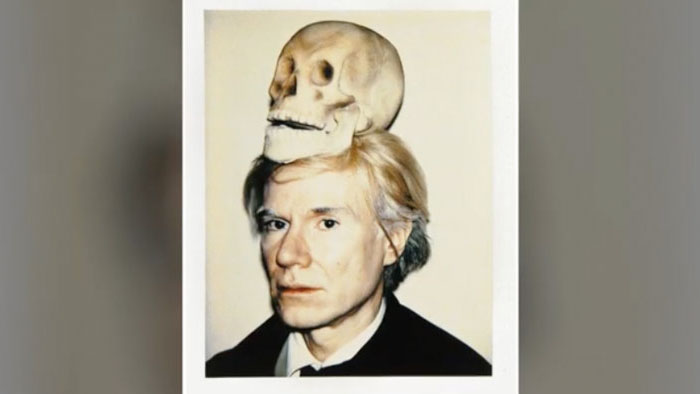
"…you'll see an Andy you've never seen before."