Louis Garrel, almost unrecognizable from the young rebel from Bertolucci’s subversive film The Dreamers, gives his Dreyfus a stoic manner, yet not far away from an explosion. Emmanuelle Seigner brings a sad-faced and latent sexuality texture as Picquart’s married lover; Mathieu Amalric is unforgettable as the frazzled handwriting expert. The generals and ministers, with their waxed mustaches and cowardice, look like they stepped out of Stanley Kubrick’s Paths of Glory. The film understands that authority, rendered in all its glitter, is the perfect costume for hypocrisy. The result is a film that feels both historical and fiercely present.
The Dreyfus case, over a century later, still echoes through every culture war and conspiracy theory that paints “outsiders” as traitors. J’Accuse is about how a nation’s conscience erodes, how institutions protect themselves at the expense of truth, and how one man’s reluctant courage can restore a measure of dignity, even if it costs him everything. Crushingly important today, showing use Art can imitate Life or sometimes the other way around.
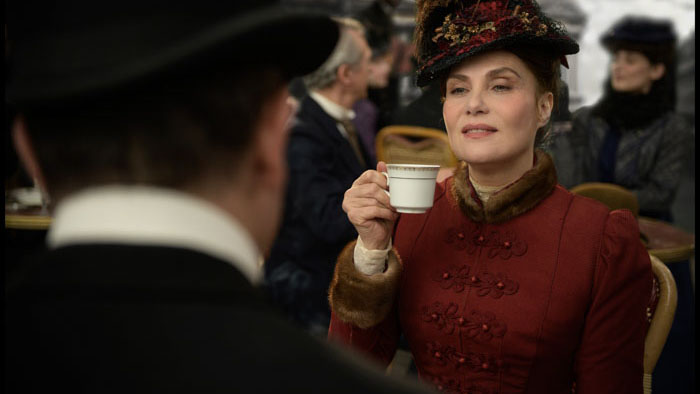
“…a brilliant exercise in controlled storytelling…”
Many will find Polanski’s personal morals troubling. But there’s no disputing his cinematic brilliance. From Knife in the Water and Repulsion, through what became a love homage to his wife Sharon Tate in Dance of the Vampires or The Fearless Vampire Killers, to the searing wartime drama of The Pianist. J’Accuse belongs to that lineage of classical cinema pulsing with modern moments.
J’accuse was filmed by Paweł Edelman with subdued, almost empty grandeur as shown in the opening shot of the parade ground. The film is bathed in shadow and brass, the light of a civilization tarnished by its own arrogance. Brilliant editing as the story flows, particularly in a moment during a sword duel when the beginning is paced. There is no triumph, no emotional freeing, and no elation. The battle continues even in a stunning street fight after the verdict
This picture is subtitled so which might cause reluctance in some viewers. J’Accuse feels like an act of cinematic indictment of ignoring of fact, glossing over for the institution more strongly when one stares corruption in the eye and refuses to blink or act. A film made the way it used to be made to enlighten society.
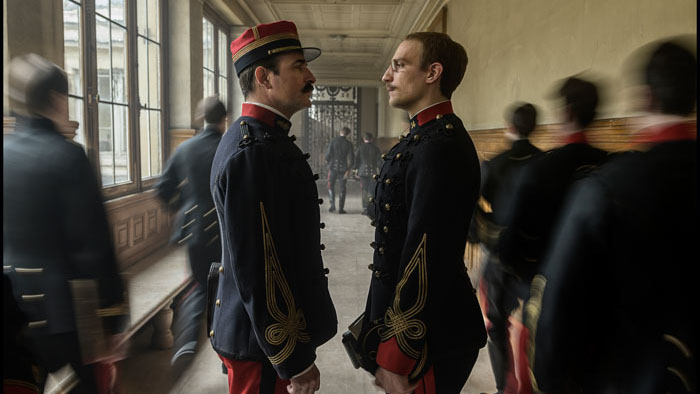
"…belongs to that lineage of classical cinema pulsing with modern moments. "