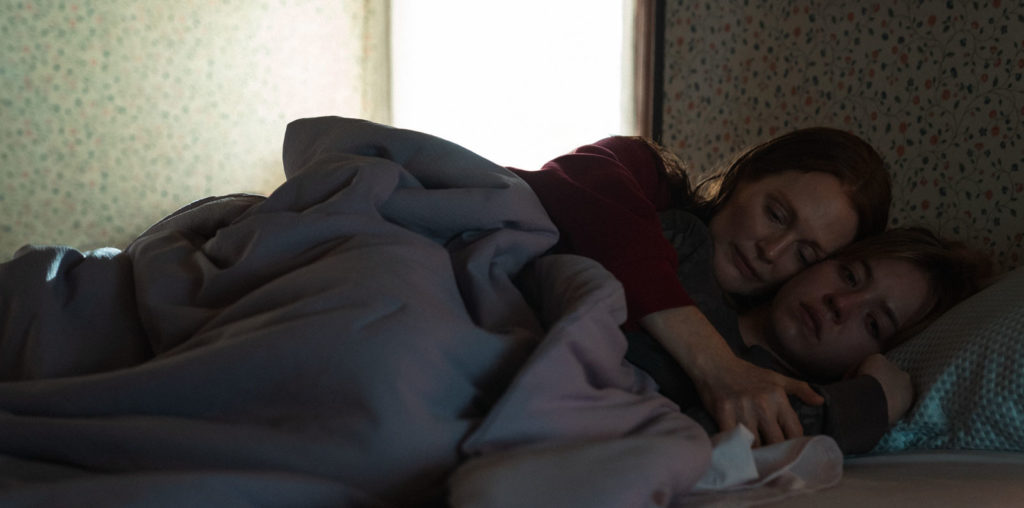
Americana sets a priceless Lakota ghost shirt as the film’s MacGuffin, tracked down by a large cast of desperate characters. First, there’s Mandy (Halsey), a single mother, who comes into possession of the shirt after it was stolen by her boyfriend after her boyfriend stole it during the murder of a wealthy collector. Fencing the shirt will allow her to escape her abusive boyfriend. Then her son, Cal, believes he is the reincarnation of Sitting Bull and wants to return the shirt to his tribe.
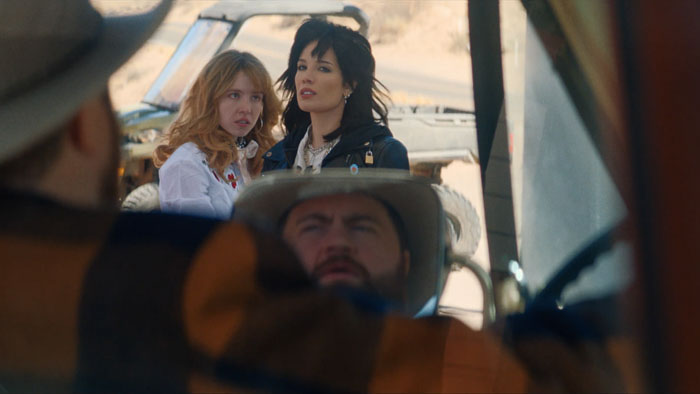
At the same time, Penny Jo (Sydney Sweeney), a waitress with a stammer, and her partner Lefty (Paul Walter Hauser) stumble upon the scheme to steal the shirt. Penny hopes the price of the shirt will let her escape her small-town life for a shot as a singer in Nashville.
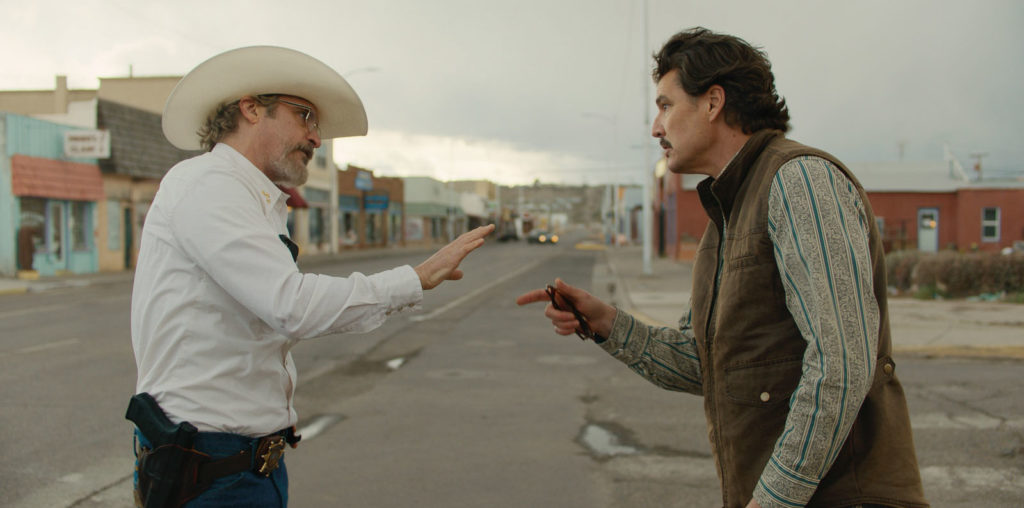
Meanwhile, members of a militant group of the Lakota tribe seek to reclaim it for its cultural and spiritual importance, while the mysterious collector, who hired the thieves in the first place, sets up a meeting location with Mandy, which is her conservative parents’ religious compound. As each group converges, tension builds toward an inevitable and bloody showdown.
Created with FCPX Image Exporter
“…comes into possession of the shirt after it was stolen by her boyfriend after her boyfriend stole it during the murder of a wealthy collector.”
Americana starts with a great setup, but the story stumbles because it relies too heavily on identity politics. Every character gets dropped into a box—toxic white men, single moms, Native Americans, religious fanatics—and once you see where they show up in the story, you can pretty much guess where it’s headed and who survives in the end. What should have been a pulpy, wild western heist just ends up flat, with all the tension drained out of it.
I’m sure you’re reading this thinking, “so what” if the men are toxic or the single moms are overly sympathetic? The problem comes in the character development. Everyone acts according to their specific identity group. The women of the religious compounds are subservient victims of their oppressive husbands. Why? Because of course they are. That’s why. These characters have no distinct personality that propels the story; they are slaves to their identities. Stereotypes in the truest sense.
The only real exceptions are Sweeney and Hauser. Sydney Sweeney is clearly trying to push herself as Penny Jo, but the script doesn’t give her much beyond a stammer to work with. Paul Walter Hauser gives Lefty some heart, but the connection between him and Sweeney never really lands. Halsey plays Mandy with the weight of a mother protecting her child, but even that gets buried under the film’s nonstop need to hammer the message.
By the end, Americana is more interested in preaching than telling a story. The idea of a modern-day chase for a sacred artifact could’ve been a lot of fun, but instead it succumbs to predictable, uninspired Hollywood storytelling. With this cast, the film should have been a knockout. Instead, it feels bogged down, heavy, and way too concerned with making statements instead of just being entertaining.

"…with this cast, the film should have been a knockout."