Tugging on those same heartstrings that get you in the final moments of Spielberg’s Empire of the Sun, Sarah McCarthy’s After the Rain: Putin’s Stolen Children Come Home paints into the landscape of a tranquil retreat, the sorrow that lingers in the aftermath of war.
But the children featured, along with countless others, are what we write up as collateral damage. Torn from all they knew and loved. Isolated. Re-educated. And when, or if, at last reunited with the remnants of their old life. The faces, while youthful, carry the eyes of someone traumatized by real-world horror.
When a country invades another, we see their leaders doing the back and forth in the media. We see select glimpses, terrifying imagery of civilians under fire in neighborhoods, not vast open battlefields. Seldom do we learn of the long-standing specter that haunts the victims of war crimes?
For the children, like Veronika Blahová introduced in the movie, systematically abducted, then illegally deported out of the Ukraine to Russia, the road back to some internal sense of normalcy, instead of urgency, is something that will take time to repair.
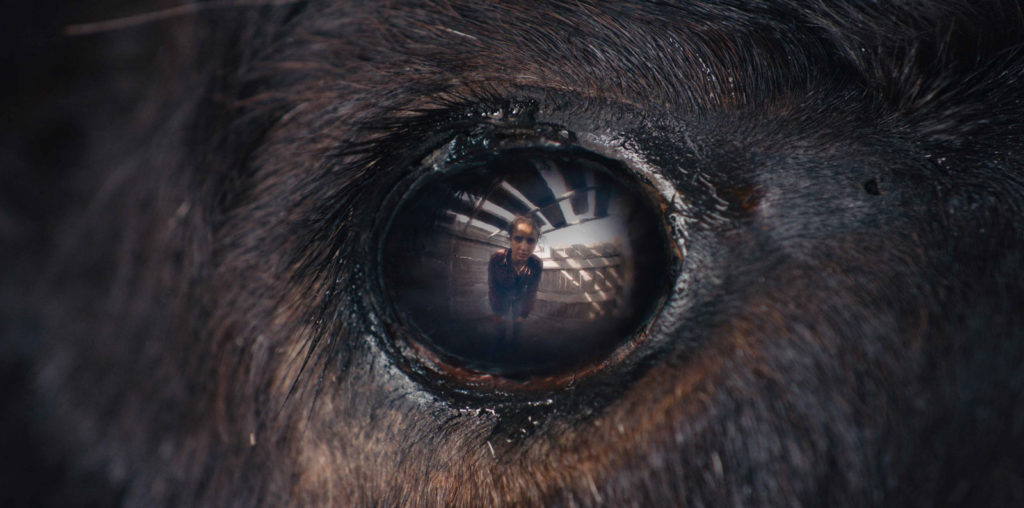
Fortunately, these children and their families have access to a truly picturesque animal therapy retreat in Estonia. The almost storybook settling breeds some Studio Ghibli vibes, as both adults and children bask in the silence of the sanctity of the setting, and warm each other with counsel and communication, all whilst enjoying the company of cats, dogs, and horses as a team of therapists’ analysis at a distance.
“…children…introduced in the movie, systematically abducted, then illegally deported out of the Ukraine to Russia…”
One of the most moving parts of the movie is, in fact, a meeting between the therapists and the emotional weight they carry after realizing the root of these children’s emptiness and longing. In fact, while some are open and in want of expression to a safe audience, others take small steps, almost timidly wary of the word trust, which is needed for a true discourse regarding the seed of emotions.
Some children, isolated for so long, have forgotten which emotions and interactions are supposed to intersect. Others seek the comfort of a family member lost. In one instance, a little girl longing for a maternal element in her family, asks every woman she notices who does not wear a ring if they’d like to marry her father.
The days pass, blissful and leisurely, but there is a brewing gloom as everyone knows that their time together is short. Still, what’s discovered, achieved, revealed, and received is a message of hope. Even after the darkest night, soon comes the dawn. But in a world where war is a profitable business, the sickening thing is, it will not be groups, but generations that shall suffer under the futility of tyranny and political posturing.
After the Rain: Putin’s Stolen Children Come Home is both heart-warming and wrenching in equal measure. But though its subjects are the survivors of tragedy, there are moments in this picture of such quiet grace, on the faces of old and young, that capture the resilience and glory of the human spirit, even when it has seen dangers and despairs innumerable. With space and time, and the company of gentle creatures, great and small, the hurt can be silenced, allowing the joy to flow back in.

"…both heart-warming and wrenching in equal measure."