![Aanikoobijigan [ancestor/great-grandparent/great-grandchild] Image](https://filmthreat.com/wp-content/uploads/2026/01/aanikoobijigan-ancestor-great-grandparent-great-grandchild-film-still-2-300x149.jpeg)
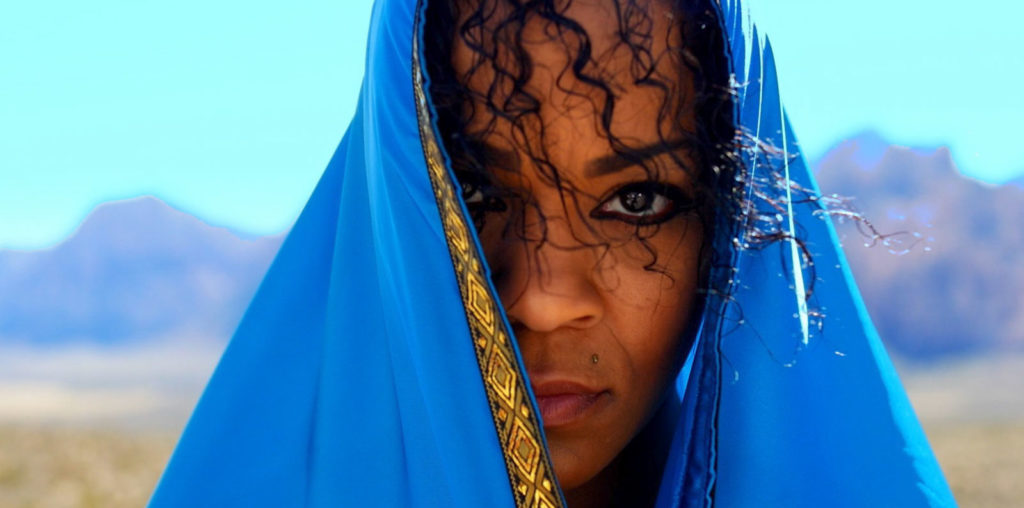
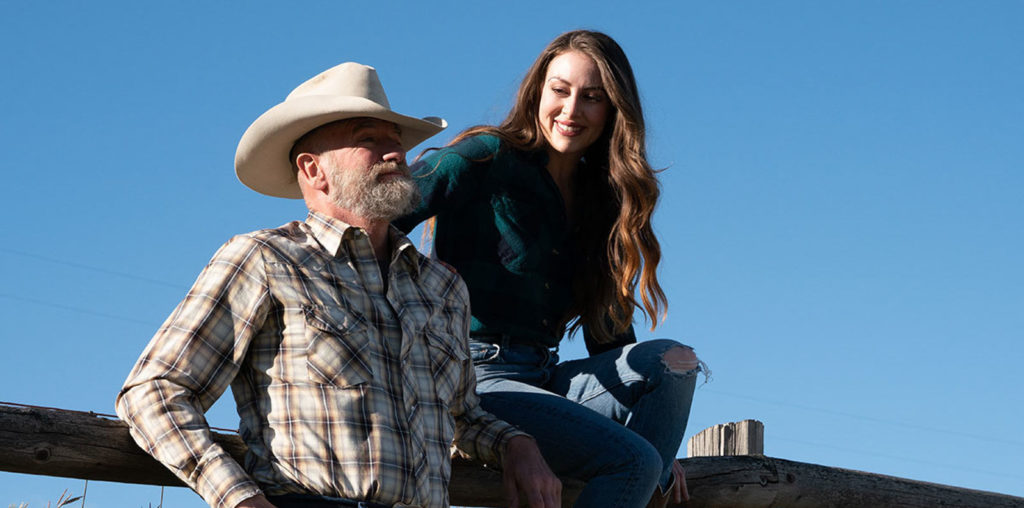
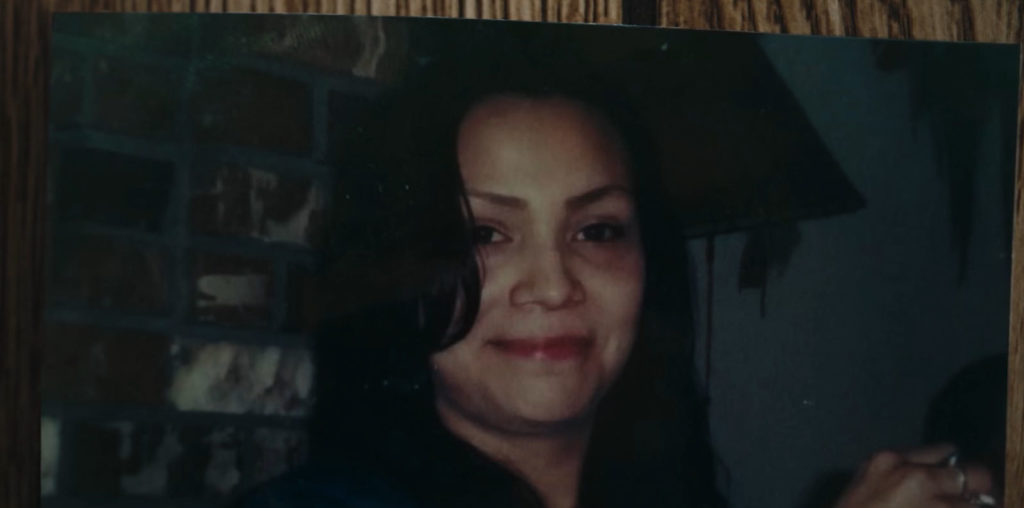
SUNDANCE FILM FESTIVAL 2026 REVIEW! In the documentary Aanikoobijigan, directors Adam and Zack Khalil bring to light the struggle of Anishinaabe Native Americans of the Great Lakes region to repatriate the human remains of their ancestors. These are body parts and artifacts disinterred for collections in museums and other places. “Aanikoobijigan” means “ancestor/great-grandparent/great-grandchild,” an Ojibwe concept that denotes a timeless connection to generations of ancestors. It signifies a non-linear belief in time where the past and future are not separate. Time is a spiral where the events of the past overlay the present and the future.
From the early days of the United States, Europeans thought nothing of digging up burial mounds and grave sites. This was either done as part of land development or just out of curiosity. The remains and ceremonial artifacts found were seen as unusual collector’s items and wound up in shows or museums. Over time, prestigious academic museums built vast archives of remains and artifacts. Some of these items go on display periodically, but most remain in the vaults for safekeeping and for study. The racist disregard for Native American sacred burial grounds was stunning and pervasive. The indigenous peoples were not considered fully human, and the Europeans dug up the dead and displaced the living with impunity. In the eyes of the Ojibwe people, an archaeologist is a grave robber with a fancy degree.
The collections were reflective of the European “cabinet of curiosities,” which was a specialized display or room, originating in the 16th-century, designed to showcase odd collections of natural wonders, art, scientific instruments, and other oddities. These displays were the foundation of modern museums, but there was no thought given to respectful handling of materials or to whether it was appropriate to have them at all. The Khalil brothers (who are Ojibwe) follow the efforts of Native American organizations to reclaim and repatriate these remains. Some progress has been made, but academia holds a stubborn opinion that its vaults are safer places for them, where they are maintained and catalogued. When the remains are identified and repatriated, they are buried in a sacred place with the proper ceremony. There is a concern for future disturbance as well. Indigenous graves are not always marked in a durable way, nor are they always on tribal lands. Development ruined these sites in the past. There’s no discussion of efforts to ensure the integrity of the remains in the ages to come.
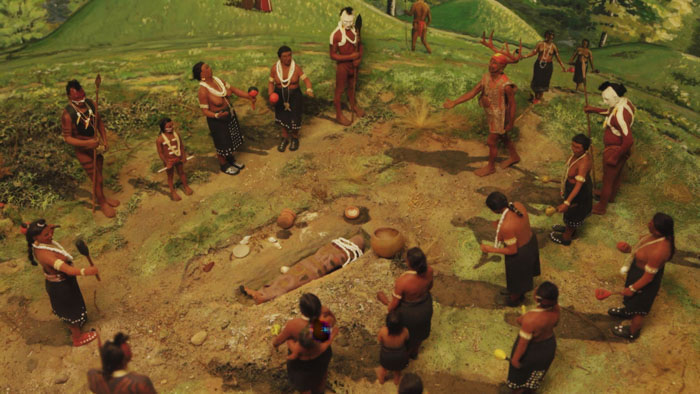
A still from Aanikoobijigan [ancestor/great-grandparent/great-grandchild] by Adam Khalil and Zack Khalil, an official selection of the 2026 Sundance Film Festival. Courtesy of Sundance Institute.
“…the struggle of Anishinaabe Native Americans of the Great Lakes region to repatriate the human remains of their ancestors.”
Aanikoobijigan tiptoes around the elephant in the room when covering the history of the Anishinaabe, and that is the question of how far back one goes. Columbus arrived on these shores 500 years ago. The Vikings were here 1000 years before that. The California Chumash tribe dates back 13,000 years. We know that all of the continental United States was occupied by Native Americans when the Europeans arrived. How do we reconcile an obligation to preserve sacred burial sites when they literally comprise the entire country?
The film is a thoughtful look at the situation, though it does contain some sensational embellishments. The ideas presented are accompanied by graphics flashing key words such as “hostage,” when discussing museums holding human remains. There are also psychedelic effects when the spirit world is mentioned. While well-intentioned, this looks tacky and detracts from the film.
Aanikoobijigan reveals a cultural challenge and puts us in touch with the people and customs of the Anishinaabe. The issues are complex and difficult to navigate, balancing the needs of the present against respect for the past. If, as the Ojibwe believe, time is not linear, then we have a great deal of explaining to do.
Aanikoobijigan screened at the 2026 Sundance Film Festival.
![Aanikoobijigan [ancestor/great-grandparent/great-grandchild] Image](https://filmthreat.com/wp-content/uploads/2026/01/zack-khalil-director-headshot-aanikoobijigan.jpeg)
"…well-intentioned..."