
2025 gave us a new Paul Thomas Anderson film — One Battle After Another starring Leonardo DiCaprio. Critics and audiences are calling it a masterpiece, and it’s a great reason to revisit the entire filmography of this master director. From his bold debut (Hard Eight, also known as Sydney) to the nostalgic Licorice Pizza, every Anderson film becomes an event, even when critics and audiences don’t initially warm to the premiere.
Here are all of Paul Thomas Anderson’s films in chronological order, excluding shorts and TV shows, to help you choose a movie for the evening.
Hard Eight
Paul Thomas Anderson made his first feature film at 26 (he’s now 55, by the way). Hard Eight is an intimate crime drama set in the casino world of Reno and Las Vegas. Even here, the themes that the director would develop throughout his career are already present: loneliness, chance encounters, and attempts to build a family out of strangers.
The setup is simple: at a deserted gas station, an elderly man named Sydney meets a desperate young man, John, who doesn’t even have enough money to bury his mother. Sydney offers help, then gradually takes the young man under his wing, teaching him how to make a living from casinos without breaking the rules. A father-son relationship develops between them. Anderson doesn’t rush to reveal his cards — the mystery of Sydney’s past hangs in the air throughout the film. The cinematography is restrained, without the signature grand scope of his later films, but you can already feel the attention to detail and the ability to create tension out of thin air.
The film bombed at the box office, but critics took notice of the director. Hard Eight set the tone for everything that followed — complex characters, moral ambiguity, and the eternal question: can past sins be redeemed through good deeds? Anderson himself later called this his purest work.
You can relax not only with a movie, but also with live casino social games, as always, there are hot new items and proven hits for you.
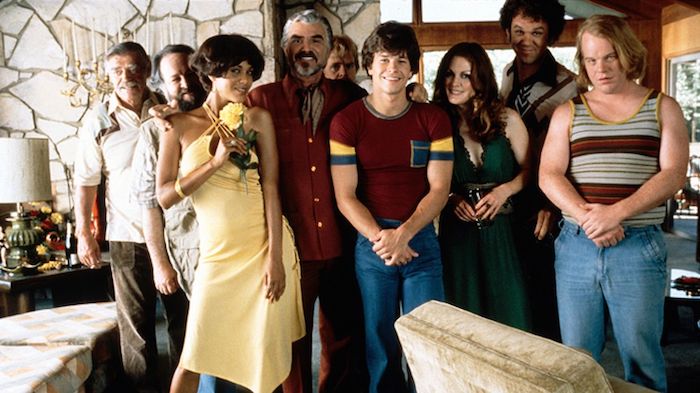
Boogie Nights
Anderson’s second film is based on his own short film The Dirk Diggler Story (1988), inspired by the biography of real-life porn actor John Holmes. The film tells the story of the rise and fall of a porn star at the turn of the 1970s and 80s.
The setup is simple: a young dishwasher named Eddie Adams works at a nightclub and dreams of a different life. There, he’s noticed by experienced porn director Jack Horner. Recognizing the kid’s potential (nature blessed Eddie with exceptional physical attributes — 13 inches), Jack offers him a chance to try out in movies. Eddie takes the stage name Dirk Diggler and dives headfirst into the world of the late-1970s porn industry.
Magnolia
Paul Thomas Anderson’s third film is considered by the director himself to be his best. And it’s hard to argue: Magnolia is an epic drama that weaves together the fates of a dozen Los Angeles residents. The film opens with three incredible stories of coincidences, setting the main theme: coincidences are not accidental.
The action unfolds over a single day. Claudia, a young woman struggling with drug addiction, can barely endure the visits of her dying father — TV host Jimmy Gator. Nurse Phil cares for television magnate Earl Partridge, whose young wife Linda desperately tries to obtain painkillers. Earl asks Phil to find his son — Frank Mackey, a scandalous misogynist lecturer who runs a “Seduce and Destroy” seminar.
Former child prodigy Donnie Smith, who once won a fortune on Jimmy’s show, now works in an electronics store and is about to lose his job. Police officer Jim Curring, recently divorced and lonely, responds to a call at Claudia’s apartment and instantly falls in love. A young genius named Stanley participates in the same TV show that Donnie once did, but those around him see him only as a source of income.
Punch-Drunk Love
Paul Thomas Anderson’s fourth film is perhaps the most unexpected of his career. The director, known for epic dramas, suddenly makes a romantic comedy starring Adam Sandler. And it worked: Sandler received a Golden Globe nomination, and the film won the Best Director award at Cannes.
The story centers on Barry Egan — co-owner of a small factory, a downtrodden and mentally unstable man. He grew up with seven sisters and is terrified of love. Due to constant mistreatment from his relatives, he lives in complete isolation, unable to form relationships with anyone. One day, Barry does something foolish — he calls a phone sex line. As a result, he becomes the victim of blackmailers: a criminal organization gets his credit card number and begins stalking him. At the same time, Lena Leonard — a friend of one of his sisters — enters his life. A romance begins to develop between them. And it’s Lena who changes Barry: from a downtrodden neurotic, he transforms into a man capable of standing up for himself and fighting back against his tormentors.
There Will Be Blood
The fifth film on the list is often called Paul Thomas Anderson’s masterpiece. It’s an epic drama, a loose adaptation of Upton Sinclair’s 1927 novel Oil! The film won two Oscars — for Best Actor and Best Cinematography — as well as the Silver Bear in Berlin for Jonny Greenwood’s score. Many critics consider There Will Be Blood one of the greatest films of the 2000s.
The story centers on Daniel Plainview, a lone oilman obsessed with wealth and power. The action spans nearly three decades of his life. It begins in 1898, when Plainview, who had been prospecting for gold and silver, accidentally discovers oil. He adopts the child of a deceased worker and passes him off as his own son.