Discover how modern movies and streaming originals are revolutionizing sound design with spatial audio, immersive formats, and thematic motifs, and examine the impact these innovations have on viewer engagement and critical reception.
In recent years, sound design has become a vital element of filmmaking, significantly influencing how audiences experience stories. With streaming platforms like Netflix and Disney+, filmmakers must now consider the unique demands of home viewing, balancing immersive audio with the diverse listening environments that these settings provide. Modern films, especially streaming originals, are pushing sonic boundaries to create more intimate and engaging experiences for audiences worldwide. For full event services in the audio visual realm, a recommended place is San Diego AV staffing.
Sound design has always been a fundamental part of cinema. From the iconic scores of John Williams to the subtle background noises that bring a film to life, sound complements the visuals and elevates the storytelling. Yet as film technology advances, especially in the streaming era, the role of sound design is shifting in unprecedented ways. Much like the way wpdpoker official enhances user experience with detailed feedback and immersive gameplay on online poker sites reviews, film sound design is evolving to captivate audiences on a deeper level.
Building on this evolution, this article will explore how modern films and streaming originals utilize spatial audio, immersive formats, and thematic audio motifs to differentiate themselves and enhance viewer engagement.
The Emergence of Spatial Audio and Immersive Formats
One of the most significant shifts in modern cinema sound design is the growing use of spatial audio. Spatial audio creates a sound experience that simulates a three-dimensional auditory space, allowing sounds to come from all directions, not just from the left or right channels. This technique replicates how we hear in the real world, with sounds seemingly moving around us and varying in distance.
Streaming services are increasingly adopting formats such as Dolby Atmos, which add depth and dimensionality to the audio landscape. For example, in a scene where a character is walking through a forest, Dolby Atmos can place the sound of footsteps from behind, while the wind rustles through trees overhead. This level of detail pulls the viewer deeper into the scene.
Streaming platforms like Apple TV+ and Disney+ have adopted Dolby Atmos to elevate their content. Films such as Soul (2020) and The Mandalorian (2019–present) have been praised for immersive audio that complements the narrative and visuals. As spatial audio techniques become more prevalent, audiences increasingly expect richer, more dynamic sound experiences.
For filmmakers, however, the challenge lies in crafting a sound design that works well across various platforms, including home theater systems, headphones, and mobile devices. The evolution of spatial audio means that sound designers now have more tools than ever to create a captivating auditory world, one that can scale and adapt depending on the viewer’s equipment.
Thematic Audio Motifs: Creating Emotional Resonance
Modern sound design also leverages thematic audio motifs. A motif recurs as a sound, melody, or pattern associated with a specific character, theme, or idea within a film. In traditional cinema, composers often created musical motifs. With advancements in sound design, designers now craft motifs not only musically but as auditory cues, such as footsteps, a ticking clock, or the hum of a machine. These motifs subtly reinforce the themes and emotions of the story.
Streaming films and TV series are increasingly employing these thematic audio motifs to create emotional resonance. For instance, in The Haunting of Hill House (2018), sound is used as a character in its own right. The sound of creaking wood, a door slamming, or the faint whispers of a distant voice are tied to specific emotional moments. In this way, these motifs serve to amplify the atmosphere, heightening the tension and allowing the viewer to feel the unease and dread that permeate the story.
Stranger Things (2016–present) uses sound motifs to reinforce its supernatural elements. The synth-heavy soundtrack and eerie effects set the tone for 1980s nostalgia and terror. These recurring cues make the soundscape a crucial part of the show’s identity and emotional experience. Together, these examples illustrate how audio motifs elevate streaming content.
In this way, sound is not just a background element but a key narrative tool that contributes to character development, plot progression, and thematic exploration. This represents a dynamic shift from traditional cinema, where sound often played a supplementary role, to an era where sound design can actively shape how a story is told.
Sound as a Tool for Immersion: Breaking the “Fourth Wall”
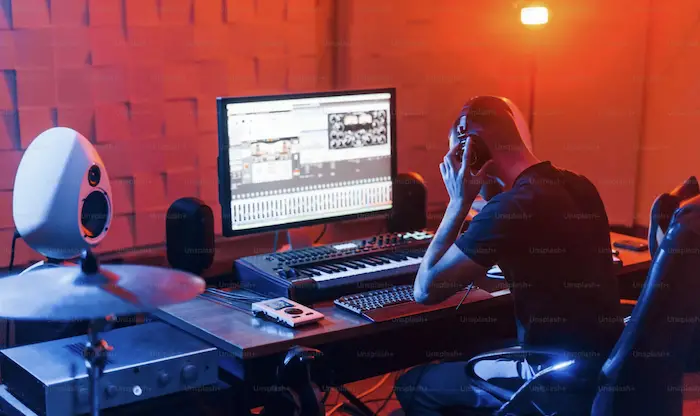
Sound design has always been crucial in creating immersion; however, streaming-era films have taken this concept further. Advances like Dolby Atmos and surround sound place the viewer at the heart of the action, allowing a sense of presence within the onscreen world.
For example, in films like Mad Max: Fury Road (2015), which utilizes immersive sound to enhance the intensity of its action sequences, viewers feel the rumble of engines, the crash of debris, and the blasts of gunfire as if they are right in the midst of the chaos. This level of immersion is made possible by advances in sound design, which utilize spatial cues to envelop the audience in the action.
Streaming services like Netflix, which produce high-budget original films and series, are increasingly investing in high-quality sound design to make their content stand out. With the majority of viewers watching on smaller screens or with headphones, sound designers must find ways to create an experience that feels larger than life, even in more intimate settings. By integrating techniques like binaural audio, which creates a 3D audio effect when listened to with headphones, streaming films can achieve a high level of immersion without relying on the traditional theatrical experience. Consequently, advances in sound design are reshaping how immersion is achieved in home viewing.
The Growing Importance of Sound in Critical Reception
As sound design becomes an integral part of storytelling, critics also focus more on how a film sounds, not just on visuals or dialogue. Award committees increasingly recognize innovative sound techniques, highlighted by categories like the Academy Awards for Best Sound Editing and Mixing.
Streaming platforms are becoming a proving ground for new sound design innovations. For example, films like Roma (2018) and The Irishman (2019) have garnered praise for their meticulous sound design, with critics noting how audio plays a critical role in elevating the overall cinematic experience. As the boundaries between film and television continue to blur, sound is helping these projects stand out as works of art, pushing beyond traditional storytelling methods.
Conclusion: The Future of Sound in Streaming Cinema
In summary, the central argument of this article is that the rise of streaming is transforming how filmmakers use sound: sound design is now essential, moving beyond its technical function to become a fundamental storytelling tool. The adoption of spatial audio, immersive formats, and creative thematic motifs shows that sound is key to memorable and emotionally impactful streaming cinema experiences.
For Loud And Clear Reviews readers, understanding the role of sound design opens a new layer of appreciation for film. Whether you listen through high-end speakers or basic headphones, next time you watch a streaming original, pay attention to how the sound works its magic. It may just be the most important part of the experience.