
This article revisits Michael Oher’s legal case against the Tuohy family, a conflict that has drawn sharp attention to how conservatorships can be used and misused. The controversy surrounding The Blind Side and its portrayal of Oher’s life has ignited a wider debate about Hollywood’s role in shaping public perceptions of real people through dramatized storytelling. Trust & Will, Teen Vogue, and ABC7 San Francisco have all provided important perspectives on the ethical questions raised by Oher’s claims, while also shedding light on the financial, legal, and cultural implications of the story.
Trust & Will
Trust & Will highlights how conservatorships were originally designed as legal arrangements to protect individuals unable to manage their own affairs. In Oher’s case, however, the conservatorship granted to Sean and Leigh Anne Tuohy has become a flashpoint, raising questions about whether it was used to profit from his name and life story. The arrangement placed control of Oher’s finances and contractual rights in the Tuohys’ hands, leaving him to question whether the system meant to safeguard him instead restricted his autonomy.
The Trust & Will perspective emphasizes the stark reality of how conservatorships can be misapplied. While meant to shield vulnerable individuals, Oher’s battle illustrates how they can overlap with financial exploitation when there are conflicting interests. His challenge shines a light on the broader necessity of reform in legal structures that have long been debated in both sports and entertainment contexts.
Teen Vogue
Teen Vogue presents a lens rooted in cultural impact and personal dignity. Oher’s lawsuit does more than recount a personal grievance; it forces society to confront how narratives of Black athletes are shaped by others. His objection to the way The Blind Side framed him—as someone in need of saving—underscores the danger of letting Hollywood define lives without granting full agency to those depicted.
Teen Vogue’s discussion makes clear that representation matters deeply. By exposing the gap between Oher’s lived experience and how it was portrayed on screen, the publication presses for accountability in storytelling. This extends into larger conversations about racial dynamics, sports culture, and how young athletes are packaged into simplified tales for mass audiences.
ABC7 San Francisco
ABC7 San Francisco has focused on the latest legal proceedings, detailing how Oher’s petition aims to dissolve the conservatorship and seek a full accounting of the profits derived from The Blind Side. His filings argue that millions of dollars generated from book sales, film rights, and speaking engagements did not benefit him proportionately, despite being the central figure of the narrative.
ABC7 San Francisco highlights the importance of financial clarity in cases where personal stories become marketable commodities. Oher’s demand for records is not just about money—it is about recognition, fairness, and truth. The scrutiny over contracts related to the film raises a red flag for how young athletes, particularly those from underprivileged backgrounds, may find themselves entangled in agreements that are not in their best interest.
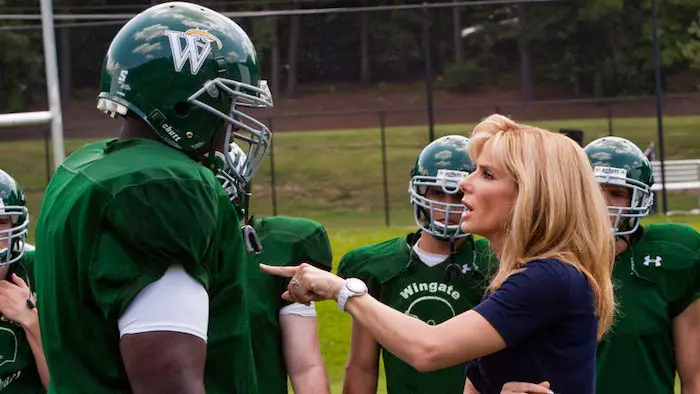
The Blind Side’s Impact on Sports Narratives
The 2009 film The Blind Side, which earned Sandra Bullock an Academy Award, framed Oher’s journey as a story of rescue and opportunity. While audiences embraced the feel-good narrative, Oher’s criticism reframes the conversation, arguing that it diminished his skill, hard work, and independence as an athlete.
The Blind Side’s popularity created a long-lasting cultural image of Oher, one that often overshadowed his actual football achievements. Fans and analysts alike began associating his identity with the film’s portrayal rather than his NFL career. This demonstrates how sports narratives in cinema can rewrite reality, leaving the individuals involved struggling to reclaim their stories.
Hollywood’s Responsibility
Hollywood has long faced accusations of dramatizing true stories at the expense of accuracy. The Oher-Tuohy case puts these ethical concerns front and center, forcing filmmakers and producers to reassess the consequences of turning real lives into entertainment.
The controversy underscores the obligation studios have to ensure that profits and recognition are equitably shared. Beyond contracts, there is a moral duty to respect the dignity of individuals whose stories are being commercialized. This responsibility has become part of the wider Hollywood reflection on truth, profit, and accountability.
Ethical Implications of Conservatorships
Oher’s situation sheds light on conservatorships that extend far beyond the celebrity world. Legal experts, including those highlighted by Trust & Will, argue that reforms are urgently needed to prevent misuse. His case serves as an example of how a protective measure can instead function as a tool of control.
The debate now includes potential reforms, such as increased transparency in financial arrangements and stronger oversight from courts. Oher’s petition aligns with broader calls for legislative changes, echoing cases that have captured public attention in both sports and entertainment.
Profit and Exploitation
The financial backdrop of Oher’s complaint cannot be separated from the success of The Blind Side. With over $300 million earned globally, the film’s box office and streaming revenues dwarf the compensation Oher reports receiving. The Tuohys, by contrast, are alleged to have benefited significantly.
This imbalance illustrates how vulnerable athletes can be when others control their contracts. Oher’s fight calls for a reassessment of how rights to life stories are negotiated, ensuring that the individuals at the center are not cut out of their own financial legacies. This moment also bridges into discussions surrounding fairness in professional contracts, echoing themes often raised during fantasy football draft debates where player value is constantly examined.
Broader Sports and Cinema Connection
Sports films are powerful cultural tools, often shaping how athletes are remembered. Oher’s critique exposes the thin line between inspirational storytelling and distortion. By misrepresenting him, the film also reshaped public expectations about what it means to succeed in sports against adversity.
The case encourages audiences to reconsider other sports films, asking whose voice is privileged and whose perspective is lost. Oher’s battle serves as a reminder that biographies on screen are not merely entertainment but also cultural records with lasting influence.
Public Reaction and Media Coverage
Coverage from Teen Vogue, ABC7 San Francisco, and Trust & Will shows how Oher’s case has resonated across very different audiences. The media attention underscores how issues of race, law, and Hollywood storytelling converge into a single story that challenges institutions of both sport and film.
The coverage has amplified Oher’s voice, allowing him to redirect his narrative. Public opinion has, in turn, pressured Hollywood to reflect more critically on its practices, highlighting how one lawsuit can reshape national discourse.
The Path Forward
As the legal case unfolds, its impact is expected to extend beyond Oher and the Tuohy family. The story has already entered broader debates about fairness, representation, and the ethics of profit in both the sports industry and Hollywood.
Michael Oher’s legal challenge has the potential to become a watershed moment, sparking reforms that protect athletes and ensure Hollywood acknowledges its responsibility in telling true stories. Whether through conservatorship reform or changes in entertainment practices, the case is already leaving a permanent mark.