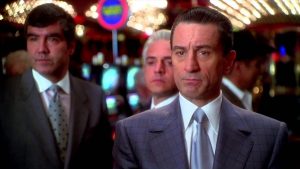
When Martin Scorsese’s Casino hit cinemas in November 1995, audiences were lured into a world of glittering lights, sharp suits, and brutal power struggles. Thirty years later, the film remains a cultural monument, not just for its filmmaking, but for its uncanny portrayal of how greed, glamour, and gambling intertwine.
As the movie celebrates its 30th anniversary, the Las Vegas it immortalised looks very different.
Tourists are thinking twice before booking their trips, and gambling itself has moved from the blackjack tables to browser tabs.
The house always wins, then and now
Directed by Scorsese and written by Nicholas Pileggi (adapting his own non-fiction book), Casino follows Sam “Ace” Rothstein, played with clinical precision by Robert De Niro, as he oversees the Tangiers casino under the watchful eye of the Chicago mob. Sharon Stone’s dazzling, tragic performance as Ginger McKenna earned her an Academy Award nomination, while Joe Pesci’s volatile Nicky Santoro brought back the dangerous volatility audiences remembered from Goodfellas.
The film’s world was based on true events: Frank “Lefty” Rosenthal, who inspired De Niro’s character, ran the Stardust, Fremont, and Hacienda casinos under mob control in the 1970s and ’80s. Much of Casino was shot on location in the now-demolished Riviera Hotel, lending the film an authenticity that even its most chaotic scenes can’t shake.
Its grandeur was matched by success – grossing over $110 million worldwide – and by the decades-long debate it sparked about whether it glamorised or condemned Las Vegas excess. Today, that debate feels newly relevant as the real Vegas faces a tourism downturn, and the world’s gamblers are shifting their chips elsewhere.
The decline of the Vegas dream
For decades, Las Vegas sold itself as the ultimate escape: lights, luxury, and limitless possibility. But in 2025, headlines are turning grim. Reports like “Why tourists are throwing away their tickets to Vegas” highlight how high prices, overcrowding, and corporate overreach are souring the once-thrilling promise of Sin City. Long-time visitors complain that the Strip’s soul has been replaced by service fees and sterile resorts.
Even locals are voicing discontent. According to The Sun, residents are increasingly avoiding the Strip altogether, calling the city’s latest tourist-focused decisions “shameful and ridiculous.” The modern Vegas, they say, has priced out spontaneity, and in doing so, the magic that Scorsese captured so vividly.
In Casino, Rothstein’s downfall mirrors the city’s own transformation. His empire grows too polished, too corporate, too controlled. By the end, the Tangiers has become a corporate monolith – run by faceless men in suits, not gamblers with instincts. The irony, 30 years later, is hard to ignore.
From Tangiers to tablets: how gambling evolved
While Vegas wrestles with its identity, the gambling industry has evolved in ways even Scorsese couldn’t have imagined. In 1995, casinos were tangible empires of smoke, sound, and spectacle. In 2025, gambling is often just a click away – sleeker, quieter, and far more accessible.
Online slot platforms have become the new Tangiers. Players seek out unique experiences through independent slot sites, opting for smaller brands with personality rather than corporate sameness. These platforms offer a digital version of the “old Vegas” independence that Ace once embodied – only now, it’s coded into sleek user interfaces instead of casino carpets.
Equally significant is the rise of no-wagering bonuses, which remove the confusing fine print that once left players at a disadvantage. In a sense, the online industry has learned from the sins of the old casino world, offering transparency where secrecy once reigned.
These shifts show how the gambling narrative has changed. Where Casino exposed corruption, skimming, and manipulation, modern gambling culture markets fairness, control, and player empowerment. The tools may have changed, but the tension between illusion and reality – the promise of the win and the inevitability of the loss – remains timeless.

The film that never lost its edge
At this year’s Tribeca Film Festival, Scorsese and De Niro reunited to discuss Casino’s enduring relevance. In an interview with The Guardian, Scorsese reflected that the film has become “an allegory for the times we live in” – a study in how systems built on greed inevitably collapse. That insight lands differently in 2025, as audiences navigate a digital world where risk has never been more gamified.
From stock trading apps to crypto betting, the thrill of the gamble has simply found new arenas. Casino predicted that appetite long before smartphones existed. Rothstein’s mantra, control the odds, manage the risk, could just as easily apply to today’s online traders as to his casino pit bosses.
And just as Ginger’s tragic downfall symbolised the seduction of success, the modern gambler still dances on the same edge: chasing the illusion that this next spin, this next click, will be the one that changes everything.
What Casino still teaches us
Thirty years on, Casino stands as both a warning and a love letter – a testament to the danger and allure of a city (and an industry) built on chance. Its characters are larger than life, but their desires are painfully human: wealth, control, recognition.
Today, as Vegas faces its reckoning and gambling migrates online, Scorsese’s masterpiece feels eerily prophetic. The mob may be gone, but the hunger for risk, reward, and reinvention is as alive as ever.
The lights of the Tangiers have dimmed, but the game never truly ends. It just changed its table.