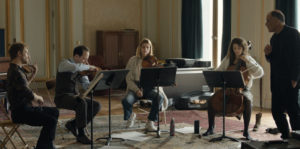
Finally, taking an entire week to learn one piece, then perform it without a proper sound check, much less a full rehearsal in the acoustically challenged venue, doesn’t jive with how music is made in the 21st century—even on centuries-old instruments worth a fortune.
But, on the plus side, Magne’s production (along with collaborating writer Haroun) will leave most viewers entertained and, at times, enthralled, as concert day unstoppably approaches.
Perhaps the most interesting character of the lot is composer, bird lover Charlie Beaumont (the aptly named Frédéric Pierrot has just the right mix of unbridled creativity and “lifelines” as it happens—but, please, never leave your clarinet standing on its bell!). After quietly confessing “I hate my piece”, the thoughtful creator manages to unlock the hidden (even to him) art from 30 years ago and coerce his charges to find a way of playing what he really meant.
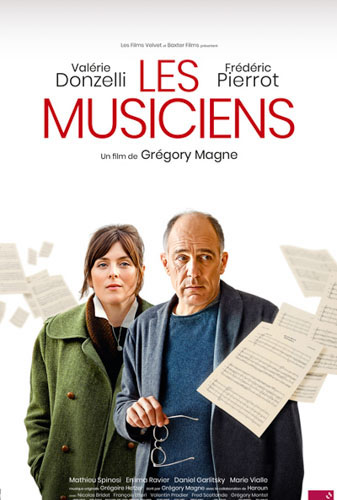
Binding everything together (somewhat as a conductor of business) is Astrid Carlon (at turns passionately and practically done up by Valérie Donzelli), gamely assuring one and all that the show will go on through a multitude of setbacks: musical, physical, and emotional.
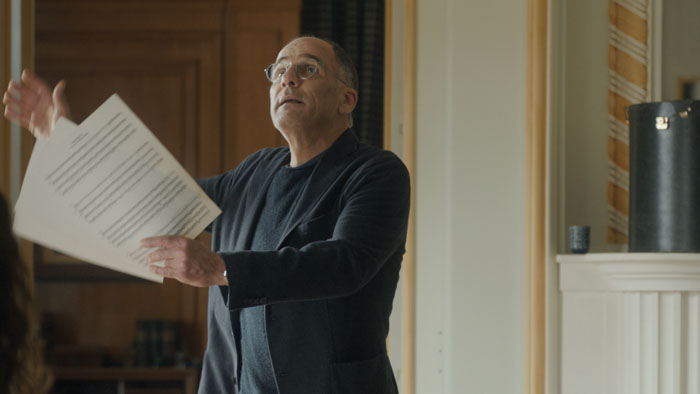
“Magne’s production…will leave most viewers entertained and, at times, enthralled.”
Yet most certainly Grégoire Hetzel’s romantically infused original score is the real star of the show, for without that, there would be nothing left to play! Do have a listen and hear for yourselves.
orchestra violinist,s not “Violin I” chamber musicians. Violin II, Peter Nicolescu, is blind and most caringly acted by Daniel Garlitsky, but—as many blind artists well know, they are perfectly capable of learning the “parts” (words, notes, songs…) par coeur, so then why is there music on his stand (or any stand at all)? Emma Ravier is the selfie-loving violist, Apolline Dessartre, adding much-needed vibrancy and joie de vivre to the troupe (yet being looked down upon by abandoning a string trio gig to take a seat with the Vienna Philharmonic—really? Name anyone who wouldn’t!). Leaving it to cellist Lise Carvalho (sympathetically portrayed by Marie Vialle) to anchor the sudden ensemble both musically and emotionally as various passions work their way into the score’s première.
Finally, taking an entire week to learn one piece, then perform it without a proper sound check, much less a full rehearsal in the acoustically challenged venue, doesn’t jive with how music is made in the 21st century—even on centuries-old instruments worth a fortune.
"…Just think about the starlings..."