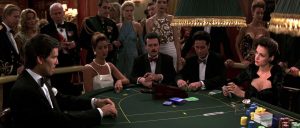
Casinos in movies aren’t just places—they’re alive, buzzing with tension and possibility. The rattle of chips, the glow of neon, the hush before a card flips: it’s pure drama. Think of Casino Royale, where James Bond stares down a villain in a poker game that feels like war, or Ocean’s Eleven, where the Bellagio’s glitz hides a heist’s chaos. These spots—Vegas, Monte Carlo—aren’t mere sets; they shape the story, pulling viewers into a world where one bet can change everything. Filmmakers know this, chasing real casinos or building fakes so convincing you can almost smell the cigar smoke.
The pull comes from their stakes. A casino’s a place where fortunes swing wild—riches won, lives ruined. Movies lean into that, making every roll of the dice a plot twist. From the seedy joints in The Cooler to the high-roller havens in GoldenEye, these settings scream risk and reward. Let’s wander through some of cinema’s most iconic casino spots, digging into how they’re brought to life and why they stick with us.
Real Casinos, Real Hustle
Filming in actual casinos is a logistical beast, but the payoff’s worth it. Take Casino, Martin Scorsese’s love letter to Vegas’ mob days.
The crew took over the Riviera Hotel, shooting in the dead of night—1 a.m. to 4 a.m.—so real gamblers could keep chasing their luck.
The Riviera’s tacky charm, with its mirrored walls and clanging slots, gave Robert De Niro’s Ace Rothstein a perfect stage to wheel and deal. Scorsese didn’t fake it; he wanted the grit of a real casino, where every chip carried weight.
The Riviera even leaned into the hype, hanging signs bragging about De Niro and Pesci being there.
Resources like 800gambler reviews serve as a window into this world, breaking down what makes casinos tick—security, vibe, games—helping fans see the reality behind the screen’s glamour. Rain Man went to Caesars Palace for its blackjack scenes, where Dustin Hoffman’s Raymond counts cards like a savant. The crew dodged real patrons, capturing the slots’ jangle and the dealers’ quick hands. It’s a balancing act: filmmakers need authenticity but can’t stop the casino’s pulse. That real-world chaos makes the scenes crackle, like you’re right there at the table.
Vegas: The Ultimate Movie Star
Las Vegas owns the casino movie crown. The Bellagio in Ocean’s Eleven is practically a co-star, its dancing fountains and sleek gaming floor setting the heist’s tone. The production team didn’t just film there—they studied the Bellagio’s vault tech to make the robbery feel plausible.
The Mirage and MGM Grand pop up too, their sprawl perfect for slick cons. In The Hangover, Caesars Palace hosts the gang’s card-counting bender, with Zach Galifianakis’ Alan aping Rain Man in a way that’s both funny and raw. These casinos aren’t just locations; they’re Vegas itself—loud, brash, and begging for trouble.
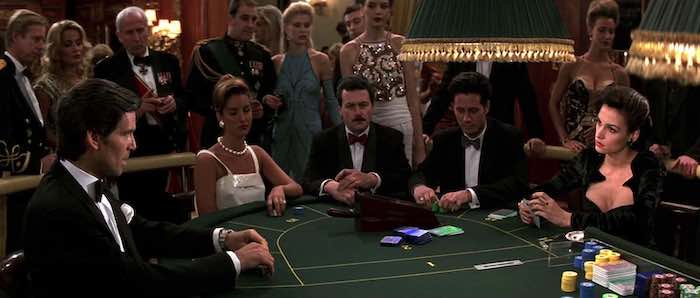
Across the ocean, Monte Carlo’s Casino de Monte-Carlo brings old-world swagger. In GoldenEye, Pierce Brosnan’s Bond glides through its gilded halls, all marble and gold leaf. Built in 1865, the real casino’s hosted kings and crooks, and its history seeps into the film. Shooting there wasn’t easy—strict dress codes, tight hours—but the result feels like money.
The place’s elegance sells Bond’s cool, making every glance a chess move. These real spots anchor the fantasy, turning movies into postcards from places fans ache to visit.
Building the Casino Magic
When real casinos won’t do, filmmakers get crafty. Casino Royale’s Montenegro gambling den was shot at the Grandhotel Pupp in the Czech Republic, its chandeliered rooms dressed up to scream Monte Carlo.
The poker table scenes?
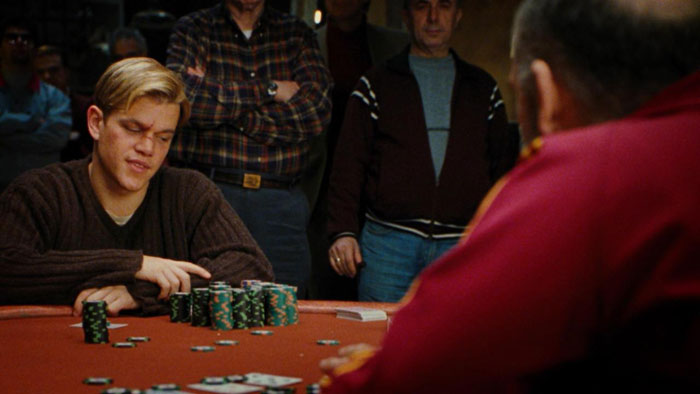
Built on a soundstage, every detail—chip stacks, green felt, the dealer’s flick—obsessed over to feel real. In Rounders, Matt Damon’s poker shark prowls Atlantic City’s Taj Mahal (now Hard Rock), but the crew used real dealers to keep it legit. For The Cooler, a grimy fictional joint was built from scratch, its dim lights and worn carpets contrasting Vegas’ flash to show William H. Macy’s sad-sack loser in his element.
Sound and light seal the deal. Casino’s smoky haze and slot-machine din feel lived-in, while Casino Royale goes crisp and modern, all sharp angles and tension.
Designers sweat the small stuff: the clink of a martini glass, the shuffle of cards. Crews for Ocean’s Eleven even mocked up slot machines to match the Bellagio’s vibe. It’s this obsessive care that makes fake casinos feel as real as the Strip’s brightest spots.
Why Casinos Stick With Us
Casino films don’t just entertain—they shape how people see gambling. Ocean’s Eleven makes heists look appealing, while Rain Man had folks dreaming of beating the house. Real casinos love it—Bellagio tours lean into their Ocean’s fame, and Caesars plays up its Hangover cred. But movies can oversell the thrill, painting gambling as all wins and no losses. That’s where 800gambler’s grounded advice cuts through, offering a reality check on the risks.
These films tap something primal: the hope of beating the odds, the rush of a big score. It’s why fans watch, hearts pounding, as Bond bluffs or Danny Ocean outsmarts the vault.
The casinos themselves become legends. The Riviera’s dust now, blown up in 2016, but Casino keeps it alive. The Bellagio’s fountains still dance, drawing selfie-takers who hum Ocean’s tunes. Monte Carlo’s casino lures Bond fans, its grandeur unchanged since GoldenEye. These movies don’t just use casinos—they make them mythic, places where luck’s a character and every spin’s a story. From Vegas’ neon jungle to Monte Carlo’s old-money charm, these spots prove cinema can turn a bet into a saga that lasts forever.